
Zsuzsa Bánk
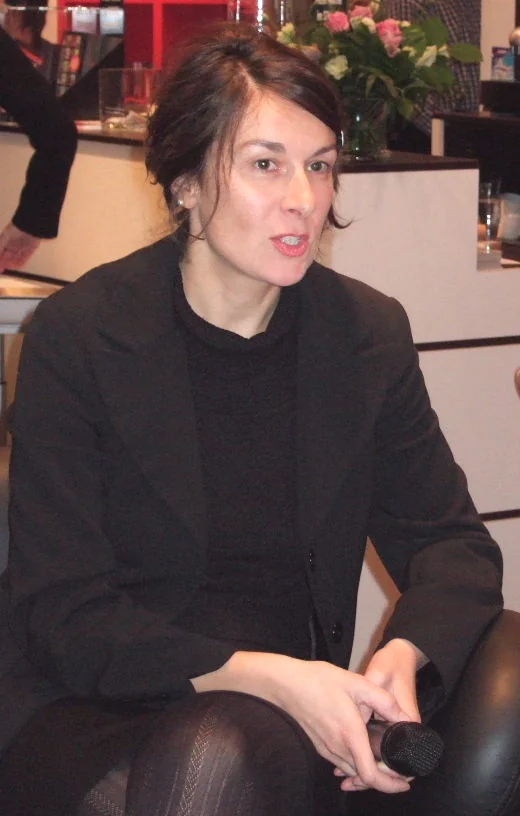
Image from Wikipedia
Image from Wikipedia
Zsuzsa Bánk – The Quiet Power of a Great German Storyteller
Between Origins, Memory, and Literary Precision
Zsuzsa Bánk, born in 1965 in Frankfurt am Main, is one of the most distinctive voices in contemporary German literature. Her biography is closely intertwined with her family's history: As the daughter of Hungarian parents, she grows up bilingual and early on develops a sensitivity for in-betweenness, loss, and belonging. This experience shapes her artistic development just as much as her later perspective on characters, families, and historical ruptures. ([zsuzsabank.de](https://www.zsuzsabank.de/biographie?utm_source=openai))
Before fully dedicating herself to writing, Bánk worked as a bookseller and studied journalism, political science, and literature in Mainz and Washington. Even this path explains much about her prose: She combines journalistic observational sharpness with literary condensation and a rare sensitivity to tone, rhythm, and psychological nuances. Today, she lives as an author in Frankfurt am Main and publishes with S. Fischer. ([zsuzsabank.de](https://www.zsuzsabank.de/biographie?utm_source=openai))
Biography: From Bookselling to Literary Authority
Her professional entry into the book world was not a detour but a foundation. As a bookseller, Zsuzsa Bánk became acquainted with the literary landscape from the inside before sharpening her academic profile in Mainz and Washington. This connection between practice and theory gives rise to a voice that writes clearly, controlled, and at the same time emotionally open. Her texts are never ornamental but precisely structured, with a strong instinct for scenes, dialogues, and inner movements. ([zsuzsabank.de](https://www.zsuzsabank.de/biographie?utm_source=openai))
The familial story of flight, migration, and cultural multilingualism lies at the center of her work. Sources repeatedly emphasize that her parents came to Germany after the Hungarian Revolution in 1956 and that this experience of loss and new beginnings has significantly influenced her literature. It is from this that the special tension of her books arises: They tell of belonging without providing simple answers, and of memory without getting lost in nostalgia. ([en.wikipedia.org](https://en.wikipedia.org/wiki/Zsuzsa_B%C3%A1nk?utm_source=openai))
Career Start and Breakthrough with "The Swimmer"
Zsuzsa Bánk achieved her decisive breakthrough in 2002 with her debut novel "The Swimmer." The book received multiple awards, including the Aspekte Literature Prize, the German Books Prize, the Jürgen Ponto Prize, the Mara Cassens Prize, and the Adelbert von Chamisso Prize. The fact that a debut provoked such a strong response points to the sovereignty of her approach: Even her first novel showcases an author with a sure sense of composition and great narrative breadth. ([zsuzsabank.de](https://www.zsuzsabank.de/biographie?utm_source=openai))
"The Swimmer" made Zsuzsa Bánk immediately visible in the literary scene. The story of a Hungarian family against a historical backdrop was recognized internationally and disseminated in various editions. Critical voices particularly highlight her quiet intensity: She does not work with effects but with condensation, shifts in perspective, and the artful escalation of tension stemming from familial conflicts and linguistic rhythm. ([dw.com](https://www.dw.com/en/zsuzsa-b%C3%A1nk-the-swimmer/a-45637762?utm_source=openai))
The Subsequent Novels: "The Bright Days," "We Will Sleep Later," and "Dying in Summer"
With "The Bright Days," Zsuzsa Bánk solidified her position as an exceptional storyteller. The novel was perceived as a significant continuation of her debut and is regarded as a great success according to the publisher. The story of three children searching for their place in life reveals her particular strength in designing character constellations and in the literary portrayal of childhood, friendship, and familial upheavals. ([fischerverlage.de](https://www.fischerverlage.de/buch/zsuzsa-bank-die-hellen-tage-9783104008059?utm_source=openai))
"We Will Sleep Later" formally and stylistically expands her repertoire. In an interview, Bánk explains that she wanted to develop a novel form here where intimate voices emerge through emails and two first-person perspectives stand equally side by side. This decision showcases her compositional curiosity: She seeks not routine but new narrative forms to make everyday life, doubts, joy, and fear audible in subtle gradations. ([fischerverlage.de](https://www.fischerverlage.de/magazin/interviews/interview-mit-zsuzsa-bank?utm_source=openai))
Her most recent known book, "Dying in Summer," is a particularly personal work. The official publisher's text describes the father's journey to Lake Balaton, the illness, the return to Frankfurt, and the reflection on farewell, family, and memory. Even in the collection of press reviews, the book is praised as a poetic, unsparing, and consoling approach to loss. Thus, Bánk once again demonstrates her ability to transform private experiences into literary universality. ([zsuzsabank.de](https://www.zsuzsabank.de/?utm_source=openai))
Short Stories, Theater, and the Expansion of Her Work
Apart from her novels, Zsuzsa Bánk also works with short forms and theater. The collection "Hottest Summer" and the included story "Under Dogs" earned her the Bettina von Arnim Prize. This shows that her strength lies not only in long forms but also in precise, atmospherically dense miniatures. ([zsuzsabank.de](https://www.zsuzsabank.de/biographie?utm_source=openai))
With "Everything is Big," she also wrote her first play, which premiered in 2020 at Schauspiel Frankfurt. This step affirms her versatility and her confident command of language as stage material. The fact that her work is not only read but also performed underscores the dramatic power of her dialogues and monologues. ([de.wikipedia.org](https://de.wikipedia.org/wiki/Zsuzsa_B%C3%A1nk?utm_source=openai))
Style and Poetic Handwriting
Zsuzsa Bánk's style combines linguistic precision with emotional depth. Her prose often works with quiet shifts, internal tensions, and a carefully controlled musicality of the sentence. Reviews describe her texts as quiet, poetic, and intense; at the same time, they exhibit a high degree of compositional artistry, as atmosphere, character development, and memory spaces intertwine closely. ([zsuzsabank.de](https://www.zsuzsabank.de/?utm_source=openai))
Bánk is particularly strong when she describes transitions: between countries, languages, generations, and life phases. Her literary development can be read as a continuous investigation of home, loss, family, and belonging. This results in a distinctive author brand that is perceived as serious, sensitive, and persistently relevant by both readers and critics. ([encyclopedia.com](https://www.encyclopedia.com/arts/educational-magazines/bank-zsuzsa-1965?utm_source=openai))
Critical Reception, Awards, and Cultural Influence
The awards clearly mark Zsuzsa Bánk's standing in the literary scene. With the Aspekte Literary Prize, the German Books Prize, and the Adelbert von Chamisso Prize, not only a debut was honored, but a holistic approach: literary quality, cultural sensitivity, and the ability to artistically bundle experiences of migration and multilingualism. Subsequent works have also been highlighted by the publisher and in the press as successes. ([zsuzsabank.de](https://www.zsuzsabank.de/biographie?utm_source=openai))
Her influence extends beyond individual titles. Bánk represents a form of contemporary literature that makes the private politically legible without writing thesis literature. Her books anchor themselves in the cultural memory because they not only tell stories but also make life situations, linguistic spaces, and historical repercussions visible. Her authority lies precisely here: in the combination of empathy, formal control, and thematic consistency. ([encyclopedia.com](https://www.encyclopedia.com/arts/educational-magazines/bank-zsuzsa-1965?utm_source=openai))
Conclusion: An Author with Quiet Force and Great Presence
Zsuzsa Bánk fascinates with the rare combination of linguistic restraint and emotional impact. Her musical career in a figurative sense lies in the art of rhythm, composition, and narrative arrangement: she builds sentences like tension arcs, chapters like movements of an inner piece. Anyone wishing to experience contemporary German literature in its finest form will find here an author of special relevance. A reading with Zsuzsa Bánk is always worthwhile because her texts gain an intensity on stage. ([zsuzsabank.de](https://www.zsuzsabank.de/biographie?utm_source=openai))
Official Channels of Zsuzsa Bánk:
- Instagram: No official profile found
- Facebook: No official profile found
- YouTube: No official profile found
- Spotify: No official profile found
- TikTok: No official profile found
Sources:
Upcoming Events
and to disappear in blue