
Wolfram Schubert
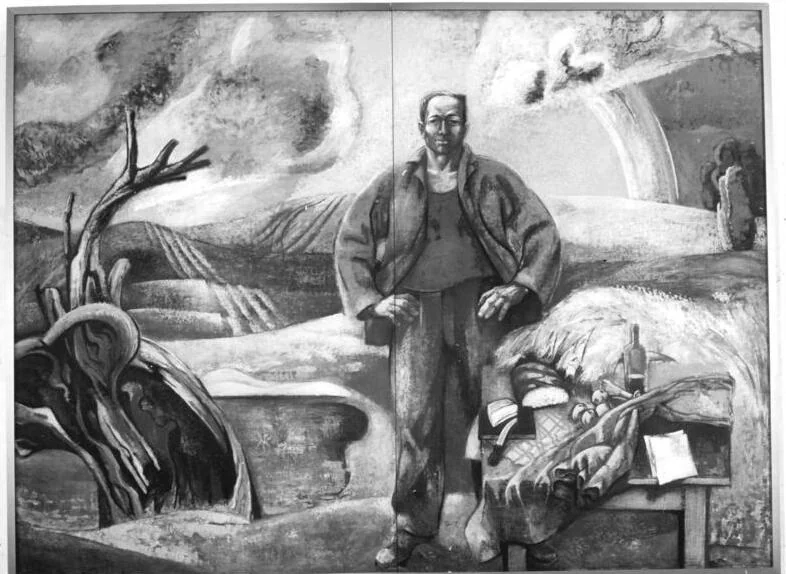
Image from Wikipedia
Image from Wikipedia
Wolfram Schubert – Painter, Graphic Artist, and University Lecturer with the Handwriting of DDR Art History
An Artist's Life Between Realism, Change, and Resistance
Wolfram Schubert, born on September 30, 1926, in Körbitz, belongs to that generation of East German artists whose life path is inextricably linked to the political upheavals of the 20th century. The German painter, graphic artist, and university lecturer developed a body of work that spanned decades between painting, murals, graphics, and site-specific art while remaining strongly rooted in the cultural and social context of his time. ([helle-panke.de](https://www.helle-panke.de/kontext/controllers/document.php/1216.0/5/923.pdf))
Early Years and Artistic Influence
From 1937 to 1943, Schubert attended the Saldria in Brandenburg and experienced the final years of the war as an existential watershed. In 1944, he entered the Wehrmacht of his graduation class; after being captured in Breslau, he was employed until 1949 for the reconstruction of the Soviet economy. These early experiences shaped the biography of an artist whose later work was continually intertwined with history, society, and collective memory. ([helle-panke.de](https://www.helle-panke.de/kontext/controllers/document.php/1216.0/5/923.pdf))
In 1950, he began studying painting at the East Berlin Art Academy and graduated in 1955. This was followed by a research position at the Art Academy in Berlin and graphic training with Tucholski. Even in these early years, he participated in major art exhibitions in the GDR and laid the foundation for a career that was based not only on individual works but also on institutional presence. ([helle-panke.de](https://www.helle-panke.de/kontext/controllers/document.php/1216.0/5/923.pdf))
The Rise in the DDR Art Scene
In 1959, Schubert began his freelance career as a painter and graphic artist, and in 1960, he moved to Neubrandenburg. There, he quickly became a prominent figure in the regional art landscape and participated in all district exhibitions. As early as 1961, he held his first solo exhibition in Rostock, an important step toward establishing a visible, independent artistic position. ([helle-panke.de](https://www.helle-panke.de/kontext/controllers/document.php/1216.0/5/923.pdf))
In the early 1960s, he created wall designs in Blankensee, Pasewalk, and Neubrandenburg. Such site-specific works mark an essential part of his artistic identity, as they did not view art as an isolated product of the studio, but rather as a public intervention in architecture and daily life. Schubert navigated within a field where design, social mission, and formal clarity converged. ([helle-panke.de](https://www.helle-panke.de/kontext/controllers/document.php/1216.0/5/923.pdf))
Travel, Exhibitions, and International Experiences
From the mid-1960s, Schubert's horizons expanded significantly. He traveled to Mali, Guinea, Uzbekistan, Tajikistan, Azerbaijan, and later to Siberia, Syria, Karelia, Rasgard, and North Korea; some of these journeys were connected with his own exhibitions. The Helle-Panke biography describes this phase as a time of intense artistic work, wherein encounters with other countries and visual worlds further opened his painting. ([helle-panke.de](https://www.helle-panke.de/kontext/controllers/document.php/1216.0/5/923.pdf))
In 1965, Schubert became chairman of the artists' association of the Neubrandenburg district, a position he held until 1988. This long tenure illustrates how deeply he was integrated into the cultural fabric of the DDR art scene. Concurrently, numerous exhibition participations occurred both domestically and internationally, including graphic exhibitions in Krakow, Ljubljana, Carpi, Madrid, Frechen, and Christchurch. ([helle-panke.de](https://www.helle-panke.de/kontext/controllers/document.php/1216.0/5/923.pdf))
Between Official Recognition and Conflict
In 1969, Schubert's career took a particularly symbolic turn: His painting “Prager Frühling” was shown for the first time in Weimar, but later renamed “Auseinandersetzung” out of consideration for the political circumstances to avoid its removal from the exhibition. In the same year, he created two frescoes in the administrative building of the District Council of Neubrandenburg, and Schubert received the art prize of the GDR. ([helle-panke.de](https://www.helle-panke.de/kontext/controllers/document.php/1216.0/5/923.pdf))
The tension between official recognition and critical distance runs throughout his work. This is especially evident in later works such as the three versions of the painting of the decaying Schloss Herrenstein, which began in 1976 and were reportedly officially ignored with discomfort. Schubert's painting here represents a chronicle of decay, memory, and social friction. ([helle-panke.de](https://www.helle-panke.de/kontext/controllers/document.php/1216.0/5/923.pdf))
Teaching at the University and Artistic Authority
From 1972 to 1977, Schubert served as a lecturer at the Art Academy in Berlin, where he led the painting department. This period underscores his authority not only as a practicing artist but also as an academic mediator. His influence thus extended beyond his own oeuvre, shaping a younger generation within the Berlin art scene. ([helle-panke.de](https://www.helle-panke.de/kontext/controllers/document.php/1216.0/5/923.pdf))
Further accolades recognizing his lifetime achievement include the Theodor Körner Prize in 1984, the Johannes R. Becher Medal in Gold in 1986, and the Patriotic Order of Merit in Silver in 1987. Such honors firmly position Schubert within the canon of DDR art history and document the institutional recognition of his work over several decades. ([de.wikipedia.org](https://de.wikipedia.org/wiki/Wolfram_Schubert))
Works, Themes, and Artistic Development
Schubert's body of work encompasses panel paintings, murals, enamel works, and facade designs. Examples listed in Wikipedia include early works such as “Im grünen Zimmer” and “Liegende,” as well as site-specific works like “Kampf und Sieg der Arbeiterklasse,” “Erlebnis Kunst,” and “Bettina von Arnim.” The range of these works demonstrates how consistently he shifted between intimate panel painting and monumental public art. ([de.wikipedia.org](https://de.wikipedia.org/wiki/Wolfram_Schubert))
Stylistically, the Helle-Panke biography describes the post-1990 period as an expansion of pictorial themes towards compassion and personal happiness. At the same time, a “brightening color palette” is mentioned, along with a compositional reorientation of the images. This indicates an artistic development where formal clarity was combined with an increasingly cheerful, open visual language. ([helle-panke.de](https://www.helle-panke.de/kontext/controllers/document.php/1216.0/5/923.pdf))
Neubrandenburg, Potzlow, and the Later Work
Schubert lived and worked in Potzlow in Uckermark from 1970 to 2020; today he lives with his wife in Gardelegen, where he is setting up a new studio. To celebrate his 99th birthday, he opened the exhibition “Und ab morgen werde ich 100” in Pirna, presenting his life's work. These later stages reveal an artist who remained productive into advanced age and confidently organized his biography retrospectively. ([de.wikipedia.org](https://de.wikipedia.org/wiki/Wolfram_Schubert))
Even after the end of the GDR, Schubert's work remained visible and discussed. Wikipedia notes more recent reports on restorative and art historical attention, including references to the rediscovery and preservation of DDR art. This speaks to the enduring relevance of his oeuvre within the context of German memory culture. ([de.wikipedia.org](https://de.wikipedia.org/wiki/Wolfram_Schubert))
Cultural Influence and Art Historical Classification
Wolfram Schubert represents an art form that emerged in the tension between state, public, and personal handwriting. His murals, frescoes, and panel paintings were not merely decorative objects but interventions in urban and political spaces. This connection of image production, social mission, and individual composition makes his position art-historically interesting. ([helle-panke.de](https://www.helle-panke.de/kontext/controllers/document.php/1216.0/5/923.pdf))
His career exemplifies how an artist navigated between support, pressure of expectation, and aesthetic self-assertion in the GDR. Thus, his work can be read not only as a series of individual images but as a visual archive of a country, its symbols, conflicts, and upheavals. In this regard, Schubert's art possesses both documentary and poetic power. ([helle-panke.de](https://www.helle-panke.de/kontext/controllers/document.php/1216.0/5/923.pdf))
Conclusion: A Lifework with Historical Depth and Lasting Presence
Wolfram Schubert fascinates with his blend of craftsmanship, cultural anchoring, and political sensitivity. His work navigates through the visual history of the GDR, the contradictions of public art, and a later, mature openness towards humanity and bright colors. For those interested in German art history, mural painting, and the role of the artist in public space, Schubert represents an independent and significant name. ([helle-panke.de](https://www.helle-panke.de/kontext/controllers/document.php/1216.0/5/923.pdf))
Especially because his works interlink architecture, memory, and the present, it is worthwhile to view exhibitions, archives, and preserved works on-site. Schubert's art lives not only in catalogs but in spaces, facades, and images that continue to tell stories today. A visit to his works offers more than art historical knowledge: It demonstrates how visual language makes history visible. ([helle-panke.de](https://www.helle-panke.de/kontext/controllers/document.php/1216.0/5/923.pdf))
Official Channels of Wolfram Schubert:
- Instagram: No official profile found
- Facebook: No official profile found
- YouTube: No official profile found
- Spotify: No official profile found
- TikTok: No official profile found
Sources:
- Wikipedia – Wolfram Schubert
- Helle Panke e.V. – The Artistic Biography of Wolfram Schubert
- DeWiki – Wolfram Schubert
- Image Index of Art & Architecture – Image Index
- Monopol Magazine – Protection for the Source
- Berliner Morgenpost – Neubrandenburg Reveals Covered DDR Art in the Town Hall
- NDR – Once Marginalized, Now Emerging: DDR Art
Upcoming Events
I'M HERE IN THE NOW. Wolfram Schubert - On the Hundredth
Discover the works of Wolfram Schubert at the Neubrandenburg Art Collection until August 30, 2026.
I AM HERE IN THE NOW: Wolfram Schubert. For the Hundredth
Celebrate the artistic legacy of Wolfram Schubert with an impressive exhibition of his works in Neubrandenburg.
I AM HERE IN THE NOW: Wolfram Schubert. For the Hundredth
Discover the fascinating art of Wolfram Schubert in a special exhibition at the Kunstsammlung Neubrandenburg until August 30, 2026.