
Peter Paul Rubens
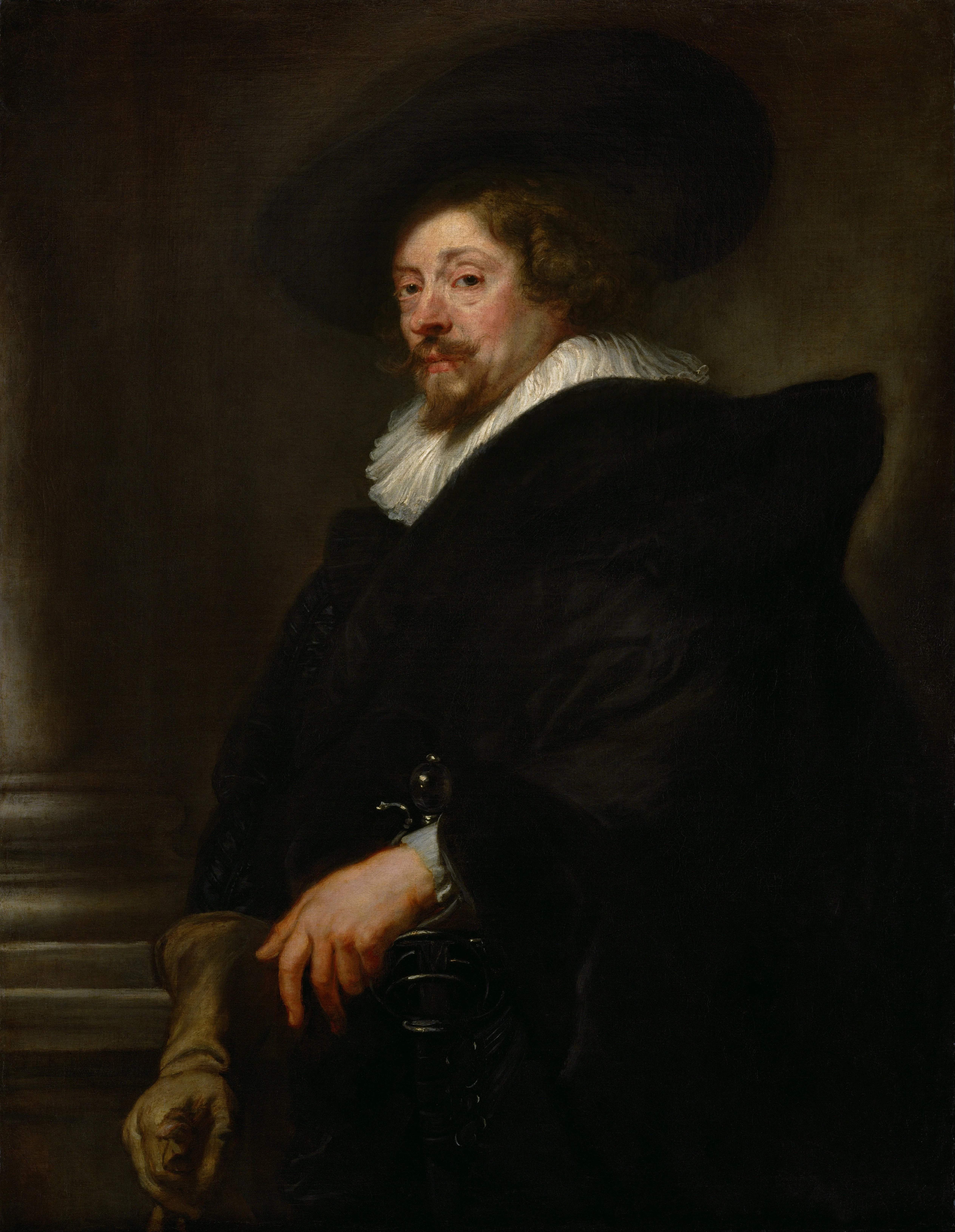
Image from Wikipedia
Image from Wikipedia
Peter Paul Rubens – The Baroque Master of Movement, Color, and Diplomacy
An Artist Who Defined European Baroque
Peter Paul Rubens is regarded as one of the most influential artists of the Baroque period and one of the most important painters in European art history. Born on June 28, 1577, in Siegen and died on May 30, 1640, in Antwerp, he combined artistic virtuosity with diplomatic rank, courtly education, and astonishing productivity. His work comprises over 10,000 paintings, drawings, and designs, ranging from monumental historical imagery to religious scenes, portraits, landscapes, allegories, and decorative large-scale commissions. (de.wikipedia.org)
Biography and Artistic Rise
Rubens’ early life took him from Siegen to Antwerp, where he grew up and received his training. Sources indicate that he developed an intense engagement with Renaissance art at a young age and integrated himself into the craft and intellectual environment of the Dutch-Flemish art scene in Antwerp. In the biographical tradition, he appears as an artist who thought beyond regional boundaries early on, with a career driven by the desire for stylistic expansion and international recognition. (nationalgallery.org.uk)
A decisive step for his artistic development was his stay in Italy. There, he studied the works of the great masters of the Renaissance and combined their formal language with his own ideas of drama, sensuality, and movement. The Italian impressions sharpened his eye for composition, light, and figure staging; later sources describe this synthesis as key to his Baroque style. This not only made Rubens an outstanding painter but also a mediator between Northern European and Italian visual cultures. (rheinische-geschichte.lvr.de)
The Breakthrough as a Painter of European Rank
After returning to Antwerp, Rubens quickly established himself as a sought-after master for altarpieces, courtly portraits, and complex pictorial programs. The National Gallery and Smithsonian emphasize his early connections in Antwerp and the high international esteem he enjoyed during his lifetime. His position was exceptional: he worked not only for ecclesiastical and aristocratic clients but also moved in political circles of European rank. This made him a key figure in an era where art, power, and diplomacy were closely intertwined. (nationalgallery.org.uk)
Workshop, Productivity, and Artistic Practice
Rubens’ immense productivity is inconceivable without his well-organized workshop. The surviving work groups reveal an artist who virtuously combined design, execution, and delegation. This resulted in not only paintings created by his own hand but also models for tapestries, book illustrations, sculptures, architectural decorations, and goldsmith works. This versatility explains why his name remains synonymous with a comprehensive Baroque art form, where painting, space, and decorative art intertwine. (de.wikipedia.org)
Style, Composition, and Baroque Energy
Rubens’ style is considered the epitome of European Baroque: dynamic bodies, monumental gestures, dramatic contrasts, and a visual language of high emotional intensity. French and German references describe him as an artist who fused diverse sources of inspiration into a powerful, cohesive form. This ability to merge vitality and classicism, sensuality and discipline, pathos and structure is what defines his status as a stylistic master. (larousse.fr)
His compositions rely on tension and movement. Figures push into space, body twists create dynamics, and the image architecture guides the gaze with assuredness through complex narrative scenes. Treccani and the National Gallery highlight that Rubens developed a unique Baroque visual language from his dialogue with the Italian Renaissance, characterized by abundance, energy, and theatrical presence. This is precisely where his timeless fascination lies: he painted not just motifs but also orchestrations of power, faith, and human passion. (larousse.fr)
Mythology, Religion, and Representation
Rubens mastered the great themes of art history with astonishing sovereignty. His historical paintings, mythological depictions, and religious scenes combine narrative power with iconographic density and emotional force. At the same time, sources show that he also created portraits, landscapes, and genre scenes, moving far beyond the stereotypical image of the monumental Baroque painter. His oeuvre thus appears like a panorama of 17th-century visual culture. (de.wikipedia.org)
Diplomacy, Court Culture, and European Networking
Rubens was not only an artist but also a diplomat and collector. This role granted him access to the courts of Europe and enhanced his influence far beyond the confines of the studio. Biographical sources emphasize his recognition in both political and artistic circles, portraying him as a man who understood art as a language of communication and representation. In a time of confessional and dynastic tensions, his imagery became a medium of prestige and power. (de.wikipedia.org)
His activities as a collector and his knowledge of Italian art further broadened his horizon. Rubens was an artist with historical consciousness who did not merely copy older models but transformed them productively. Sources repeatedly reference his engagement with Titian, Veronese, Michelangelo, and other Renaissance masters. This resulted in a style that uniquely combined learned reference and immediate visual impact. (rheinische-geschichte.lvr.de)
Reception of His Work and Cultural Influence
Rubens’ significance extends into modern times. Museums and research institutions continue to document the enormous dissemination and presence of his works in European collections, while art historical publications repeatedly confirm his position as a principal representative of Flemish Baroque. His images have sustainably shaped the understanding of movement, corporeality, and Baroque abundance. Those who look at Rubens do not only see an individual artist figure but a whole aesthetic cosmos that has shaped the visual language of the continent. (de.wikipedia.org)
Contemporary research also keeps Rubens at its center. Recent scholarly works focus on attribution, workshop organization, and the significance of his pictorial programs, demonstrating how alive his oeuvre remains. It is precisely the combination of individual handwriting and collective production that keeps him relevant in art history. Rubens thus stands not only for beauty and abundance but also for the historical complexity of artistic production at the highest level. (archiv.ub.uni-heidelberg.de)
Discography, Hits, and Current Projects
There are no musical albums, singles, charts, or current music projects for Peter Paul Rubens. The results found on the web related to "Rubens" predominantly concern other individuals or modern music projects with the same name, not the Flemish Baroque master. His artistic achievements lie in painting, drawing, design, and diplomatic activity; contemporary reception occurs in museums, scholarly publications, and art collections, not in a musical discography. (de.wikipedia.org)
Conclusion: Why Peter Paul Rubens Remains Fascinating Today
Peter Paul Rubens remains intriguing because he was more than a painter: he was a style influencer, networker, diplomat, collector, and master of staging. His art combines intellectual depth with sensual energy, showcasing how powerful Baroque can be when form, content, and movement are in perfect balance. Those who view his works encounter a European figure of the century, whose impact on painting, representation, and the understanding of art is still felt today. To truly experience Rubens, one should see his paintings in museums and in their original formats, for only there does his full Baroque power unfold. (de.wikipedia.org)
Official Channels of Peter Paul Rubens:
- Instagram: no official profile found
- Facebook: no official profile found
- YouTube: no official profile found
- Spotify: no official profile found
- TikTok: no official profile found