
Michel Abdollahi
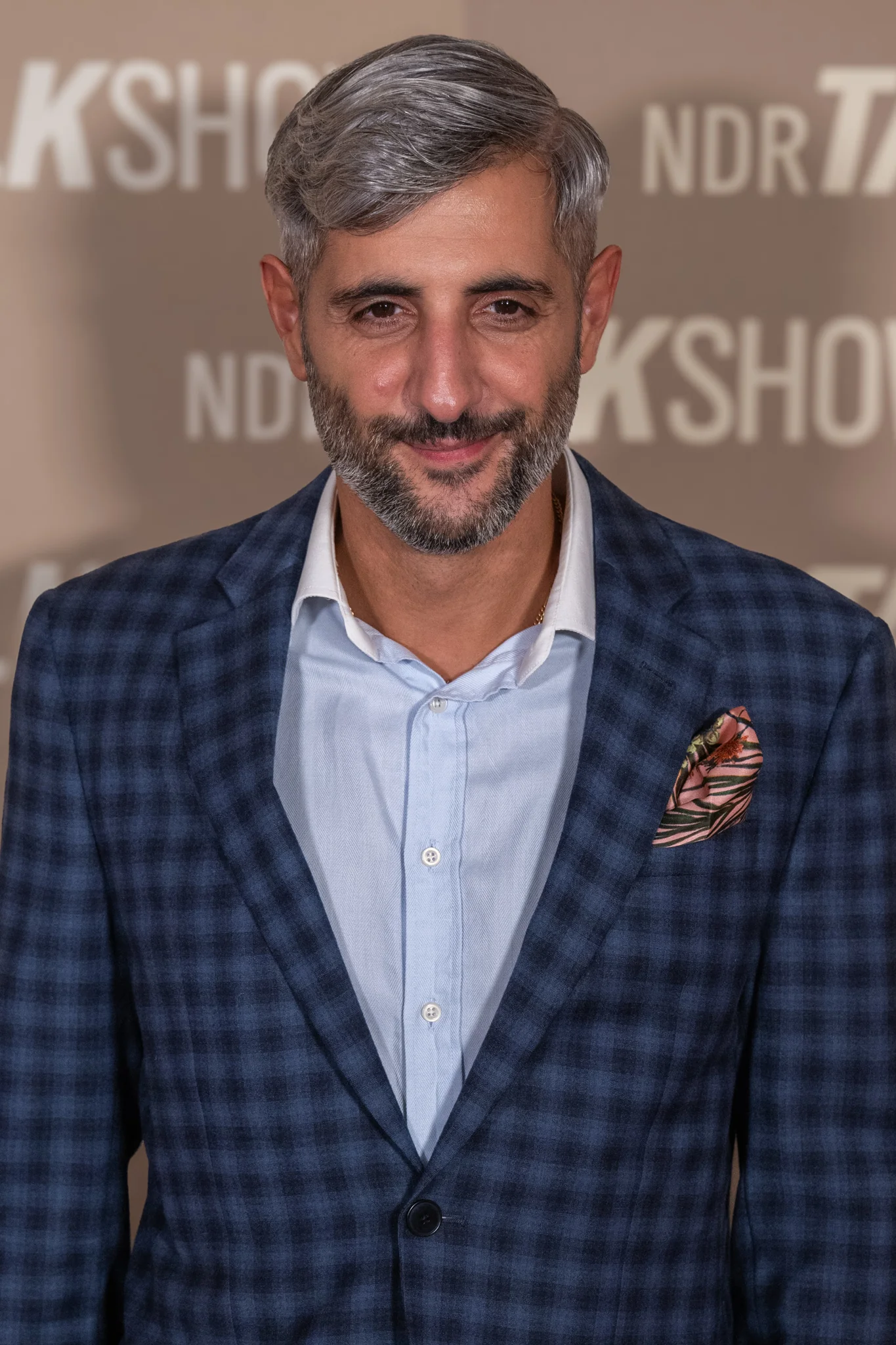
Image from Wikipedia
Image from Wikipedia
Michel Abdollahi – Art, Attitude, and Journalistic Energy Between Stage and Screen
An Artist with a Voice, Gaze, and Stance
Michel Abdollahi, born on April 20, 1981, in Tehran, is one of the most distinctive German-Iranian voices in the German media and cultural space: television presenter, compere, performance artist, poetry slammer, painter, and journalist. His biography combines migration experience, intellectual curiosity, and a pronounced stage presence into a public profile that cannot be reduced to a single format. From an early age, he wove language, performance, and societal observation into an art form that entertains and irritates alike. ([de.wikipedia.org](https://de.wikipedia.org/wiki/Michel_Abdollahi?utm_source=openai))
Biography: From Tehran to Hamburg
Abdollahi was born in Tehran and moved to Hamburg in 1986, where he later studied law and Islamic studies at the University of Hamburg; sources also mention Iranian studies as part of his academic background. This fusion of legal thinking, cultural education, and biographical experience shapes his work to this day. From an early age, he focused not only on art but also on societal friction: the question of how origin, attribution, and the public sphere interact. ([qantara.de](https://qantara.de/artikel/interview-mit-dem-journalisten-und-performance-k%C3%BCnstler-michel-abdollahi-deutschland?utm_source=openai))
His public career began not in traditional journalism but in the Hamburg poetry slam scene, where he was already active at 19. There, he wrote short stories and poems, hosted events, and developed that blend of linguistic power, timing, and presence that would later define his television appearances. The scene became not just a stage for him but a training ground for impact, pace, and emphasis. ([web.de](https://web.de/magazine/unterhaltung/thema/michel-abdollahi?utm_source=openai))
The Breakthrough in Public View
Abdollahi achieved a greater breakthrough with television documentaries on societal issues such as integration, racism, and right-wing populism. His role as a reporter and author in NDR formats particularly made him well-known, as he tackled subjects that others were keen to avoid. In reports like "In the Nazi Village," his journalistic profile became evident: confrontational, precise, and always close to societal conflict lines. For this contribution, he received the German Television Award in 2015. ([qantara.de](https://qantara.de/artikel/interview-mit-dem-journalisten-und-performance-k%C3%BCnstler-michel-abdollahi-deutschland?utm_source=openai))
Abdollahi stands for a journalism that does not rely on cold distance but on direct encounter. His working style combines research with performative strength, giving even interviews and documentaries a clear dramatic tension. This form of media presence makes him a figure between reporter, performer, and cultural commentator. ([qantara.de](https://qantara.de/artikel/interview-mit-dem-journalisten-und-performance-k%C3%BCnstler-michel-abdollahi-deutschland?utm_source=openai))
Fight of the Arts and the Power of the Live Stage
Together with Jan-Oliver Lange, Abdollahi founded the event series "Kampf der Künste" in 2005, which is regarded as Europe's largest provider of poetry slam and stage literature. The project evolved into a formative infrastructure for spoken word in German-speaking regions and helped to bring poetry slam from the niche into broader cultural visibility. In 2015, a record of approximately 5,000 visitors was reached at a poetry slam in Hamburg, evidencing the reach of this movement. ([de.wikipedia.org](https://de.wikipedia.org/wiki/Kampf_der_K%C3%BCnste?utm_source=openai))
This experience as a co-initiator of a large live platform explains much of Abdollahi's career: he thinks in formats, audience engagement, and immediate resonance. For him, the stage is not just an adjunct of television but a source of his expressive means. This is where his strength as a compere lies: he can harness energy, open spaces, and turn conversations into events. ([de.wikipedia.org](https://de.wikipedia.org/wiki/Kampf_der_K%C3%BCnste?utm_source=openai))
Television, Reporting, and Current Projects
For years, Abdollahi has defined the NDR program with the talk format "Käpt'ns Dinner." The show takes place in a decommissioned submarine in Hamburg Harbor and deliberately emphasizes closeness, concentration, and discussions without small talk; the format will continue with new episodes in 2026. This underscores how consistently Abdollahi sees his career not as a linear media job but as an ongoing form of staging and conversational culture. ([ndr.de](https://www.ndr.de/fernsehen/sendungen/kaeptnsdinner?utm_source=openai))
In addition, his recent work with the digital project "Truth.Unscripted," which is conducted under his name and described as a YouTube channel in collaboration with Spiegel TV, adds to his portfolio. There, documentary formats with journalistic intent are presented, including projects focused on climate, species, and nature conservation. Current sources clearly describe the channel as under Michel Abdollahi's responsibility; thus, his digital work remains part of a consistently expanded media effort. ([truth-unscripted.com](https://truth-unscripted.com/faq?utm_source=openai))
Awards, Recognition, and Relevance
Abdollahi received the German Television Award in 2015 for "In the Nazi Village" and the Gustaf Gründgens Prize in 2017; the jury's justification specifically highlights his impact as a compere and co-initiator of "Kampf der Künste." Additionally, lectures and international appearances, for instance, for the Goethe Institute, further strengthen his role as a cultural mediator. His work thus stands for not only media reach but also institutionally recognized quality. ([deutschlandfunk.de](https://www.deutschlandfunk.de/der-performancekuenstler-und-fernsehmoderator-michel-abdollahi-100.html?utm_source=openai))
Musical and Cultural Classification
Michel Abdollahi is not a classical musician with a regular album discography, and verified sources do not reflect a standalone music release as a solo artist. Nevertheless, he operates within a clearly musically shaped public domain: poetry slam, compere culture, stage literature, and performative moderation utilize rhythm, voice, pauses, and emphasis as musical tools. His art thrives on a sense of timing, articulation, and an instinct for crescendo and punchline. ([de.wikipedia.org](https://de.wikipedia.org/wiki/Michel_Abdollahi?utm_source=openai))
This is precisely why his cultural significance is closely tied to live culture. Abdollahi bridges the gap between spoken art and television dramaturgy, between journalism and performance, between popular culture and political analysis. His stage is not merely a place of presentation but a space for stance, conflict, and identity. ([qantara.de](https://qantara.de/artikel/interview-mit-dem-journalisten-und-performance-k%C3%BCnstler-michel-abdollahi-deutschland?utm_source=openai))
Style, Impact, and Public Presence
In interviews and portraits, Abdollahi appears as a precise observer with a clearly identifiable linguistic style. He combines Hanseatic elegance with substantive rigor, adding a special tension to his performances. The mix of authority, irony, and controlled emotionality makes him a moderator who not only leads but opens spaces for interpretation. ([taz.de](https://taz.de/Die-umarmten-mich-einfach/%215267629/?utm_source=openai))
His digital visibility is also part of this impact: official profiles and projects merge audience, journalism, and personality together. At this intersection, his current public image emerges – an artist and journalist who informs, stages, and takes a position simultaneously. This is the source of his relevance in the German cultural and media landscape. ([linktr.ee](https://linktr.ee/michelabdollahi?utm_source=openai))
Conclusion: An Artist Who Turns Conversations into Events
Michel Abdollahi fascinates because he connects attitude with form: he thinks like a journalist, speaks like a performer, and presents like a stage artist. His career spans poetry slam, award-winning documentaries, and enduring talk and digital formats. Those who experience him feel how language, presence, and societal insight combine to create a distinct artistic profile. ([de.wikipedia.org](https://de.wikipedia.org/wiki/Kampf_der_K%C3%BCnste?utm_source=openai))
This very mix makes him compelling: Michel Abdollahi represents a public performance that remains intelligent, uncomfortable, and stylistically precise. His work unfolds its full impact where voices, themes, and people confront each other directly. Experiencing him live means encountering media literacy, stage power, and cultural curiosity in a moment. ([web.de](https://web.de/magazine/unterhaltung/thema/michel-abdollahi?utm_source=openai))
Official Channels of Michel Abdollahi:
- Instagram: https://www.instagram.com/michelabdollahi/
- Facebook: No official profile found
- YouTube: https://www.youtube.com/@truth.unscripted
- Spotify: No official profile found
- TikTok: No official profile found