
Johanna Borchert
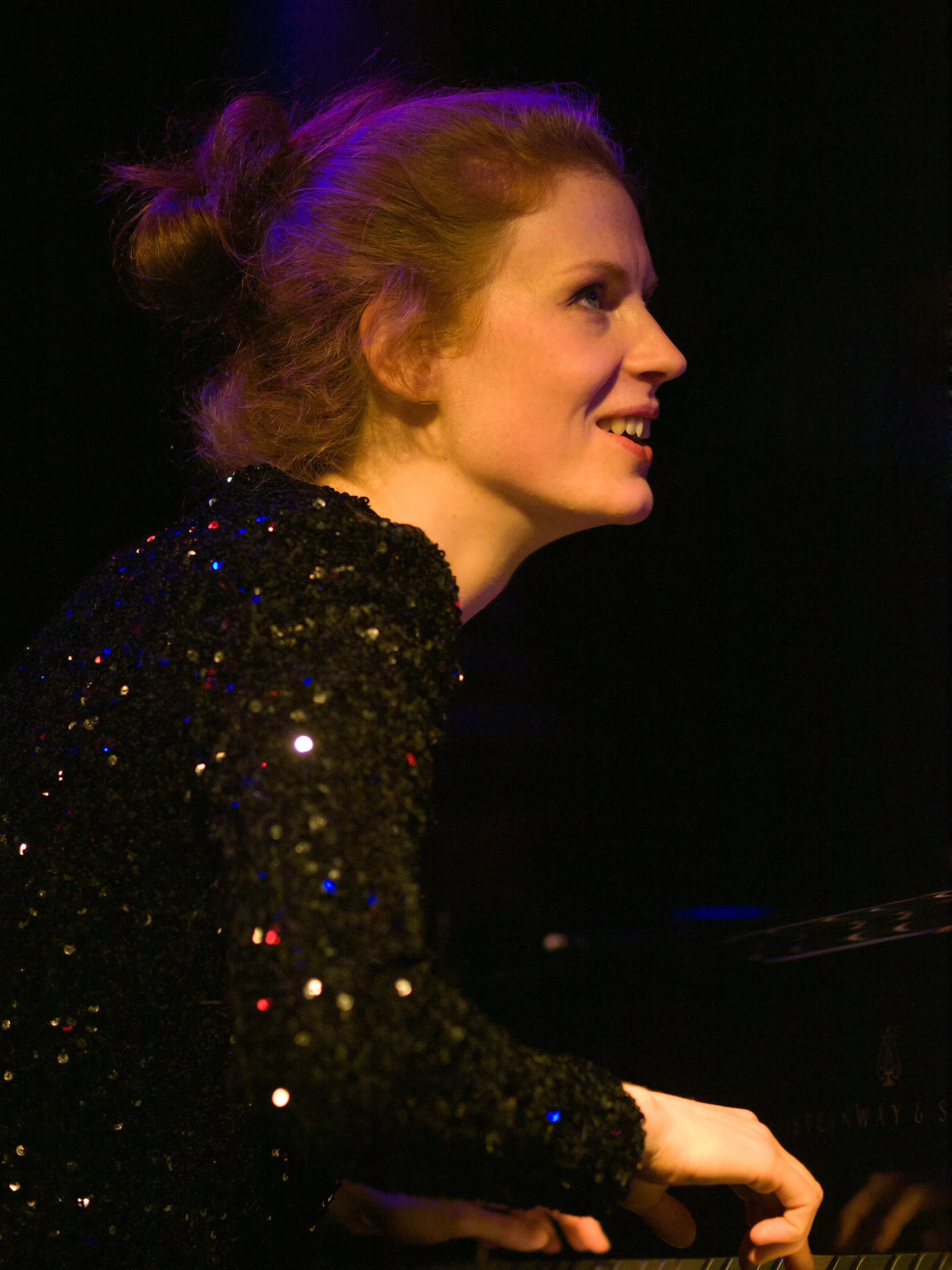
Image from Wikipedia
Image from Wikipedia
Johanna Borchert: The Poetic Border Crosser Between Jazz, Improvisation, and Songcraft
A Berlin Musician with an International Horizon and Distinctive Sound Language
Johanna Borchert, born in Berlin in 1983, is one of the most distinctive voices in the German jazz and improvisation scene. As a jazz pianist, singer, and composer, she combines classical piano playing, free improvisation, songwriting, and vocal experimentalism into an art form that eludes quick categorization. Her career is marked by places of study, collaborations, and projects that took her beyond Berlin early on, sharpening her profile as an internationally connected musician. ([de.wikipedia.org](https://de.wikipedia.org/wiki/Johanna_Borchert))
Biographical Roots: From Berlin to Bremen to Copenhagen
Borchert grew up in Bremen and studied jazz piano and composition at the University of the Arts Berlin and the Rhythmic Music Conservatory in Copenhagen. Her influential teachers included David Friedman, Hubert Nuss, and Django Bates, which led to an early stylistic openness between jazz tradition, complex harmonics, and modern sound exploration. Stays in Chennai, where she studied classical Indian music, and at Mills College in California further expanded her musical horizon. She now lives and works in Copenhagen, from where she advances her projects across Europe and beyond. ([de.wikipedia.org](https://de.wikipedia.org/wiki/Johanna_Borchert))
This biographical movement is more than just a change of location: it reflects a music career based on exchange, experimentation, and the constant expansion of one's own language. Borchert belongs to those artists whose artistic development is not linear, but rather consists of studies, band contexts, solo programs, and interdisciplinary works. It is precisely this complexity that defines her authority in the modern jazz landscape. ([de.wikipedia.org](https://de.wikipedia.org/wiki/Johanna_Borchert))
Early Projects and the Path to the International Scene
Even before her solo career, Borchert made a name for herself with band projects like Little Red Suitcase and Schneeweiss & Rosenrot. With these formations, she toured through numerous countries in Europe, as well as to Asia and North America, which significantly shaped her stage presence and experience in the international concert business. Particularly, Schneeweiss & Rosenrot, which brings together jazz, pop, and experimental elements, became an important focal point in her artistic development. ([de.wikipedia.org](https://de.wikipedia.org/wiki/Johanna_Borchert))
With Schneeweiss & Rosenrot, she won the New German Jazz Award in 2012, while earlier albums by Little Red Suitcase were nominated for the Danish Music Awards in 2006 and 2008. These accolades mark not just a mere success on paper but document the attention Borchert's work garnered early on in the European jazz scene. Her name was associated with an approach that combines risk, sound imagination, and compositional precision even before her solo debut. ([de.wikipedia.org](https://de.wikipedia.org/wiki/Johanna_Borchert))
The Solo Debut and the Liberation of Her Own Voice
Since 2010, Borchert has also performed with solo programs, and in 2014, her first album under her own name, FM Biography, was released. The album was described as a work situated between pop and avant-garde and features notable contributors like Fred Frith, Shahzad Ismaily, and Julian Sartorius. In its reception, the work was perceived as quiet, intimate, and at the same time formally bold, because it does not pit song structure, improvisation, and experimental production against each other, but intertwines them organically. ([de.wikipedia.org](https://de.wikipedia.org/wiki/Johanna_Borchert))
For FM Biography, Borchert received the Echo Jazz Award for Best National Singer in 2015. The recognition of an album that does not rely on simple hits or appealing formulas sends a strong signal regarding her position as a distinctive interpreter with an artistic profile. Critics highlighted the atmosphere, free dynamics, and proximity to experimental soundscapes; at the same time, the work was understood as a personal, yet universally readable song statement. ([de.wikipedia.org](https://de.wikipedia.org/wiki/Johanna_Borchert))
Discography: From Experimental Jazz to Concentrated Song Aesthetics
The discographic notes show a development ranging from early ensemble works through improvisational formats to concentrated solo and duo efforts. Key milestones include Ultrektement (2005), the two Little Red Suitcase releases They’ll Learn Much More Than You’ll Never Know (2006) and Temporarily Out of Order (2007), the nonet album The Big Bang Little Red Big Bang (2012), the solo project Orchestre Ideal (2012), FM Biography (2014), Love or Emptiness (2017), and Amniotic (2022). This discography showcases a musician who continuously repositions herself between composition, improvisation, and song form. ([de.wikipedia.org](https://de.wikipedia.org/wiki/Johanna_Borchert))
Love or Emptiness and Amniotic deepen the impression of an artist who shapes her material with a keen sense for arrangement, space, and emotional tension. With Amniotic, Borchert returned after her second pregnancy in 2022 as a song poet, singer, and pianist with a concept album that particularly emphasizes her authorship. Here, sound is not just accompaniment, but a dramatic tool: reduced gestures, refined dynamics, and a strong presence of voice shape the impact. ([de.wikipedia.org](https://de.wikipedia.org/wiki/Johanna_Borchert))
Collaboration as an Artistic Principle
A striking feature of Borchert's career is the quality of her collaborations. She has worked with Fred Frith and Chris Brown, and later with Miles Perkin, Anders Vestergaard, Mika Forsling, Simon Toldam, Peter Bruun, and other musicians known for their open formats and experimental playing styles. These partnerships underscore that her work is not based on self-staging, but on dialogic production and a fine sense for collective sound shaping. ([de.wikipedia.org](https://de.wikipedia.org/wiki/Johanna_Borchert))
This development continues in her duo playing with Miles Perkin. For the upcoming project The Match, scheduled for release on May 22, 2026, a sound language is being described that combines influences from jazz, contemporary classical music, and expanded improvisation. The project was already communicated in March 2026, which impressively attests to Borchert's current activity. ([ub-comm.de](https://www.ub-comm.de/?p=8498&utm_source=openai))
Stylistic Signature: Intimacy, Experiment, and Spiritual Depth
Borchert's style moves at the intersection of modern jazz, singer-songwriter aesthetics, and free improvisation. Deutschlandfunk described her work as characterized by sonic experiments, such as prepared strings and unusual interventions in the piano, while other portraits emphasized her spiritual openness and emotional intensity. It is precisely this combination of technical sophistication and inner concentration that makes her music so distinctive. ([deutschlandfunk.de](https://www.deutschlandfunk.de/am-mikrofon-die-jazzpianistin-johanna-borchert-100.html?utm_source=openai))
Her concerts are considered special experiences because they incorporate not only musical precision but also visual and dramatic elements. Poetic depth, dense atmosphere, and the deliberate use of light and image projections are repeatedly mentioned in the reception. Borchert demonstrates that jazz in the 21st century does not function solely through virtuosity, but through atmosphere, narrative power, and the courage to reduce. ([musicboard-berlin.de](https://www.musicboard-berlin.de/johanna-borchert/?utm_source=openai))
Cultural Influence and Reception in the Music Press
In the music press, Borchert has repeatedly been described as an artist with her own cosmos. Der Tagesspiegel emphasized her affiliation with projects that traveled worldwide and highlighted her turn to her own name as an important step. Such classifications indicate that Borchert is not perceived as a marginal figure in jazz, but as a prominent musician with a clear aesthetic standpoint between pop proximity, avant-garde, and improvisational art. ([tagesspiegel.de](https://www.tagesspiegel.de/kultur/kaugummi-im-klavier-3682084.html?utm_source=openai))
The album reception also points to her cultural significance: FM Biography was referred to as a masterpiece of quiet tones, while later works like Amniotic once again underscored her ability to translate personal experiences into musical form. Her involvement in theater productions, where she significantly utilized solo piano improvisation, adds a performative and interdisciplinary dimension to her profile. Borchert thus represents a European contemporary music that consciously transcends genre boundaries. ([tagesspiegel.de](https://www.tagesspiegel.de/kultur/kaugummi-im-klavier-3682084.html?utm_source=openai))
Current Projects and Artistic Presence
With Amniotic, Borchert presented a work in 2022 that marked her return as a songwriter and pianist. In 2023 and 2026, further activities followed, including performances and the new duo format with Miles Perkin, which appears under the title The Match. This continuity shows that Borchert's career is not resting on past accolades but remains productive, exploratory, and open to new constellations. ([de.wikipedia.org](https://de.wikipedia.org/wiki/Johanna_Borchert))
Especially in a scene where much is oriented towards trend cycles, Borchert's work appears remarkably timeless. Her music career does not follow a short-term strategy but rather a consistent artistic development that treats improvisation, composition, and singing as equally valid forms of expression. Thus, she remains a musician whose work deserves sustained attention both in concert halls and on recordings. ([de.wikipedia.org](https://de.wikipedia.org/wiki/Johanna_Borchert))
Conclusion: Why Johanna Borchert Remains One of the Most Exciting Voices in European Jazz
Johanna Borchert combines sonic curiosity, compositional precision, and an extraordinary stage presence into an artistic signature that is rarely so independent in the German-speaking jazz scene. Her biography reflects training, travel, collaborations, and accolades, but what is crucial is the consistency with which she has developed a distinctive musical form from all these stages. Anyone wanting to experience jazz, improvisation, and poetic songwriting beyond the routine should see Johanna Borchert live on stage. ([de.wikipedia.org](https://de.wikipedia.org/wiki/Johanna_Borchert))
Official Channels of Johanna Borchert:
- Instagram: No official profile found
- Facebook: No official profile found
- YouTube: No official profile found
- Spotify: No official profile found
- TikTok: No official profile found
Sources:
- Johanna Borchert – Official Website
- Wikipedia – Johanna Borchert
- ARD Kultur / Jazzlabor – Johanna Borchert, 2026
- Deutschlandfunk – On the Microphone: The Jazz Pianist Johanna Borchert
- Musicboard Berlin – Johanna Borchert
- Der Tagesspiegel – Portrait of the Musician Johanna Borchert
- AVIVA-Berlin – Johanna Borchert: FM Biography
- Uta Bretsch Communications – Johanna Borchert & Miles Perkin: The Match