
Ephraim Kishon
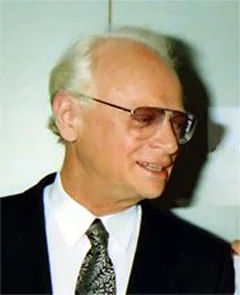
Image from Wikipedia
Image from Wikipedia
Ephraim Kishon: The Satirist Who Transformed Everyday Life into Literature, Theater, and Film
A Century-Old Mind of Satire Between Budapest, Israel, and the World
Ephraim Kishon is considered one of the defining voices of modern satire. Born as Ferenc Hoffmann in Budapest and later becoming Ephraim Kishon in Israel, he combined biographical breaks, experiences of exile, and subtle humor into a body of work with international resonance. His writing revolved around everyday Israeli life, including family dynamics, bureaucracy, and the comical mechanisms of ordinary survival. This blend of lightness, precision, and political sharpness made him one of the most successful satirists of the 20th century in the German-speaking world. (de.wikipedia.org)
From Hungarian Art Student to Hebrew Chronicler of Everyday Life
Kishon was born in 1924 in Budapest to a Jewish family and studied art history and sculpture after school. He began writing humorous essays and theater texts at an early age before the war radically changed his life. The time of persecution, fleeing from a transport heading to Sobibor, and hiding under a false identity shaped his perspective on power, arbitrariness, and the absurdity of human systems. After the war, he returned to Hungary before emigrating to Israel in 1949, where he received a new name and a new literary home. (ephraimkishon.com)
This second birth made Kishon’s career unique. In Israel, he learned Hebrew at an astonishing pace and soon began writing satirical columns that observed the new society with a sharp eye, yet never without affection. His language combined wordplay, neologisms, and a precise comedy of the environment, making his texts not only entertaining but also illuminating social realities. The immigrant became a chronicler of the land of immigration, and the survivor became an observer of daily routines. (ephraimkishon.com)
The Breakthrough: Columns, Short Stories, and the Power of Hebrew Humor
Kishon achieved his true breakthrough with journalistic continuity and literary discipline. From 1952, he wrote the column "Chad Gadja" in the daily newspaper Ma’ariv, which became one of the most popular satirical voices in Israel for decades. Prior to this, he had published in smaller publications and sharpened the pointed observations that later made him famous with early short forms. His first book in Israel compiled columns that distilled his experiences as an immigrant and his ironical view of daily life. (de.wikipedia.org)
His success was based on a unique dual movement: Kishon wrote deeply rooted in Israeli reality while being so universal that his texts transcended language and national boundaries. The English translation of his book "Look Back Mrs. Lot" was selected as "Book of the Month" by the New York Times in 1959, marking the beginning of his international career. His books were published in dozens of languages, and in the German-speaking world, he became a mass phenomenon, supported by Friedrich Torberg's translations and later by additional German versions. (de.wikipedia.org)
Theater, Film, and the Art of Satirical Exaggeration
Kishon was not only an author of short stories and columns but also a significant playwright and filmmaker. In 1953, his play "Der Schützling" premiered at the Habimah National Theatre, followed by his directorial debut with "Sallah – or: Trade Daughter for Apartment" in 1964. The film was nominated for an Oscar as the first Israeli production ever and marked the beginning of international recognition of his film work. (de.wikipedia.org)
Later works like "Good Night, Constable!" also received Oscar recognition, and Kishon’s films won multiple awards. His satirical material thrived on precise timing, character drawing, and sensitivity to the social friction from which comedy arises. He excelled particularly in showcasing environments from within rather than caricaturing them from the outside: newcomers, officials, families, middle-class citizens, and the entire machinery of everyday life. (de.wikipedia.org)
Literary Style: Bureaucracy, Family Comedy, and Political Irony
Content-wise, Kishon targeted the small and large absurdities that hold societies together while rendering them ridiculous. Bureaucracy, politics, modern art, and the art market were among his preferred targets, yet his tone remained playful and pointed rather than aggressive. Especially where he exposed the unreasonable in the rules of everyday life, his satire gained elegance and reach. (de.wikipedia.org)
His most famous books and texts balance between family humor, social satire, and political observation. Works such as "Der Blaumilchkanal" and "Turn Around, Mrs. Lot!" became classics in the German-speaking world because they translated the local into universally understandable comedy. Kishon's characters are rarely mere caricatures; they embody contradictions, vanities, and hopes, which is why they feel so vividly alive. This art of exaggeration with a human core defines his entire body of work to this day. (de.wikipedia.org)
Success in the German-Speaking World and Cultural Impact
A significant part of Kishon’s fame originated in the German-speaking world, where his books sold millions. The particular historical tension of his popularity made his success even more remarkable: in Germany, he found a vast audience, even though his biography was marked by persecution and flight. Kishon himself commented on this contradiction with his characteristic irony and relied on humor as a form of communication. (de.wikipedia.org)
His influence extends beyond literature. His characters, language, and fundamental satirical patterns have shaped modern Israeli cultural understanding, and continue to live on stage and screen today. Kishon’s work belongs to those rare cases where entertainment, cultural self-description, and critical societal analysis form a lasting connection. This is precisely where his authority lies: in the combination of linguistic artistry, contemporary diagnosis, and widely received popularity. (jfc.org.il)
Latter Years, Awards, and Legacy
Kishon received numerous awards throughout his life, including recognition for his film work and for his overall contribution. In 2002, he was awarded the Israel Prize for his life's work, one of the highest honors in the country. He spent his final years in Switzerland; he died on January 29, 2005, in Meistersrüte in the canton of Appenzell Innerrhoden. (whoswho.de)
Even after his death, Kishon remains present not only through reissues and stage adaptations but also through anniversary events and cultural retrospectives. For his 100th birthday in 2024, contributions, broadcasts, and events have appeared that underline his status as a lasting figure in German-Israeli cultural history. His work remains relevant because it does not trivialize the comedy of life but rather dissects it: precisely, intelligently, and with a distinctive sensitivity to human weaknesses. (merkur.de)
Current Projects and Publications
Since Ephraim Kishon passed away in 2005, there are no new albums, singles, or contemporary music projects of his own. What is relevant today are anniversary programs, readings, festival references, and reinterpretations of his texts that have resurfaced in 2024 around the occasion of his 100th birthday. His work is therefore not continued but continually re-read, performed, and updated in cultural memory. (merkur.de)
Discography and Critical Reception
Kishon does not have a classical music discography; his oeuvre consists of books, columns, plays, and films. Nevertheless, his work can be read like an extensive artistic compilation: with early Hebrew texts, international translations, theatrical successes, directorial works, and late pieces on modern art criticism. In reviews, he has been described as a master of everyday wit, a political satirist, and a precise observer of social routines. (de.wikipedia.org)
The critical appreciation highlights three elements in particular: his linguistic inventiveness, the tremendous popularity of his books, and the cultural impact of his characters and themes. Especially in the German-speaking world, he was not only read but also became an integral part of popular culture. His satire has outlasted trends because it did not gather short-term punchlines but unveiled structures of everyday life that continue to remain understandable. (de.wikipedia.org)
Conclusion: Why Ephraim Kishon Continues to Fascinate Today
Ephraim Kishon remains intriguing because his work consists of life experiences, literary precision, and unwavering observational skills. He wrote about bureaucracy, family, politics, and art, but always also about human vulnerability within the system. Those who read him or watch his films encounter not merely a storyteller of jokes but a great satirist with a historical memory and a deep sense of composition, rhythm, and timing. Those who experience him live in readings, stage adaptations, or film screenings instantly recognize how present his comedy remains. (de.wikipedia.org)
Official Channels of Ephraim Kishon:
- Instagram: No official profile found
- Facebook: No official profile found
- YouTube: No official profile found
- Spotify: No official profile found
- TikTok: No official profile found
Sources:
- Wikipedia – Ephraim Kishon
- Ephraim Kishon Official Website – Biography / Books / Films
- Ephraim Kishon Official Website – Bio
- Jüdische Allgemeine – Ephraim Kishon: 100 Years of Human Comedy
- Jewish Film Center – Films by Ephraim Kishon
- ORF Ö1 – Ephraim Kishon’s 100th Birthday
- NDR – 100 Years of Ephraim Kishon
- The Jerusalem Post – The Kishon Look: Israel's Third Annual Comedy Festival
Upcoming Events
Schirrhof Nights: NEW GLOBE THEATER – It Was the Lark
Experience a humorous and musical continuation of Romeo and Juliet at T-Werk, Potsdam.
It Was the Lark – Comedy by Ephraim Kishon
Enjoy Kishon's humorous comedy about Romeo and Juliet in everyday life. At T-Werk in Potsdam.