
Diyar
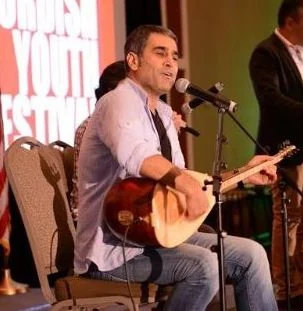
Image from Wikipedia
Image from Wikipedia
Diyar – The Powerful Voice of Kurdish Song Between Political Expression and Melodic Renewal
An Artist Portrait Full of History, Stance, and Musical Depth
Diyar, also known as Diyar Dêrsim or Hozan Diyar, is one of the defining Kurdish voices of his generation. The singer, whose real name is Diyar Yıldırım, was born on December 1, 1966, in Ayvatlı, in the Mazgirt district of Tunceli Province, and has been present with his own solo albums since the 1990s. His artistic career combines origin, political experience, and musical continuity into a profile that extends far beyond mere entertainment.
Origins, Biography, and Early Influences
Diyar grew up in a Kurdish family in the Dersim/Tunceli region, a culturally and historically charged area that significantly shaped his later artistic self-understanding. After his schooling, he moved to Germany, where he faced political issues and found contact with the music group Koma Berxwedan. This step marked the beginning of a career that initially unfolded collectively, and then increasingly as a solo artist.
The connection of exile, memory, and cultural identity runs like a red thread through his entire music career. Diyar works with a repertoire that relies not only on melody and song but also on historical resonance and social significance. It is this tension between personal biography and collective experience that lends a special intensity to his stage presence.
The Path to a Solo Career
His musical start with Koma Berxwedan laid the foundation for an independent artistic development that he consistently pursued as a solo singer from the 1990s onward. Earlier works were more characterized by militant political lyrics, including his most famous song "Biz Apo’ya söz vermişiz," which various sources cite as a significant reference point in his career. With this, Diyar positioned himself early on as an artist whose work is closely tied to political awareness and cultural self-assertion.
Over the years, the focus of his music shifted more towards melodic accessibility and popular forms. His recent albums are classified more as pop music while retaining emotional depth and characteristic expression. This stylistic openness reveals an artist who refuses to be confined to a single genre, consciously evolving his compositions and arrangements.
Concerts, Reach, and Cultural Presence
Diyar has performed at numerous concerts in various regions, including Rojava, Iraqi Kurdistan, Sweden, and the United States. This international presence underscores his significance as a voice of a transnational Kurdish music culture. His performances represent not only musical performance but also representation and cultural connections across geographic borders.
In current reports, Diyar is perceived as a key figure in the Kurdish cultural sphere. A recent contribution describes him as an artist who continues to comment on social and political developments, thus confirming his role as a public voice. This is where a core aspect of his authority lies: Diyar remains not only a musician but also a cultural commentator with a clear stance.
Discography: From Militant Song to Melodic Maturity
Diyar's discography includes a range of albums that track his development well. Notable releases mentioned in sources include "Karwan" (1992), "Cenga Jînê" (1997), "Wey Dinyayê" (1999), "Gulê Neçe" (2002), "Natirsim," "Oxir be Ugur," "Dema Azadî," "Kela Dimdim," "Tîna rojê," "Kehniya Stranan," and "Mam Zekî." These titles already showcase the thematic range between freedom, war, memory, and poetic imagery.
The musical evolution of his albums also reflects the change in his artistic expression. Early recordings are more marked by political urgency and narrative directness, while later productions allow more space for melodic lines, pop influences, and accessible forms. Diyar thus connects musical production and cultural expression into an organic unity.
Style, Voice, and Musical Signature
Diyar's style is rooted in the core of Kurdish music but reveals influences from popular forms and a modern song aesthetic. His voice carries the experience of a region marked by fracture, migration, and memory, imparting a high emotional density to his songs. Notably, he has a keen sense for balancing clear enunciation and melodic warmth.
As an interpreter, he works with a direct, often impassioned articulation that carries both political content and themes of love and homeland. The compositions are often designed for recognizability and collective sing-along without losing seriousness. This creates a profile that resonates both in the concert hall and in cultural memory.
Political Dimension and Cultural Influence
Diyar is relevant not only as a singer but also as a cultural figure in the Kurdish sphere. He is associated with political contexts in sources and has appeared in public settings that extend beyond music in the narrow sense. This proximity to societal debates makes him a credible and engaged voice for many listeners.
His influence is particularly evident in how he has positioned Kurdish music between tradition, political expression, and modern popularity. Diyar represents a generation of artists who do not understand their art as mere entertainment but as carriers of memory, identity, and resistance. This enshrines his enduring significance for Kurdish music culture.
Family, Personal Background, and Public Perception
Even in his private life, Diyar is rooted in music: he is married to the singer Deniz Deman. This connection points to an environment where artistic work and musical experience are intimately intertwined. Such biographical details deepen the image of an artist whose life and work are hardly separable.
The public perception of Diyar is fed by his long-standing presence, his clear positioning, and his continuous artistic activity. Precisely because his songs transcend mere genre boundaries, he resonates with diverse audiences. For many, he remains a musician who is not only heard but experienced as a formative part of their identity.
Conclusion: Why Diyar Continues to Fascinate Today
Diyar unites origin, stance, and musical development into a uniquely coherent artist profile. His career spans from early, militant songs through his time with Koma Berxwedan to solo albums that showcase his voice in ever new facets. Those who wish to understand Kurdish music as a living cultural form encounter a singer of lasting relevance in Diyar.
What remains particularly exciting about him is the connection between political depth and melodic presence. Diyar embodies a musical career stemming from experience, expression, and historical responsibility. For this reason alone, it is worthwhile to not only listen to his songs but to experience him live, where his stage presence and voice can unleash their full power.
Official Channels of Diyar:
- Instagram: No official profile found
- Facebook: No official profile found
- YouTube: No official profile found
- Spotify: No official profile found
- TikTok: No official profile found
- X: https://x.com/_hozan
- SoundCloud: https://soundcloud.com/hozandiyar
Sources:
Upcoming Events
Diyar Dersîm
An evening full of voice, tension, and live atmosphere in the Mercatorhalle Duisburg: Diyar Dersîm plays on 02.05.2026. Secure your tickets now! #Duisburg #Concert
Documentary Films Yar and Roots at Gasteig HP8
Two documentaries, an evening full of memory and perspectives at Gasteig HP8. On 21.05.2026 from 18:00, tickets from 10 Euros. #Munich #FilmFestival