
Dagmar Manzel
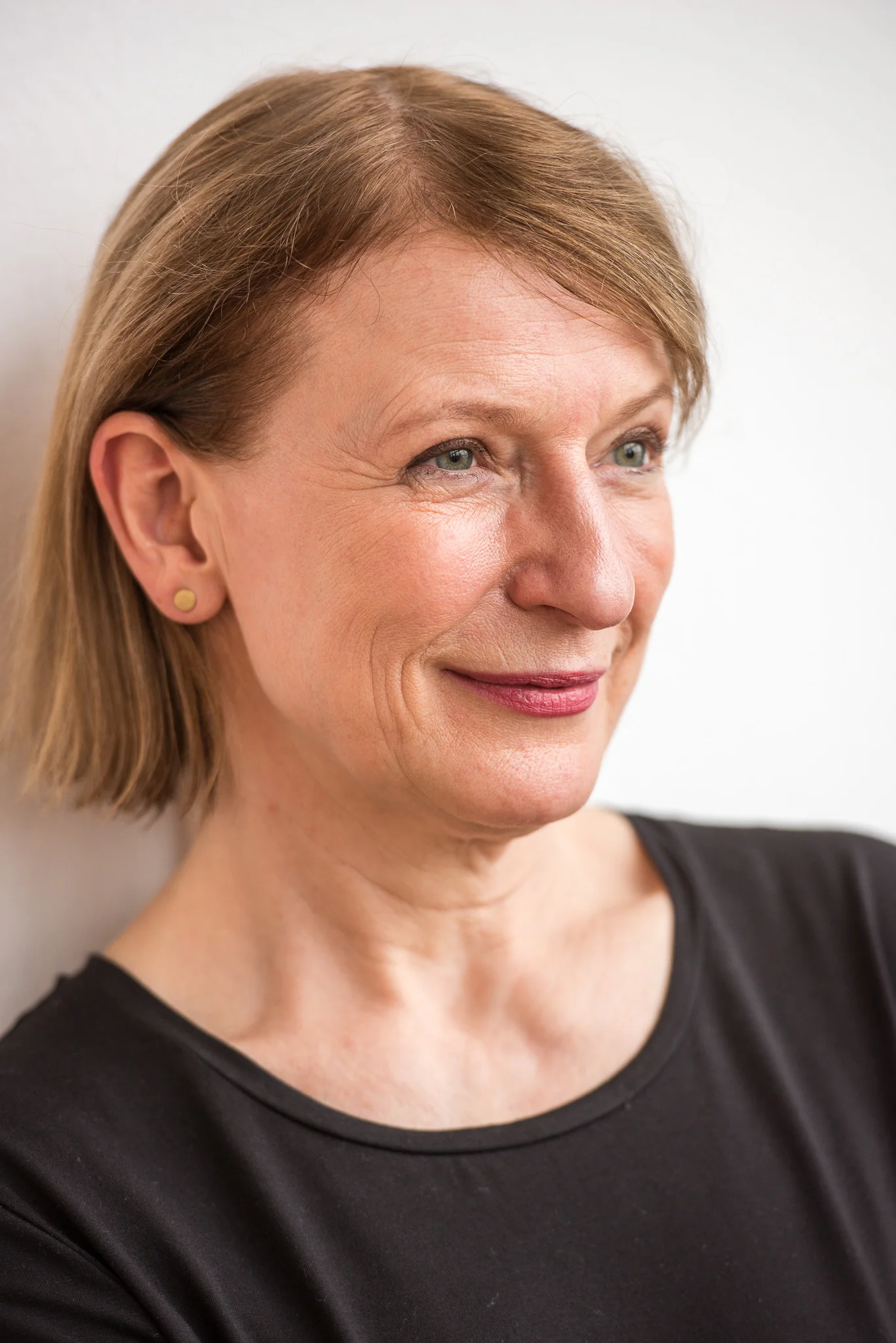
Image from Wikipedia
Image from Wikipedia
Dagmar Manzel
Icon between stage, screen, and chanson: Dagmar Manzel captivates with her voice, performance, and rare charisma
Dagmar Manzel, born in 1958 in East Berlin, is one of the defining artists in the German-speaking cultural sphere. Her musical career is inseparably linked to an extraordinary stage presence: as an actress, singer, and voice in radio plays, she combines acting, singing, and narrative power into a distinctive artistic profile. From early engagements in Dresden to years spent in the ensemble of the Deutsches Theater Berlin, as well as celebrated music theater roles and solo projects, Manzel has undergone an impressive artistic development. Today, she embodies a rare synthesis of acting, chanson tradition, and operetta expertise – marked by precision in composition, arrangement, and interpretation.
Background, training, and foundation of a versatile career
Growing up in East Berlin, Dagmar Manzel discovered her passion for the stage early on. After completing high school, she studied acting at the Staatliche Schauspielschule Berlin (now the Hochschule für Schauspielkunst "Ernst Busch") from 1977 to 1980. The technical foundation of this training continues to shape her artistic work today: textual accuracy, musical timing, and a confident handling of character profiles characterize her interpretations. She made her debut at the Staatstheater Dresden, where she internalized both the art of ensemble performance and the dramaturgical work on classical material.
Even in this early phase, her sensitivity for musical roles became evident – a skill that she later successfully applied in opera and operetta houses. The combination of acting technique and musical intuition quickly became a trademark that attracted both directors and audiences alike.
Deutsches Theater Berlin: artistic home and springboard
In 1983, Manzel joined the Deutsches Theater Berlin, where she worked as a permanent ensemble member until 2001. This long, intensive period shaped her authority as a stage artist. In collaboration with notable directors, she developed a dramaturgy of performance that links psychological precision with physical presence and vocal expressiveness. These years are considered her artistic breakthrough: she demonstrated a range that spanned contemporary drama to literary theater, always with that compelling force that makes her characters vibrant, surprising, and emotionally resonant.
At the same time, her engagements in music theater broadened her spectrum. The title role in "Die Großherzogin von Gerolstein" or the lead role in "La Périchole" showcased how organically she shifts between spoken and sung word. These boundary-crossings fueled her further career – on stage as well as later in film, television, and concert halls.
Film, television, and a popular investigator
Since the early 1980s, Manzel has regularly appeared in film and television productions. In addition to her numerous award-winning television roles, she shaped the public’s perception as Chief Inspector Paula Ringelhahn in the Franconian episodes of the crime series. This role helped her gain a broad audience beyond the music and theater world, without reducing her art to a single format. Her film and television roles are distinguished by subtext, timing, and the ability to portray complex characters as "audible" figures – a quality that stems from her musical work and adds an acoustic sensibility to every scene.
The combination of popularity and artistic quality is central to her authority: productions in the film landscape, sophisticated television movies, and major series demonstrate how sustainably she builds characters, establishes psychological transitions, and considers the musical structure of a scene – from breath to phrasing.
Komische Oper Berlin and the art of the genre: operetta, Weill, Sondheim
As a singer and performer, Manzel shines at the Komische Oper Berlin: Whether as Mrs. Lovett in Sondheim's "Sweeney Todd," as Madeleine de Faublas in "Ball im Savoy," or as Cleopatra in "Die Perlen der Cleopatra" – her stage presence and text interpretation significantly contribute to the impact of these works. In Weill/Brecht's "Die sieben Todsünden," she impresses with her vocal characterization, rhythmic clarity, and precise diction. Here, expertise in the genre combines with historical style certainty: jazz operetta, cabaret tradition, and classical music theater become contemporary narrative forms with clear, present-day statements under her interpretation.
These productions also demonstrate her ability to lead ensembles and create musical highlights dramaturgically. The balance of irony, melancholy, and elegance – a triad that characterizes the practice of operetta and Weill – becomes a captivating theatrical event with her involvement that reaches both opera and theater audiences alike.
Discography: Chanson tradition, Weill songs, and Berlin soundscapes
Dagmar Manzel's discography documents a clear artistic line: chanson, cabaret songs, and operetta numbers as narrative miniatures. With "MENSCHENsKIND" (Deutsche Grammophon), she established a program that connects the Berlin chanson tradition with contemporary interpretative aesthetics. "Sehnsucht" (2019) continues this path: Weill, Hollaender, Spoliansky, and Heymann appear in chamber music arrangements, whose transparency allows her text treatment and colorful vocal lines to shine. The selection ranges from well-known standards to rarely heard treasures, reflecting Manzel's commitment to preserving the repertoire and updating historical sound spaces.
Previously, she presented a Werner-Richard-Heymann program titled "Irgendwo auf der Welt" (2011) – a musical-historical portrait bridging UFA sound films, cabaret, and contemporary history. Her repertoire follows a dramaturgical approach: Each song becomes a scene; each arrangement serves the character. In sum, a discography emerges that not only adds albums but also delivers a holistic picture of Manzel’s musical understanding – serious, sensual, and pointed.
Style analysis: word-tone integration and dramaturgical sound
Manzel's artistic development can be described as a continuous refinement of word-tone integration. She phrases language musically and sings music with an awareness of the text – an interplay that creates dramaturgical clarity. Her timbre works with nuances: dark, velvety mid-range, bright-surfacing highs, all sustained by precise articulation. This singing technique allows for dynamic contrasts that generate narrative tension in both chanson and Weill songs.
In producing her programs, she opts for transparent arrangements: small ensembles, pointed instrumental colors, and room for text clarity. This creates soundscapes that do not imitate the time's color but condense it. Musically, she connects to the aesthetics of the Berlin interwar period, interpreting it with contemporary awareness of gender roles, social fractures, and ambivalences – a stylistic bridge that adds cultural value.
Awards and recognition: benchmarks for quality
Dagmar Manzel has received numerous awards, including prestigious prizes from theater, film, and audiobook sectors. These honors reflect her authority as a boundary-crosser between genres: they not only recognize individual roles but confirm a continuous artistic quality – from precise character portrayals to musical interpretations. The music press and cultural critics also acknowledge her versatility: her operetta and Weill evenings are considered exemplary in textual clarity, humor, and emotional depth; similarly, her acting work is praised for psychological nuance and willingness to take risks in character development.
Particularly in the intersection of music theater and spoken theater, Manzel has set standards: she demonstrates that operetta and chanson – when properly understood – can address existential themes. This perspective shapes her programming concepts and gives her discography and stage work enduring relevance.
Current projects 2024–2026: Directorial debut in opera, repertoire roles, and concert programs
Recently, Manzel has also shifted her expertise behind the scenes: with a production of "Hänsel und Gretel" at the Komische Oper Berlin, she presented a visually striking, audience-friendly interpretation of the classic. Reviews highlighted the colorful design, clear character direction, and musical lightness – a directorial approach that opens opera to a broad audience while maintaining artistic rigor. At the same time, she remains active as a performer in successful productions, such as "Eine Frau, die weiß, was sie will!" or in concert programs where she continues to develop her chanson and Weill expertise.
Concerts, song evenings, and readings expand her current portfolio. The scheduling shows how closely her artistic planning intertwines with the pillars of her career: stage, music, and literature. This multifacetedness is not a mere juxtaposition but a curated program dramaturgy: each role, each song, and each reading deepens the overall profile of an artist who continuously renews her repertoire while also preserving the traditions of Berlin's music and theater culture.
Cultural influence: Berliner Schule, cabaret DNA, and transversal narrative forms
Dagmar Manzel exemplifies a Berliner Schule of the performing arts that understands language, body, and music as equally valid means of expression. Her work strengthens the position of German-language chanson and operetta in today’s repertoire. She preserves the DNA of Weimar entertainment art – wit, melancholy, and social awareness – and translates it into a present that does not smooth over ambivalences. She thus operates also politically in cultural terms: preserving repertoire becomes a culture of remembrance, and entertainment evolves into the art of nuance.
As an audiobook speaker and author (autobiography), she extends this influence in literature and audio production. The fact that reviews repeatedly highlight her resonant speech, the color palette of her voice, and her dramaturgical instinct is no coincidence: it points to an artistic method that knowledgeable integrates music history without becoming merely archival. Thus, a form of musical storytelling emerges that productively intertwines the past and present.
Conclusion: Why experience Dagmar Manzel live?
Dagmar Manzel unites expertise, experience, authority, and trustworthiness. Her artistic development shows a consistent focus on style, voice, and character – from spoken theater to operetta to chanson. Her discography demonstrates an awareness of repertoire and production, and her stage work shapes sound and meaning at the moment of performance. For those seeking the intertwining of text and music, the great art of nuance, and the smile within pain, Manzel offers an unmistakable voice. Live, she unleashes that magnetic power that halts time: an artist who not only plays roles but opens worlds.
Official channels of Dagmar Manzel:
- Instagram: No official profile found
- Facebook: No official profile found
- YouTube: No official profile found
- Spotify: No official profile found
- TikTok: No official profile found
Sources:
- Dagmar Manzel – Official Homepage
- Komische Oper Berlin – Contributors: Dagmar Manzel
- tipBerlin – "Hänsel und Gretel": Review/Analysis
- MOZ – How Dagmar Manzel directs "Hänsel und Gretel"
- Apple Music – Dagmar Manzel (Albums & Tracks)
- Apple Music – Album "MENSCHENsKIND" (Deutsche Grammophon)
- Operetta Research Center – "Sehnsucht" (Album Info)
- Musik-Sammler – "Irgendwo auf der Welt" (CD Details)
- Wikipedia (DE) – Dagmar Manzel
- Wikipedia (EN) – Dagmar Manzel
- IMDb – Biography: Dagmar Manzel
- Rotten Tomatoes – Dagmar Manzel (Filmography Excerpt)
- Munzinger – Dagmar Manzel (Biography, Excerpt)
- Berlin.de – Eine Frau, die weiß, was sie will! (Cast & Info)
- Wikipedia: Image and text source
Upcoming Events
The Lost Man at filmforum Duisburg
The Lost Man
The Lost Man
The Lost Man
The Lost Man
The Lost Man
The Lost Man
The Lost Man
The Lost Man