
Passau
Schrottgasse 2, 94032 Passau, Deutschland
Glass Museum Passau | Opening Hours & Admission Prices
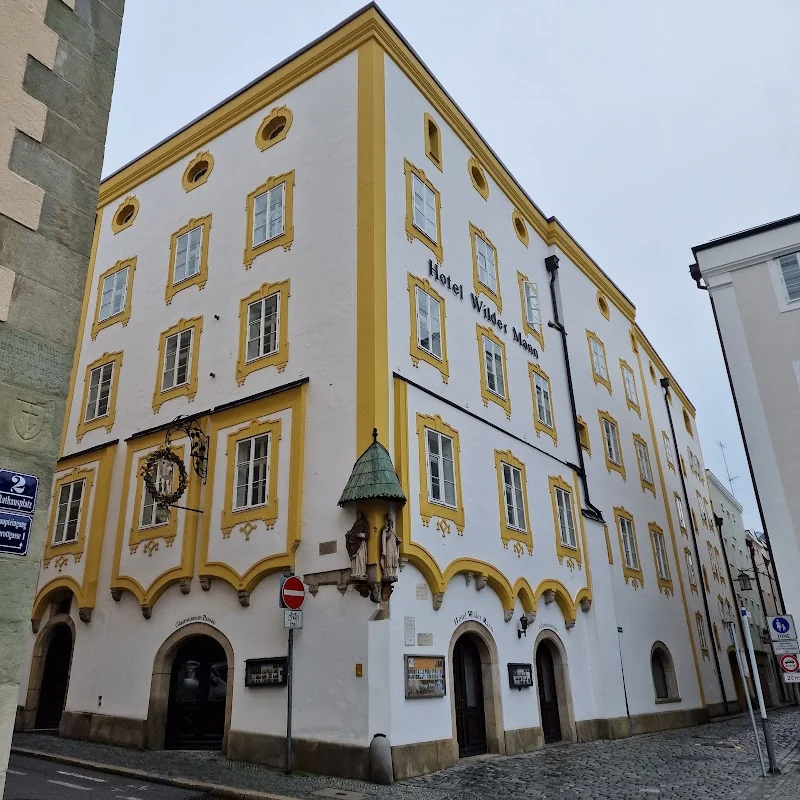
The Glass Museum Passau is one of the most significant addresses for European glass art and is located in the heart of the Passau Old Town directly at the Town Hall Square. Housed in the historic building complex Wilder Mann, it combines over 30,000 exhibits and provides insights into more than three centuries of glass history from the Baroque period to Art Nouveau and beyond. The visit can be ideally combined with a stroll through the Old Town thanks to its central location. Those interested in design, craftsmanship, and culture will find rare originals, masterful decorations, and finest techniques from Bavaria, Bohemia, Austria, and Silesia. Visitor information is clearly structured: The museum is open daily from 9 AM to 6 PM, with a seasonal winter break. Admission prices are transparent, there are discounts and free quotas, and access is uncomplicated by car, train, or bicycle. Additionally, guests benefit from the immediate connection to the Hotel Wilder Mann, which is located in the same building.
Opening Hours Overview
For reliable visit planning, the opening hours are central: The Glass Museum Passau opens daily from 9:00 AM to 6:00 PM. This continuous schedule facilitates appointment planning for individual guests, day travelers, and groups. It is important to note the annually communicated winter break during which the museum remains closed; for the current season, this is set from December 22, 2025, to February 23, 2026. Therefore, a visit can be particularly well planned for the period from late February to just before Christmas. Those planning a city trip to Passau can schedule their museum visit for the morning or afternoon and combine it with other attractions in the Old Town. The location at the Town Hall Square is especially convenient, as public transport, restaurants, and other museums are within walking distance. For families with children, the continuous daily operation is helpful because orientation in the museum is easy thanks to clear signage, and one can discover the diversity of the exhibits without time pressure. International guests will also find bilingual information regarding the opening hours. It is important to note that no regular tours take place during the winter break; announcements are made on the museum's website. Therefore, those planning a trip around the holidays should check whether a visit is possible before December 22 or should be postponed to a date after February 24.
Admission Prices, Tickets, and Discounts
The museum offers a clear, visitor-friendly pricing system: Admission for adults is 8 euros. Discounts are granted, among others, for groups of eight or more, students, and people with disabilities; the reduced rate is 6 euros. Children up to six years of age have free admission when accompanied by their parents. Additionally, holders of certain cards benefit from special conditions: Those presenting a Bayern-Ticket from Deutsche Bahn or a ticket from Donauschifffahrt Wurm & Noé on the day of their visit receive discounted admission. Holders of the PASSAU CARD can visit the museum free of charge. Tickets are issued conveniently on-site at the museum ticket office; thus, one can flexibly adjust the visit to their own daily planning. For travel groups, it is worthwhile to choose times with less crowding in advance and to utilize the discount regulations for groups. Transparently communicated prices and clear evidence for discounts make the ticketing process simple. Those wishing to take literary or in-depth material about the collections can also find publications on the collection and the art of Bohemian glass in the museum – a good complement to the tour that extends the value of the experience beyond the visit. Due to the fair pricing and generous child and card regulations, the Glass Museum Passau is attractive not only for art enthusiasts but also for families and travel groups.
Access, Location in Hotel Wilder Mann & Parking at Römerplatz
The location of the Glass Museum is a major plus: Address is Schrottgasse 2, 94032 Passau, directly at the Town Hall Square in the Old Town. The museum and Hotel Wilder Mann are located in the same historic building complex; the shared entrance facilitates orientation. For arrival by car, the underground parking garage Parkhaus Römerplatz is recommended, which is only about 150 meters from the museum. Short-term parking directly at the hotel/museum is primarily for loading and unloading. From the underground garage, it takes just a few minutes on foot to reach the Town Hall Square and thus directly to the museum. Those arriving by train will find the museum about 1 to 1.5 kilometers east of Passau's main train station; a taxi is recommended with luggage, while a pleasant walk through the Old Town leads to the destination without luggage. Cyclists benefit from the fact that the museum is located on the Danube Cycle Path; bicycles can be securely and free of charge parked in the entrance area or at the hotel reception. The central location makes it easy to combine the visit with other Old Town stations such as the Town Hall, the Danube and Inn promenades, or other museums. Those exploring Passau by car can also use the city's parking guidance system, which leads to available parking spaces. Due to this easily accessible, central location, the Glass Museum Passau is a comfortable cultural station for both day visitors and travelers staying in the Old Town.
Collection Focus: Bohemian Glass, Art Nouveau, and Lötz Highlights
Over 30,000 exhibits document the diversity of European glass from Bavaria, Bohemia, Austria, and Silesia. The focus is on the 19th century to Art Nouveau – the period when artistic glass production in Bohemia reached its peak. Visitors receive a stylistic overview from Baroque and Rococo through Empire, Biedermeier, and Historicism to Art Nouveau and Art Deco. Objects from the glassworks Johann Lötz Witwe hold a special place, whose iridescent decorations and technically demanding executions have shaped international art and exhibition history. The museum's website regularly presents pieces from the collection, including designs by Josef Hoffmann, executed at Lötz around 1900, or works by Franz Hofstötter, which impressively illustrate the design innovations around 1900. The overview is complemented by references to relevant manufactories and refineries of the time and by literature published by the museum. Thus, the in-house publication series “Bohemian Glass 1700–1950” offers deeper insights, for example, into Art Deco and Modernism as well as into workshops like Lötz, Kralik, Moser, or Riedel. The density of exhibits allows for detailed tracking of the developments of individual glassworks – from their inception through their heyday to their decline. For design fans, the stylistic transitions are tangible: from the classicist severity through colorful and form-loving Art Nouveau showcases to the clear lines of modernity. The tour thus offers not only aesthetic enjoyment but also a comprehensible cultural-historical narrative from original objects.
History, Founders, and Special Features of the Building Complex
The Glass Museum Passau was opened on March 15, 1985 – none other than Neil A. Armstrong, the first man on the moon, was the guest of honor at the opening ceremony. The museum is listed in the register of “Nationally Valuable Cultural Heritage” and is thus recognized as culturally outstanding. The founder of the museum is the entrepreneur Georg Höltl (1928–2016), who also developed the idea of “Rolling Hotels” (Rotel Tours). He renovated the building complex of four Old Town houses – including the traditional Hotel Wilder Mann – within two years while exemplary preserving the historical substance and thus created an impressive framework for the collection. The history of the house dates back far: parts of the ensemble have been documented since 1303; one of the corner buildings served for centuries as the city judge's house. The hotel name “Wilder Mann” refers to the long-standing hospitality tradition at this location. Among the historical references is also a prominent guestbook entry: Empress Elisabeth of Austria (“Sisi”) stayed here in September 1862. The connection between the hotel and the museum remains a hallmark of the place: guests of the house reach the exhibition areas directly and experience the combination of historical architecture and artistic glass objects in the authentic context of the Old Town. The fact that the collection and building are owned by the Höltl entrepreneurial family ensures continuity in the care, expansion, and mediation of the collections. This consistent private sponsorship is a special feature in the German museum landscape and explains why the Glass Museum Passau simultaneously publishes, exhibits, and positions itself culturally close to research.
Photos, Shop & Visitor Service
Those who want to get inspired in advance can find regularly updated posts with object photos and detailed descriptions on the museum's website – including Art Nouveau icons from the glassworks Johann Lötz Witwe with designs by Josef Hoffmann or Franz Hofstötter. The city’s tourism website also presents the Glass Museum and offers a compact gallery with impressions from the exhibition rooms. On-site, a range of publications complements the tour: The series “Bohemian Glass 1700–1950” has been published in several volumes and illuminates epochs and workshops from Historicism to Art Deco; it is ideal for deepening after the visit or as a gift for glass lovers. Clear signage ensures orientation in the house; particularly generous is the Biedermeier Hall, which is accessible by elevator and barrier-free. The rest of the museum is spread over several levels with steps and is therefore not fully barrier-free – an important note for guests with mobility restrictions. The location and accessibility are service-friendly: The entrance is located in the Wilder Mann building complex at the Town Hall Square; restaurants, cafés, and other attractions are in the immediate vicinity. Staff at the ticket office and reception are available for questions. Those staying at Hotel Wilder Mann benefit from short distances; the house's booking advantages also include free museum admission. For all other guests, the admission prices are clear, discounts are well defined, and access is well explained. This makes the visit planable and pleasant – from the ticket question to arrival and the in-depth exploration with photos and literature.
Sources:
Mehr anzeigenWeniger anzeigen
Glass Museum Passau | Opening Hours & Admission Prices
The Glass Museum Passau is one of the most significant addresses for European glass art and is located in the heart of the Passau Old Town directly at the Town Hall Square. Housed in the historic building complex Wilder Mann, it combines over 30,000 exhibits and provides insights into more than three centuries of glass history from the Baroque period to Art Nouveau and beyond. The visit can be ideally combined with a stroll through the Old Town thanks to its central location. Those interested in design, craftsmanship, and culture will find rare originals, masterful decorations, and finest techniques from Bavaria, Bohemia, Austria, and Silesia. Visitor information is clearly structured: The museum is open daily from 9 AM to 6 PM, with a seasonal winter break. Admission prices are transparent, there are discounts and free quotas, and access is uncomplicated by car, train, or bicycle. Additionally, guests benefit from the immediate connection to the Hotel Wilder Mann, which is located in the same building.
Opening Hours Overview
For reliable visit planning, the opening hours are central: The Glass Museum Passau opens daily from 9:00 AM to 6:00 PM. This continuous schedule facilitates appointment planning for individual guests, day travelers, and groups. It is important to note the annually communicated winter break during which the museum remains closed; for the current season, this is set from December 22, 2025, to February 23, 2026. Therefore, a visit can be particularly well planned for the period from late February to just before Christmas. Those planning a city trip to Passau can schedule their museum visit for the morning or afternoon and combine it with other attractions in the Old Town. The location at the Town Hall Square is especially convenient, as public transport, restaurants, and other museums are within walking distance. For families with children, the continuous daily operation is helpful because orientation in the museum is easy thanks to clear signage, and one can discover the diversity of the exhibits without time pressure. International guests will also find bilingual information regarding the opening hours. It is important to note that no regular tours take place during the winter break; announcements are made on the museum's website. Therefore, those planning a trip around the holidays should check whether a visit is possible before December 22 or should be postponed to a date after February 24.
Admission Prices, Tickets, and Discounts
The museum offers a clear, visitor-friendly pricing system: Admission for adults is 8 euros. Discounts are granted, among others, for groups of eight or more, students, and people with disabilities; the reduced rate is 6 euros. Children up to six years of age have free admission when accompanied by their parents. Additionally, holders of certain cards benefit from special conditions: Those presenting a Bayern-Ticket from Deutsche Bahn or a ticket from Donauschifffahrt Wurm & Noé on the day of their visit receive discounted admission. Holders of the PASSAU CARD can visit the museum free of charge. Tickets are issued conveniently on-site at the museum ticket office; thus, one can flexibly adjust the visit to their own daily planning. For travel groups, it is worthwhile to choose times with less crowding in advance and to utilize the discount regulations for groups. Transparently communicated prices and clear evidence for discounts make the ticketing process simple. Those wishing to take literary or in-depth material about the collections can also find publications on the collection and the art of Bohemian glass in the museum – a good complement to the tour that extends the value of the experience beyond the visit. Due to the fair pricing and generous child and card regulations, the Glass Museum Passau is attractive not only for art enthusiasts but also for families and travel groups.
Access, Location in Hotel Wilder Mann & Parking at Römerplatz
The location of the Glass Museum is a major plus: Address is Schrottgasse 2, 94032 Passau, directly at the Town Hall Square in the Old Town. The museum and Hotel Wilder Mann are located in the same historic building complex; the shared entrance facilitates orientation. For arrival by car, the underground parking garage Parkhaus Römerplatz is recommended, which is only about 150 meters from the museum. Short-term parking directly at the hotel/museum is primarily for loading and unloading. From the underground garage, it takes just a few minutes on foot to reach the Town Hall Square and thus directly to the museum. Those arriving by train will find the museum about 1 to 1.5 kilometers east of Passau's main train station; a taxi is recommended with luggage, while a pleasant walk through the Old Town leads to the destination without luggage. Cyclists benefit from the fact that the museum is located on the Danube Cycle Path; bicycles can be securely and free of charge parked in the entrance area or at the hotel reception. The central location makes it easy to combine the visit with other Old Town stations such as the Town Hall, the Danube and Inn promenades, or other museums. Those exploring Passau by car can also use the city's parking guidance system, which leads to available parking spaces. Due to this easily accessible, central location, the Glass Museum Passau is a comfortable cultural station for both day visitors and travelers staying in the Old Town.
Collection Focus: Bohemian Glass, Art Nouveau, and Lötz Highlights
Over 30,000 exhibits document the diversity of European glass from Bavaria, Bohemia, Austria, and Silesia. The focus is on the 19th century to Art Nouveau – the period when artistic glass production in Bohemia reached its peak. Visitors receive a stylistic overview from Baroque and Rococo through Empire, Biedermeier, and Historicism to Art Nouveau and Art Deco. Objects from the glassworks Johann Lötz Witwe hold a special place, whose iridescent decorations and technically demanding executions have shaped international art and exhibition history. The museum's website regularly presents pieces from the collection, including designs by Josef Hoffmann, executed at Lötz around 1900, or works by Franz Hofstötter, which impressively illustrate the design innovations around 1900. The overview is complemented by references to relevant manufactories and refineries of the time and by literature published by the museum. Thus, the in-house publication series “Bohemian Glass 1700–1950” offers deeper insights, for example, into Art Deco and Modernism as well as into workshops like Lötz, Kralik, Moser, or Riedel. The density of exhibits allows for detailed tracking of the developments of individual glassworks – from their inception through their heyday to their decline. For design fans, the stylistic transitions are tangible: from the classicist severity through colorful and form-loving Art Nouveau showcases to the clear lines of modernity. The tour thus offers not only aesthetic enjoyment but also a comprehensible cultural-historical narrative from original objects.
History, Founders, and Special Features of the Building Complex
The Glass Museum Passau was opened on March 15, 1985 – none other than Neil A. Armstrong, the first man on the moon, was the guest of honor at the opening ceremony. The museum is listed in the register of “Nationally Valuable Cultural Heritage” and is thus recognized as culturally outstanding. The founder of the museum is the entrepreneur Georg Höltl (1928–2016), who also developed the idea of “Rolling Hotels” (Rotel Tours). He renovated the building complex of four Old Town houses – including the traditional Hotel Wilder Mann – within two years while exemplary preserving the historical substance and thus created an impressive framework for the collection. The history of the house dates back far: parts of the ensemble have been documented since 1303; one of the corner buildings served for centuries as the city judge's house. The hotel name “Wilder Mann” refers to the long-standing hospitality tradition at this location. Among the historical references is also a prominent guestbook entry: Empress Elisabeth of Austria (“Sisi”) stayed here in September 1862. The connection between the hotel and the museum remains a hallmark of the place: guests of the house reach the exhibition areas directly and experience the combination of historical architecture and artistic glass objects in the authentic context of the Old Town. The fact that the collection and building are owned by the Höltl entrepreneurial family ensures continuity in the care, expansion, and mediation of the collections. This consistent private sponsorship is a special feature in the German museum landscape and explains why the Glass Museum Passau simultaneously publishes, exhibits, and positions itself culturally close to research.
Photos, Shop & Visitor Service
Those who want to get inspired in advance can find regularly updated posts with object photos and detailed descriptions on the museum's website – including Art Nouveau icons from the glassworks Johann Lötz Witwe with designs by Josef Hoffmann or Franz Hofstötter. The city’s tourism website also presents the Glass Museum and offers a compact gallery with impressions from the exhibition rooms. On-site, a range of publications complements the tour: The series “Bohemian Glass 1700–1950” has been published in several volumes and illuminates epochs and workshops from Historicism to Art Deco; it is ideal for deepening after the visit or as a gift for glass lovers. Clear signage ensures orientation in the house; particularly generous is the Biedermeier Hall, which is accessible by elevator and barrier-free. The rest of the museum is spread over several levels with steps and is therefore not fully barrier-free – an important note for guests with mobility restrictions. The location and accessibility are service-friendly: The entrance is located in the Wilder Mann building complex at the Town Hall Square; restaurants, cafés, and other attractions are in the immediate vicinity. Staff at the ticket office and reception are available for questions. Those staying at Hotel Wilder Mann benefit from short distances; the house's booking advantages also include free museum admission. For all other guests, the admission prices are clear, discounts are well defined, and access is well explained. This makes the visit planable and pleasant – from the ticket question to arrival and the in-depth exploration with photos and literature.
Sources:
Glass Museum Passau | Opening Hours & Admission Prices
The Glass Museum Passau is one of the most significant addresses for European glass art and is located in the heart of the Passau Old Town directly at the Town Hall Square. Housed in the historic building complex Wilder Mann, it combines over 30,000 exhibits and provides insights into more than three centuries of glass history from the Baroque period to Art Nouveau and beyond. The visit can be ideally combined with a stroll through the Old Town thanks to its central location. Those interested in design, craftsmanship, and culture will find rare originals, masterful decorations, and finest techniques from Bavaria, Bohemia, Austria, and Silesia. Visitor information is clearly structured: The museum is open daily from 9 AM to 6 PM, with a seasonal winter break. Admission prices are transparent, there are discounts and free quotas, and access is uncomplicated by car, train, or bicycle. Additionally, guests benefit from the immediate connection to the Hotel Wilder Mann, which is located in the same building.
Opening Hours Overview
For reliable visit planning, the opening hours are central: The Glass Museum Passau opens daily from 9:00 AM to 6:00 PM. This continuous schedule facilitates appointment planning for individual guests, day travelers, and groups. It is important to note the annually communicated winter break during which the museum remains closed; for the current season, this is set from December 22, 2025, to February 23, 2026. Therefore, a visit can be particularly well planned for the period from late February to just before Christmas. Those planning a city trip to Passau can schedule their museum visit for the morning or afternoon and combine it with other attractions in the Old Town. The location at the Town Hall Square is especially convenient, as public transport, restaurants, and other museums are within walking distance. For families with children, the continuous daily operation is helpful because orientation in the museum is easy thanks to clear signage, and one can discover the diversity of the exhibits without time pressure. International guests will also find bilingual information regarding the opening hours. It is important to note that no regular tours take place during the winter break; announcements are made on the museum's website. Therefore, those planning a trip around the holidays should check whether a visit is possible before December 22 or should be postponed to a date after February 24.
Admission Prices, Tickets, and Discounts
The museum offers a clear, visitor-friendly pricing system: Admission for adults is 8 euros. Discounts are granted, among others, for groups of eight or more, students, and people with disabilities; the reduced rate is 6 euros. Children up to six years of age have free admission when accompanied by their parents. Additionally, holders of certain cards benefit from special conditions: Those presenting a Bayern-Ticket from Deutsche Bahn or a ticket from Donauschifffahrt Wurm & Noé on the day of their visit receive discounted admission. Holders of the PASSAU CARD can visit the museum free of charge. Tickets are issued conveniently on-site at the museum ticket office; thus, one can flexibly adjust the visit to their own daily planning. For travel groups, it is worthwhile to choose times with less crowding in advance and to utilize the discount regulations for groups. Transparently communicated prices and clear evidence for discounts make the ticketing process simple. Those wishing to take literary or in-depth material about the collections can also find publications on the collection and the art of Bohemian glass in the museum – a good complement to the tour that extends the value of the experience beyond the visit. Due to the fair pricing and generous child and card regulations, the Glass Museum Passau is attractive not only for art enthusiasts but also for families and travel groups.
Access, Location in Hotel Wilder Mann & Parking at Römerplatz
The location of the Glass Museum is a major plus: Address is Schrottgasse 2, 94032 Passau, directly at the Town Hall Square in the Old Town. The museum and Hotel Wilder Mann are located in the same historic building complex; the shared entrance facilitates orientation. For arrival by car, the underground parking garage Parkhaus Römerplatz is recommended, which is only about 150 meters from the museum. Short-term parking directly at the hotel/museum is primarily for loading and unloading. From the underground garage, it takes just a few minutes on foot to reach the Town Hall Square and thus directly to the museum. Those arriving by train will find the museum about 1 to 1.5 kilometers east of Passau's main train station; a taxi is recommended with luggage, while a pleasant walk through the Old Town leads to the destination without luggage. Cyclists benefit from the fact that the museum is located on the Danube Cycle Path; bicycles can be securely and free of charge parked in the entrance area or at the hotel reception. The central location makes it easy to combine the visit with other Old Town stations such as the Town Hall, the Danube and Inn promenades, or other museums. Those exploring Passau by car can also use the city's parking guidance system, which leads to available parking spaces. Due to this easily accessible, central location, the Glass Museum Passau is a comfortable cultural station for both day visitors and travelers staying in the Old Town.
Collection Focus: Bohemian Glass, Art Nouveau, and Lötz Highlights
Over 30,000 exhibits document the diversity of European glass from Bavaria, Bohemia, Austria, and Silesia. The focus is on the 19th century to Art Nouveau – the period when artistic glass production in Bohemia reached its peak. Visitors receive a stylistic overview from Baroque and Rococo through Empire, Biedermeier, and Historicism to Art Nouveau and Art Deco. Objects from the glassworks Johann Lötz Witwe hold a special place, whose iridescent decorations and technically demanding executions have shaped international art and exhibition history. The museum's website regularly presents pieces from the collection, including designs by Josef Hoffmann, executed at Lötz around 1900, or works by Franz Hofstötter, which impressively illustrate the design innovations around 1900. The overview is complemented by references to relevant manufactories and refineries of the time and by literature published by the museum. Thus, the in-house publication series “Bohemian Glass 1700–1950” offers deeper insights, for example, into Art Deco and Modernism as well as into workshops like Lötz, Kralik, Moser, or Riedel. The density of exhibits allows for detailed tracking of the developments of individual glassworks – from their inception through their heyday to their decline. For design fans, the stylistic transitions are tangible: from the classicist severity through colorful and form-loving Art Nouveau showcases to the clear lines of modernity. The tour thus offers not only aesthetic enjoyment but also a comprehensible cultural-historical narrative from original objects.
History, Founders, and Special Features of the Building Complex
The Glass Museum Passau was opened on March 15, 1985 – none other than Neil A. Armstrong, the first man on the moon, was the guest of honor at the opening ceremony. The museum is listed in the register of “Nationally Valuable Cultural Heritage” and is thus recognized as culturally outstanding. The founder of the museum is the entrepreneur Georg Höltl (1928–2016), who also developed the idea of “Rolling Hotels” (Rotel Tours). He renovated the building complex of four Old Town houses – including the traditional Hotel Wilder Mann – within two years while exemplary preserving the historical substance and thus created an impressive framework for the collection. The history of the house dates back far: parts of the ensemble have been documented since 1303; one of the corner buildings served for centuries as the city judge's house. The hotel name “Wilder Mann” refers to the long-standing hospitality tradition at this location. Among the historical references is also a prominent guestbook entry: Empress Elisabeth of Austria (“Sisi”) stayed here in September 1862. The connection between the hotel and the museum remains a hallmark of the place: guests of the house reach the exhibition areas directly and experience the combination of historical architecture and artistic glass objects in the authentic context of the Old Town. The fact that the collection and building are owned by the Höltl entrepreneurial family ensures continuity in the care, expansion, and mediation of the collections. This consistent private sponsorship is a special feature in the German museum landscape and explains why the Glass Museum Passau simultaneously publishes, exhibits, and positions itself culturally close to research.
Photos, Shop & Visitor Service
Those who want to get inspired in advance can find regularly updated posts with object photos and detailed descriptions on the museum's website – including Art Nouveau icons from the glassworks Johann Lötz Witwe with designs by Josef Hoffmann or Franz Hofstötter. The city’s tourism website also presents the Glass Museum and offers a compact gallery with impressions from the exhibition rooms. On-site, a range of publications complements the tour: The series “Bohemian Glass 1700–1950” has been published in several volumes and illuminates epochs and workshops from Historicism to Art Deco; it is ideal for deepening after the visit or as a gift for glass lovers. Clear signage ensures orientation in the house; particularly generous is the Biedermeier Hall, which is accessible by elevator and barrier-free. The rest of the museum is spread over several levels with steps and is therefore not fully barrier-free – an important note for guests with mobility restrictions. The location and accessibility are service-friendly: The entrance is located in the Wilder Mann building complex at the Town Hall Square; restaurants, cafés, and other attractions are in the immediate vicinity. Staff at the ticket office and reception are available for questions. Those staying at Hotel Wilder Mann benefit from short distances; the house's booking advantages also include free museum admission. For all other guests, the admission prices are clear, discounts are well defined, and access is well explained. This makes the visit planable and pleasant – from the ticket question to arrival and the in-depth exploration with photos and literature.
Sources:
Upcoming Events
No events found
Frequently Asked Questions
Reviews
Ralf Moeller
2. December 2025
This glass museum was an unparalleled experience. The insane variety and intricacy were almost overwhelming. Beautiful. Bohemia was basically the Silicon Valley of glass art and had an absolute worldwide reputation. Being able to experience all of this just with my wife was the icing on the cake. The museum belonged to us for 2 hours.
Beppi
5. September 2025
Much bigger than expected and definitely much nicer than assumed. Please plan for 1 to 2 hours, the museum spreads over several floors and is structured from top to bottom. Take the elevator to the 5th floor and keep going down. Tip, check out the pictures at the entrance, which is also the hotel entrance, it's worth it.
Christian Wagner
16. November 2025
From the outside, the glass museum seems rather unremarkable, but inside, an impressive world of endless rooms opens up across several floors. More than 30,000 exhibits showcase the full range of Bohemian glass art, from delicate glasses and vases to quirky glass cats. The sheer variety is overwhelming. You can easily spend two hours here and discover everything from breathtakingly beautiful glass art to more daring designs. As a special extra, there's a hotel room to see, where Sissi once stayed and seemingly left quite a bit behind. A visit is definitely worthwhile.
martina lehmacher
8. August 2025
Yes, very interesting. With plenty of time, you could spend hours there.
User1 “Kein Alias”
23. October 2025
At 8 euros, it's not even that expensive. Definitely interesting. And the glass isn't just up in the attic, as one might think. After all, it's all in a hotel. The exhibition is surprisingly large and extensive. It's worth a visit.