
Rolf Miller
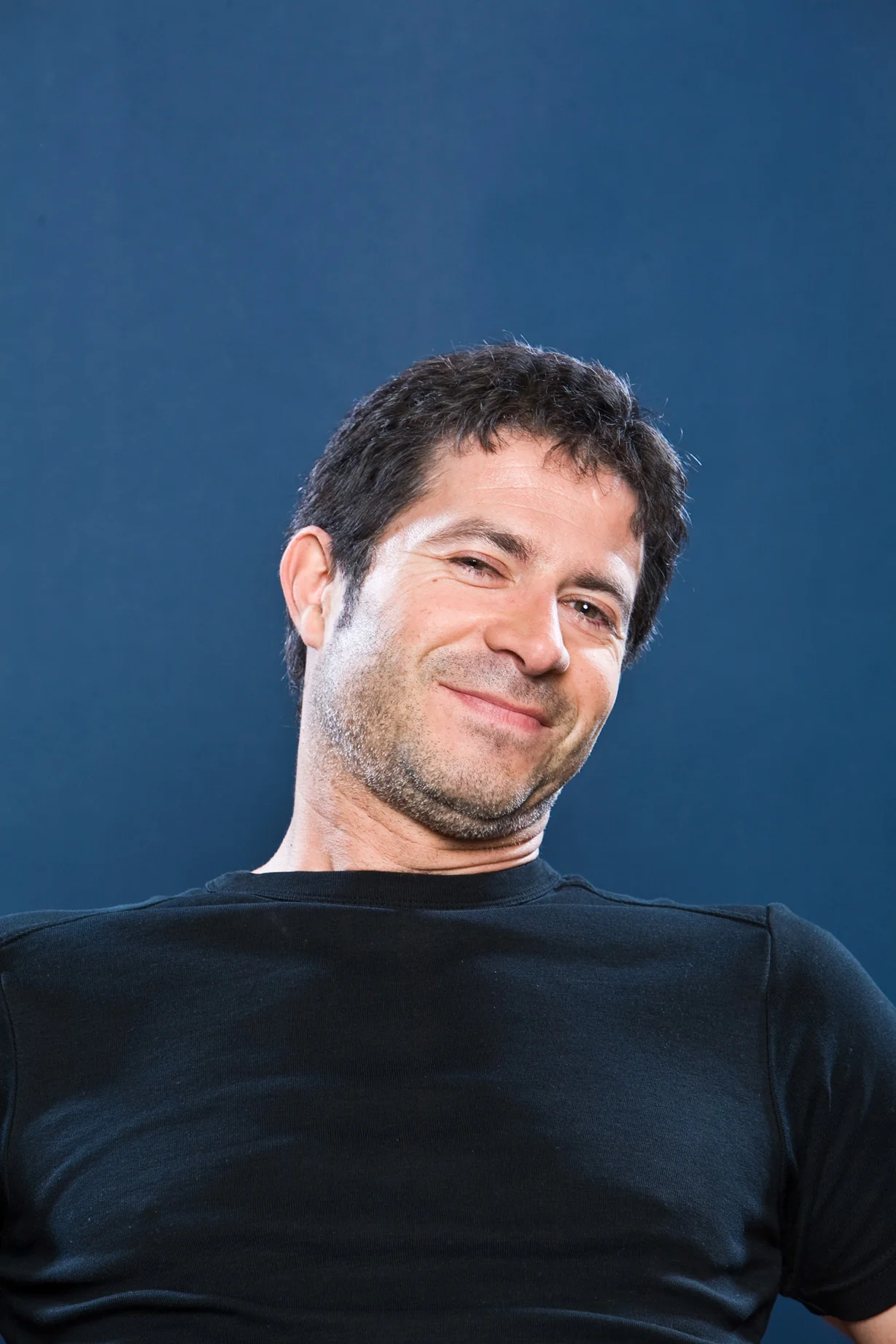
Image from Wikipedia
Image from Wikipedia
Rolf Miller – The Most Consistent Minimalist of the German Cabaret Stages
A cabaret artist who opens entire worlds with half-sentences
Rolf Miller, born on April 21, 1967, in Walldürn, has shaped the German cabaret scene with a distinctive stage persona: minimalist in form, maximally effective in punchlines. His music career in the strictest sense does not exist – his instrument is language, his stage is the cabaret. In the dialect of Odenwald, with deliberately placed pauses for thought and speech, he builds an entire universe of implication from half-sentences. His artistic evolution leads from early university performances to sold-out tours and multiple award-winning programs that have catapulted him into the top tier of political cabaret.
The career of this word acrobat began after graduating from the Frankenlandschule Walldürn and studying administrative sciences in Kehl. Early on, he displayed an instinct for timing, arrangement, and the precise composition of the unsaid – a unique kind of "production" where a chair and a water bottle are sufficient props. Since the 2000s, Miller has been regarded as a master of "composed stammer symphonies" and as one of the most reliable representatives of a cabaret that combines social relevance with artistic radicalism.
Biography: From Odenwald to the Big Stages
Miller made his first performances during his studies in Kehl; his stage premiere took place at the Kulturbühne Biermichel. The breakthrough came in 1994 with a double victory at the Passauer ScharfrichterBeil and the Kleinkunstpreis Baden-Württemberg. In collaboration with media artist Marion Pfaus, he experimented early on with live video and recording elements – a modern, multimedia aesthetic that set his stage presence apart from classic cabaret distinctions. This phase culminated in the cabaret workshop series "Zungenschlag," where Miller's typical figure finally took shape.
By the late 1990s, Miller established himself on public television – regular appearances in classic formats such as "Ottis Schlachthof," "Mitternachtsspitzen," or "Asül für alle" made his laconic understatement accessible to a wide audience. To this day, he lives and works in the Stuttgart area; his proximity to Southern German stages and broadcasters has remained an integral part of his music career as a language and timing artist.
The Stage Persona: Composition of the Gap, Dramaturgy of the Pause
Miller's artistic persona resembles the prototype of the tavern philosopher – self-assured, full of half- and quarter-truths, always on the brink of semantic loss of control. Yet behind the apparent helplessness lies a virtuously composed dramaturgy: incomplete syntax, incoherent images, deliberate misquotes, and the calculated tipping point from the obvious to the absurd. "Behind the pause lurks the punchline" – this principle shapes his arrangement of pauses, slips of the tongue, references, and misplaced causalities. The artistic development of this figure shows how maximum effect arises from minimal gestural material.
Stylistically, Miller combines linguistic musical elements – rhythm, syncopation, retarding effects – with political and social frictions. In his production, "stammer symphonies" arise that possess musical quality through repetition, variation, and the surprising cadence of the unsaid. In every punchline, the question resonates of how public opinion and discourse function when language falters – and yet strikes home.
Career Milestones and Awards: Authority Through Consistency
The list of his awards documents the long-term authority of this approach: from the Passauer ScharfrichterBeil (1994) to the German Kleinkunstpreis (2006, cabaret category) and the German Cabaret Award (2011, main prize). In addition, numerous regional and national honors not only confirmed Miller's artistic development but also placed him within the canon of German-language cabaret history. These prizes attest to the professional recognition for an art form that may appear simple yet is technically highly complex.
For the music and cabaret landscape, Miller exemplifies a genre understanding in which script, performance, direction, and timing create a cohesive stage composition – a production that focuses on the essentials and therefore stands out.
Programs and "Discography": From "Der Spaß ist voll" to "Wenn nicht wann dann jetzt"
Miller's body of work can be read like a discography of German-language cabaret – each program a chapter in the overall cycle of his antihero persona. The early phase was marked by "Brennzeichen D – kurz vorm Höhepunkt" and "Ich Deutscher – nix verstehn." With "Der Spaß ist voll" (1998–2004) and "Kein Grund zur Veranlassung" (2005–2009), he developed the half-sentence aesthetic to maturity. "Tatsachen" (2010–2014) further shifted the balance from stammering to statement towards a finely noted linguistic rhythm, while "Alles andere ist primär" (2014–2018) noticeably sharpened the social friction. "Obacht Miller" (2018–2022) ultimately consolidated the signature; since 2023, "Wenn nicht wann dann jetzt" has been running as a new touring era.
On audio recordings – in cabaret terminology the acoustic publication – central programs are available as CD, DVD, or download: "Der Spaß ist voll" (2003, WortArt), "Kein Grund zur Veranlassung" (2005, CD; 2007, DVD; 2009, Director's Cut), "Tatsachen" (2010, CD; 2014, DVD), "Alles andere ist primär" (2016, CD), "Obacht Miller!" (2021, Download). These releases secure Miller's repertoire in the reception of music and audio culture and document the development of his punchline architecture.
Style Analysis: Minimalism as a High-Performance Form
Miller's methods can be read in terms of musical aesthetics: motif work (running gags, recurring characters like "Achim" and "Jürgen"), motif transformation (misquote, reinterpretation), pauses as fermatas, crescendos of error, abrupt caesuras. The arrangement of language particles creates friction between expectation and fulfillment. The apparent dilettantism is precisely composed; the supposed thoughtlessness uncovers the routine of our own argumentative patterns. Thus, a form of art arises that is both comedic and enlightening – a chamber play of implication, echo, and silence.
In genre comparison, Miller positions himself between political cabaret, language art, and stand-up: he forgoes props, scenery, and quick gag density in favor of a dense subtext. This reduction is his trademark – and the reason critics call him the "most consistent minimalist."
Critical Reception and Cultural Historical Context
The German-language music and cabaret press regularly points to Miller's elegance in circling the "elephant in the room." Observers emphasize the effect of "contrary fascination": the audience enjoys the distance to the unsympathetic yet highly comedic stage figure – while simultaneously recognizing the reflection of their own blind spots. Voices like Loriot praised "something truly special in text and performance," while regional columns acclaim Miller's minimalist stage concept as a masterpiece of timing. The breadth of the reviews creates the image of an artist who comedically condenses the major questions of everyday life using seemingly small means.
In the history of German-language cabaret, Miller's approach fits within the line of radically reduced forms: concentration on language, attitude, and speech music. He expands this tradition with an "aesthetic of stuttering" that elevates the moment between statement and insight to the actual event.
Current Projects 2024–2026: The Tour Era "Wenn nicht wann dann jetzt"
Since 2023, Miller has been touring with "Wenn nicht wann dann jetzt" – a program that presents his character as a gloriously ignorant, vital dullard, and wonderfully half-informed chronicler of the present. In 2024 and 2025, he can be experienced nationwide, accompanied by TV appearances and press responses; the schedule currently runs until at least May 2026. Performances in venues like the Max-Reger-Halle or locations in Franconia and Upper Palatine document the enduring appeal with which Miller reaches his audience across cultural regions.
Content-wise, the program sharpens the core themes: language confusion as a compass, absurdities of everyday life as a diagnosis of the present, the art of evasion as a precise form of revelation. The resulting production of this material shows how Miller's artistic development has become even more focused and economical in recent years – and how confidently he stretches the tension between quiet implication and loud insight.
Stage, Television, and Audio Releases
In addition to live tours, Miller has remained a constant guest in television formats such as "Mitternachtsspitzen," "Asül für alle," "Die Anstalt," "Kabarett aus Franken," and "Ottis Schlachthof." This media presence sustains the reception of his programs and allows for the archiving of cabaret as a live art form in the audiovisual memory. For listeners, the "discography" of his programs makes the subtle differences of the versions audible: like a band that varies songs over years, Miller models his numbers with minimal but impactful changes in text, rhythm, and pacing.
Together with labels such as WortArt and Feez/Sony Music, he has contributed to ensuring that cabaret recordings exist as a legitimate audio format in the streaming age. Thus, Miller shifts the boundary between the ephemeral stage moment and permanence – a gain for research, feuilleton, and fans.
Cultural Influence: Language as a Reflection of Societal Routines
Miller's relevance lies in the culturally critical precision of his minimalism. He negotiates stereotypes, masculinity rituals, tavern logics, and media clichés – not in a didactic way, but exposing the truth behind them. The audience laughs, yet in the echo of the half-sentences, insights linger. In times of overheated discourse, Miller reminds us that form and rhythm of language are crucial: those who stumble show where we all falter. This school of listening has profoundly influenced German-language cabaret in recent decades.
Moreover, the integration of dialect as an artistic means deserves a music-historical perspective: dialect becomes for Miller a tonal coloring, a pitch of the punchline, an instrument of distancing – a finely calibrated "sound design" of language that connects tradition and present.
Voices of the Fans
The reactions from fans clearly show: Rolf Miller captivates people worldwide. On Facebook, comments after shows read: "What timing – I was already laughing in the pauses!" or "His half-sentences say more than a thousand words." Another post summarizes the fascination perfectly: "Minimalism at maximum – please more of this!"
Conclusion: Why You Should Experience Rolf Miller Live
Rolf Miller proves that cabaret does not have to be loud to be effective. His artistic development has produced a form that finds its strength in reduction: speech music instead of show effects, implication instead of overstretch, precision instead of overload. His discography of stage programs is a lesson in arrangement, composition, and production of language. Anyone who wants to understand how a character can simultaneously be exposed and become a mirror for the audience will experience it in Miller's performances – best live, where each pause becomes the score for the punchline.
Official Channels of Rolf Miller:
- Instagram: No official profile found
- Facebook: https://www.facebook.com/rolfmiller.fejsbuck
- YouTube: No official profile found
- Spotify: No official profile found
- TikTok: No official profile found
Sources:
- Rolf Miller – Official Website
- Rolf Miller – Programs (Tour & Content)
- Wikipedia – Rolf Miller
- WortArt – Artist Page Rolf Miller (Label/Publications)
- Apple Music – Rolf Miller (Overview of Releases)
- nmz – German Kleinkunstpreis 2006 (Report)
- OberpfalzECHO – Concert Report "Wenn nicht wann dann jetzt" (15.03.2025)
- Wikipedia: Image and Text Source
Upcoming Events
Rolf Miller live: If not when then now
Munich laughs again: Rolf Miller brings dry cabaret and sharp satire to the stage at Lustspielhaus. 26.04.2026, 19:30. #Comedy
Rolf Miller – "If not now, then when?"
Join us as Rolf Miller presents his new cabaret program in Amberg. An evening full of humor and sharp observations at the ACC.
Rolf Miller
Rolf MillerMi. 13.05.2026 19:30-23:00 UhrBlackbox at Fat Cat (Gasteig)
Rolf Miller: I Say Nothing
Bayreuth gets Rolf Miller in top form: dry, accurate, wonderfully quirky. On 23.10.2026 at DAS ZENTRUM for 30.40 Euro. #Cabaret
Rolf Miller – If not now, then when!
Intelligent cabaret in the Inselhalle Lindau: Half-sentence humor, timing, and satire on point. 13.11.2026, 20:00, from 37.40 €, accessible. Laughing with depth – secure your tickets now. #RolfMiller
Rolf Miller - "I say nothing"
No one says nothing as beautifully as Rolf Miller. The press writes, "A highlight of stuttering and stammering"... about which one must laugh constantly and therefore does not immediately notice the abysses Miller conceals... Always indirectly, always incidentally, almost apathetically, the grandiose satirist presents us with the meaningless nothingness of our existence, with a brutal sense of perception. Do not live your life, dream your dream, because the goal is in the way. - Uh, huh!? - Exactly. Miller shows