
Pjotr Iljitsch Tschaikowski
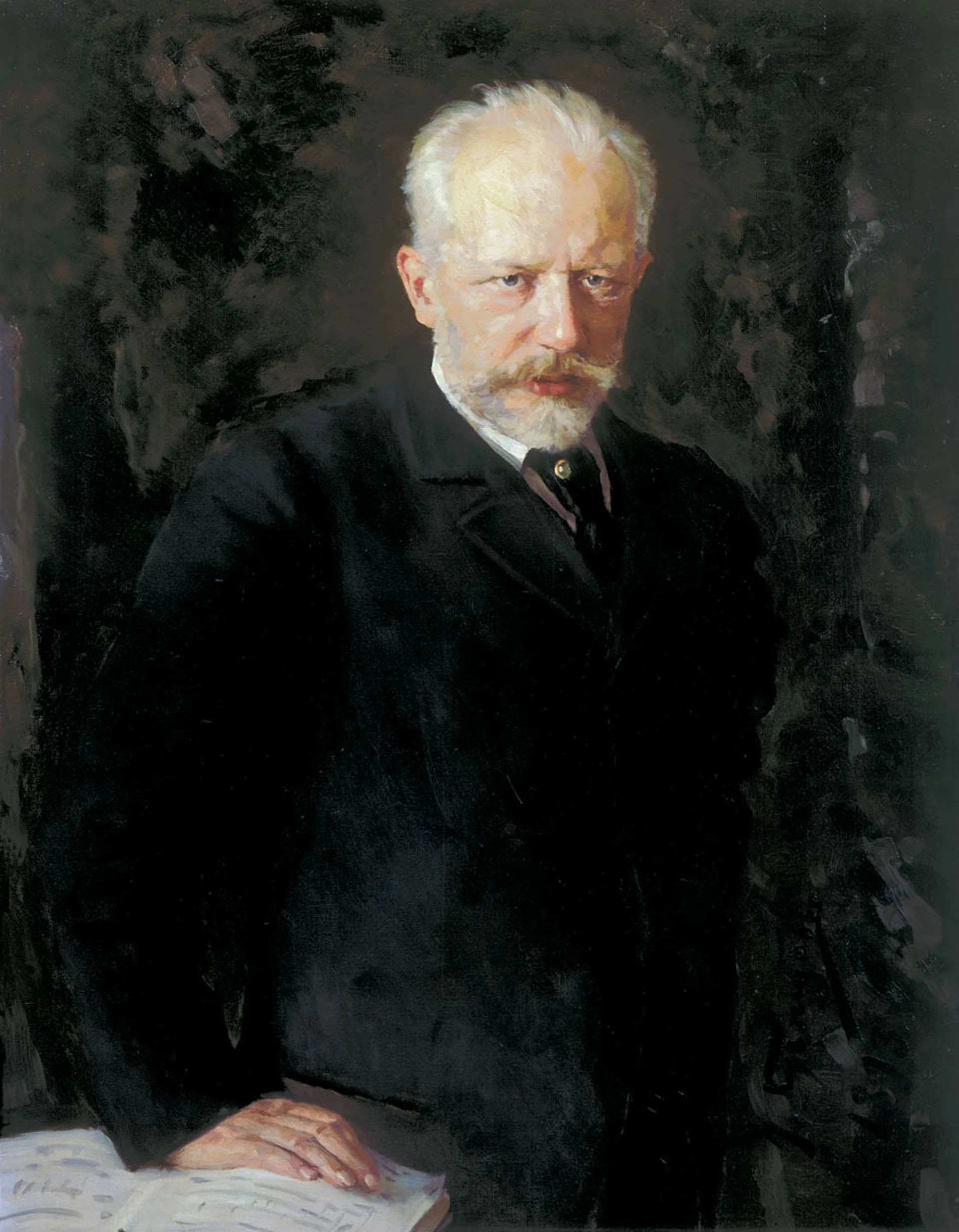
Image from Wikipedia
Image from Wikipedia
Pyotr Ilyich Tchaikovsky – Romantic, Sound Magician, World Heritage of Classical Music
From Russian Romanticism to World Icon: Why Tchaikovsky's Music Resonates Even Today
Pyotr Ilyich Tchaikovsky (1840–1893) is one of the defining composers of the Romantic era, whose works unfold a distinctive blend of melodic catchiness, orchestral richness, and psychological depth. His musical career took him from a lawyer in Saint Petersburg to a celebrated composer on the international stage – a path marked by intense artistic development, personal crises, and groundbreaking successes. Whether as an opera composer, symphonist, or master of ballet: Tchaikovsky's sound language intertwines emotion, structural awareness, and dramatic narrative power into a magnetic stage presence that endures in concert and opera life today.
Early Years and Education: From Judicial Clerk to Composition Graduate
Born in Votkinsk, Tchaikovsky grew up in an education-oriented family and received early piano lessons. Initially, he pursued a legal career and worked at the Ministry of Justice before completely dedicating himself to music, driven by artistic impulse. From 1862, he studied composition, instrumentation, and music theory at the Saint Petersburg Conservatory founded by Anton Rubinstein. This educational foundation, combined with intensive studies of the Viennese Classical and German Romantic traditions, created the technical basis upon which Tchaikovsky developed his personal idiom – an idiom that fused Western formal traditions with Russian melodic and dramatic expression. His artistic development was solidified through engagement with teachers like Rubinstein, quickly making him a distinctive voice in the musical landscape.
Rise and Breakthrough: “Romeo and Juliet” and the 1st Piano Concerto
With the fantasy overture “Romeo and Juliet,” Tchaikovsky made an early statement: symphonic poem, thematic character sharpening, lyrical cantilenas that stick immediately in the memory. He achieved international breakthrough with the 1st Piano Concerto in B minor, Op. 23. After initial sharp rejection by Nikolai Rubinstein, the work had its triumphant premiere in Boston under Hans von Bülow in 1875 and became a cornerstone of the concert repertoire. This success anchored Tchaikovsky in the global music scene and fueled his career as a composer, whose works began to gain recognition beyond Russia. The combination of virtuosic brilliance, orchestral force, and singable melody made the concerto a favorite among audiences – a pattern that shapes much of his instrumental music.
Opera and Ballet: Musical Dramaturgy with Psychological Breath
Tchaikovsky renewed opera from the inside out: “Eugene Onegin” unfolds delicate soul movements in a tightly woven musical narrative; “Pique Dame” heightens the tragedy of obsession with sharply sketched leitmotifs, harmonic shades, and a dramatically compelling climax. He set even clearer standards in ballet: With “Swan Lake,” “Sleeping Beauty,” and “The Nutcracker,” he elevated the genre to symphonic art – a fluid interaction between stage and orchestra pit, where dance numbers, orchestral interludes, and thematic developments seamlessly intertwine. His composition, arranging of dance movements, and highly differentiated orchestration shaped a new era of narrative ballet, whose melodic inventiveness resonates even in pop culture.
Symphonic Works and Concerts: Form Dramaturgy, Passion, Art of Sound Colors
The three late symphonies – No. 4 in F minor, No. 5 in E minor, and No. 6 in B minor “Pathétique” – form the core of Tchaikovsky's symphonic self-examination. Here, formal ambition, rhythmic motor, affect-laden themes, and careful orchestration intersect to create music that makes inner conflicts audible while spanning great arcs. The Violin Concerto in D major, Op. 35, with its lyrical Andante and exuberant finale, is one of the most played works in the solo repertoire. Orchestral fantasies like “Francesca da Rimini,” “Capriccio Italien,” and the “1812 Overture” showcase Tchaikovsky as a master of program music, merging historical color, national idioms, and orchestral power with scenic imagination. His production consistently follows a dramaturgy of tension and release – a hallmark of his artistic development.
Compositional Profile: Melody, Harmony, Orchestration
Tchaikovsky's music thrives on singability and colorful instrumentation. In harmony, he often chose chromatic shades and surprising modulations to blend emotional warmth with tragic depth. His orchestration utilizes woodwind colors for lyrical intimacy, brass for heroic signals, and strings for lush cantilenas. In composition, he worked with thematic condensation, song-like invention, and contrasting tableaux that dramatically engage the listener. The result: a sound language that is both popular and highly artistic – not least because Tchaikovsky balances formal discipline and emotional immediacy. The arrangements of his ballets and the finely-tuned transitions in his symphonies demonstrate his sensitivity to dramatic pacing.
Cultural Context and Influence: Between Western School and Russian Identity
Although Tchaikovsky was not part of the “Mighty Handful,” he anchored Russian elements within an aesthetic shaped by the Western school. This dual rooting explains his international impact: he speaks a universal musical language without denying his origins. His works were performed in Europe and North America during his lifetime – a sign of their structural clarity and emotional readability. In the 20th and 21st centuries, his compositions have remained continuously present: as repertoire pieces in opera and ballet schedules, as benchmarks for conductors, soloists, and orchestras, and as cultural icons influencing film, advertising, and pop music. Tchaikovsky's stage presence in performance tradition acts like a seismograph for orchestral culture: it shows how much Romantic sound discourse continues to resonate today.
Career Milestones and Personal Dynamics: Patronage, Travel, Conducting
The years-long correspondence with patron Nadezhda von Meck provided financial support and artistic freedom. Tchaikovsky undertook extensive travels, increasingly conducted his own works from the late 1880s, and established himself as an authority on international stages. Tours took him to Germany, Great Britain, Bohemia, and the USA, where his music had already found an engaged audience. These biographical steps were marked by a music career that connected composing with public representation – a dynamic interplay that has profoundly influenced the reception history of his works.
Late Years and Legacy: The “Pathétique” as a Personal Confession
The 6th Symphony “Pathétique” represents a culmination of his expressive aesthetics: thematic condensation, audacious formal disposition, and a final resignation that feels almost modern in its slowness. Just days after its premiere, Tchaikovsky died in 1893 in Saint Petersburg. The unresolved cause of death contributed to an aura of myth, yet his musical legacy remained the true motor of his posthumous fame. The “Pathétique” became a cipher of Romantic tragedy – of a composer who united personal turmoil, compositional rigor, and orchestral poetry into a distinctive signature.
Discography in Repertoire Reflection: Major Works and Milestones
In the history of recordings and streaming, Tchaikovsky is among the most recorded composers. Symphonies No. 4–6 are available in legendary cycles; the 1st Piano Concerto and the Violin Concerto are standard works that shape soloist profiles and write interpretation history. The operas “Eugene Onegin” and “Pique Dame” mark cornerstones of the Slavic repertoire and have been documented in benchmark productions. The ballets – led by “Swan Lake” and “The Nutcracker” – are omnipresent every Christmas season, underscoring their cultural reach. Critical reception appreciates the melodic invention, orchestral signature, and dramatic pull; at the same time, it discusses formal vagueness in early works and the balance between programmatic and symphonic – a debate that does not diminish Tchaikovsky's stature but highlights his modernity.
Reception and Present: Constant Presence on Stage and Streaming
Tchaikovsky's music remains omnipresent in the international concert scene. Major venues regularly feature his concertos, symphonies, operas, and ballets. On streaming platforms, new recordings and curated collections continually appear, providing guidance for both beginners and connoisseurs. This vibrant performance tradition tells of an authority that challenges generations of conductors, orchestras, and soloists – interpretatively, technically, stylistically. That his works are both popular and demanding explains their sustainability in the repertoire and their cultural influence to the present day.
Style and Interpretation of Works: What Makes Tchaikovsky Unique
His music is rich in experience: it knows the pathos of triumph, the melancholy of memory, the unrest of inner conflict. From a professional standpoint, Tchaikovsky's nuanced composing technique, finely calibrated arrangements, and sonically rich production combine into a dramatically focused architecture. The balance of cantilena and contrast, of cyclical form ideas and dramatic tension, allows his works to be open to new interpretations. Whether historically informed detail work or highly romantic lush sound – Tchaikovsky's scores can encompass both and reward interpretative imagination with great impact in the hall.
Conclusion: Why Tchaikovsky Continues to Inspire
Tchaikovsky combines heartfelt closeness with compositional precision. His music tells, breathes, and shines – in opera and ballet just as in the concert hall. Those who experience his works live feel the pulse of Romantic sound discourse in timeless presence. The invitation is: Experience Tchaikovsky in the hall and discover how melodic beauty, formal intelligence, and orchestral sensuality create a compelling whole.
Official Channels of Pyotr Ilyich Tchaikovsky:
- Instagram: No official profile found
- Facebook: No official profile found
- YouTube: No official profile found
- Spotify: No official profile found
- TikTok: No official profile found
Sources:
- Wikipedia – Pyotr Ilyich Tchaikovsky
- Encyclopaedia Britannica – Pyotr Ilyich Tchaikovsky
- Tchaikovsky Research – Life & Works
- Apple Music Classical – Pyotr Ilyich Tchaikovsky
- Bavarian State Opera – Biography Pyotr Tchaikovsky
- Cologne Philharmonie – Concert Program Tchaikovsky
- Wikipedia: Image and text source