
Orchester im Treppenhaus
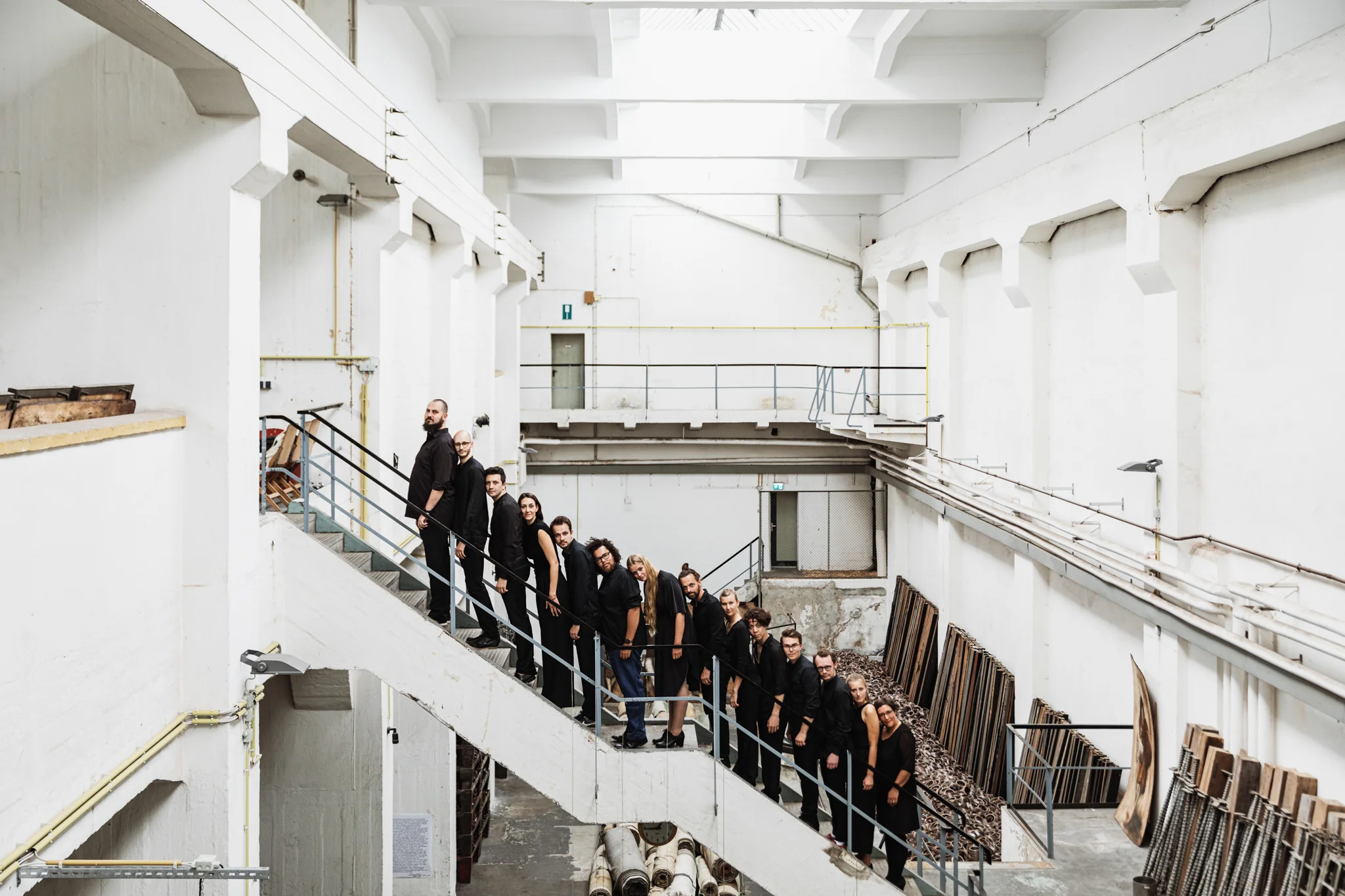
Image from Wikipedia
Image from Wikipedia
Orchestra in the Staircase: The Chamber Orchestra Redefining Classical Music
An ensemble from Hannover that breaks concert rules and opens new auditory worlds
The Orchestra in the Staircase, also known as treppenhausorchester, is one of the most exciting formations in the German classical music scene. Based in Hannover and consisting of around 20 musicians under the founder, artistic director, and conductor Thomas Posth, the ensemble has a clear mission: to expand the concept of the classical concert and create new access points to classical music. Organized as an association under the auspices of the Academy for Living Music e. V., the orchestra combines artistic ambition with a distinctly participatory understanding of music communication.
What makes this ensemble so special is not only the diverse programming but also the consistency with which it questions the spaces, rituals, and expectations of concert operations. The Orchestra in the Staircase envisions the concert as an experience, as a meeting, and as a cultural exceptional state. This not only appeals to the regular audience of classical music but also invites those who have felt little connection to traditional formats.
Biography: The Idea Behind the Name is Already a Statement
The name Orchestra in the Staircase embodies the artistic gesture of the ensemble. It connotes departure, movement, and an attitude that brings classical music out of an elitist space into new social contexts. The ensemble was founded in Hannover and evolved into a cohesive artistic unit that does not simply reproduce the canon but seeks reinterpretation, dramaturgical intensification, and immediate audience connection.
Central to this development is Thomas Posth, who, as the founder, artistic director, and conductor, shapes the aesthetic direction. Under his leadership, the orchestra does not see itself as a rigid body of sound but as a mobile, experimental formation. The musicians consistently seek formats in which classical works are not merely performed but translated into new experiences.
The organizational structure as an association underscores this openness. The Academy for Living Music e. V. provides a framework in which artistic production, communication, and community building can come together. From this arises the unique energy of the orchestra: an ensemble that does not preserve classical music by conserving it, but by revitalizing it in the present.
Artistic Stance: Classic as a Space for Experience
The Orchestra in the Staircase is working on an expansion of the concert concept that goes far beyond mere moderation. In the described formats such as Dark Room, Dark Ride, Hygge, Circles, Disco, or Emergency Concerts, the audience is not only addressed as listeners but as part of a situational concert event. The hall becomes a space of experience, the stage a social laboratory, and the concert an intense encounter with sound, movement, and atmosphere.
This approach is particularly evident in projects where classical music is combined with unusual spatial or dramaturgical setups. The combination of music, ritual, and staging creates a different perception of the repertoire. Instead of repeating the canon in traditional forms, the ensemble opens new paths of listening and relies on surprise, proximity, and physical presence.
This approach makes the Orchestra in the Staircase an important representative of the innovative classical scene in Germany and Europe. The ensemble demonstrates that classical music need not sound museum-like or distant but can gain new relevance as a living art form through updating and changing formats. The artistic value lies not solely in the effect but in the consistent repositioning of the entire concert concept.
Career and Development: From Hannover to Major Concert and Festival Venues
The Orchestra in the Staircase has long surpassed its regional origins. Information from promoters and concert venues describes the ensemble as a regularly invited orchestra on national and international stages. Notable engagements include the Podium Festival Esslingen, Heidelberger Frühling, Klang trifft Kulisse in Grafenegg, Elbphilharmonie Hamburg, Alte Oper Frankfurt, Festspielhaus Baden-Baden, Bayerischer Rundfunk in Munich, Istanbul Music Festival, Mozartfest Würzburg, Beethovenfest Bonn, and Fusion Festival.
This presence is no coincidence but the result of a clear artistic strategy. The ensemble establishes itself where new concepts for classical music are sought and brings its formats into contexts where the audience is open to boundary crossings. Herein lies the strength of the orchestra: it is not only a body of sound but also a catalyst for the future of concert life.
For the 2024/25 season and beyond, the Orchestra in the Staircase will again find itself in prominent programming contexts. An event at the Elbphilharmonie Hamburg, for example, made it clear that the ensemble questions concert habits and establishes new rituals to enable more intensive listening and closer contact between the audience and orchestra. Such performances solidify the ensemble's reputation as an innovative actor with a strong stage presence.
Current Projects and Formats: Staircase Workshop, Staircase Cloud, and SEA SOUNDS
The current activities showcase how vibrant and future-oriented the orchestra is. The official website presents the Staircase Workshop 2026 as a concert project for youth between 14 and 18 years old. Here, young people develop a concert experience together with the treppenhausorchester from the initial idea to the performance, including writing workshops, their own text work, and creative participation. This is music communication at its best: open, concrete, and sustainable.
Another central component is the Staircase Cloud, an app that connects concerts with the everyday life of the audience. It offers information, tickets, and exclusive insights, while also serving as a community space for sound walks, podcasts, rehearsal visits, and group singing. The orchestra thus develops a modern ecosystem of live experience and digital engagement.
Current project lines also include SEA SOUNDS 2025 with 21 days in Norderney, 29 concerts, and 13 venues, as well as the Staircase Festival 2025 in Hannover and Hamburg. There, the ensemble consolidates a wide range of concert experiences and community formats in a short period. Anyone wishing to understand the present of classical music will find here an example of how an ensemble thinks about programming, communication, and audience experience in new ways.
Discography, Repertoire, and Artistic Signature
In a narrower sense, the Orchestra in the Staircase does not follow a traditional discography of a pop or jazz act. Its artistic identity emerges more through formats, programs, audiovisual projects, and documented events. For this reason, the ensemble's repertoire is central to understanding its work: it connects classical works with new contexts, new spatial concepts, and a dramaturgical language that intensifies listening.
This approach becomes particularly visible in formats such as KULT, Dark Room, Dark Ride, or Disco. The content descriptions make clear that the ensemble questions concert habits and develops rituals that transform classical music into a more physically and emotionally immediate experience. The repertoire is not understood as a rigid collection but as material for new narrative forms.
Thus, the artistic signature of the orchestra lies not in chart-oriented hits or classical album campaigns, but in the reinvention of the concert format itself. This shifts the focus from the question of individual releases to the experiential value of the music. Here, the ensemble achieves its greatest impact and enduring cultural influence.
Style, Sound Image, and Musical Development
Stylistically, the Orchestra in the Staircase moves within the realm of classical music but expands this field to include performative, theatrical, and social dimensions. The sound remains chamber-music precise, yet the presentation is intentionally open, experimental, and often immersive. This combination of musical accuracy and conceptual boldness makes the ensemble accessible to a broad audience.
The musical development of the orchestra can be described as a movement from the traditional concert to multimedia and space-related formats. Here, the quality of ensemble playing remains crucial: the 20 musicians must not only perform convincingly but also be dramaturgically flexible. This requires high ensemble culture, precise coordination, and a pronounced stage presence.
In a time when many institutions are searching for new pathways for classical music, the Orchestra in the Staircase offers a compelling answer. It combines expertise in repertoire with courageous contemporary aesthetics and thus creates a style that reaches both specialist audiences and curious newcomers. The sound becomes an attitude, the arrangement becomes an experience, and the production becomes a cultural statement.
Cultural Influence and Significance for the Classical Scene
The Orchestra in the Staircase has become one of the most visible examples of innovative concert culture in the German-speaking world. Its formats show how classical music can be brought out of distance and transformed into social, playful, or immersive contexts. In doing so, the ensemble makes an important contribution to the future of music communication.
Culturally, the orchestra also sets accents because it consciously relativizes the separation between high culture and everyday life. The ambition to play classical music not just for a traditional audience but to open up new access points has a clear social dimension. The ensemble perceives music as an invitation, not as a barrier to entry.
Its relevance arises from this mix of artistic ambition, institutional professionalism, and open experimental eagerness towards the audience. That is where the authority of the Orchestra in the Staircase lies: it not only claims that classical music can be contemporary but proves it in ever-new formats, projects, and concert situations.
Conclusion: An Orchestra for the Future of Listening
The Orchestra in the Staircase is exciting because it does not regard classical music as a closed legacy but as a living space of possibilities. It stands for artistic development, bold formats, and a stage presence that takes the audience seriously while also challenging them. Those who want to experience how classical music can sound, impact, and surprise today will find here an ensemble with a distinctive signature.
Especially in live performances, this music unfolds its full power. The combination of precision, spatial concepts, and immediate proximity to the audience makes every evening a special experience. The Orchestra in the Staircase is not just worth noting in a program booklet but is an artistic experience best enjoyed in the concert hall, in an unusual location, or right in the midst of one of its innovative formats.
Official Channels of Orchestra in the Staircase:
- Instagram: No official profile found
- Facebook: No official profile found
- YouTube: No official profile found
- Spotify: No official profile found
- TikTok: No official profile found
Sources:
- Wikipedia - Orchestra in the Staircase
- treppenhausorchester - Official Website
- treppenhausorchester - Imprint
- treppenhausorchester - Contact
- treppenhausorchester - Dates
- treppenhausorchester - Staircase Festival
- treppenhausorchester - Shadow Theater Film Festival
- Elbphilharmonie Hamburg - Orchestra in the Staircase
- Stages and Orchestras of the City of Bielefeld - Orchestra in the Staircase
- Operabase - Orchestra in the Staircase