
Martin Schäuble
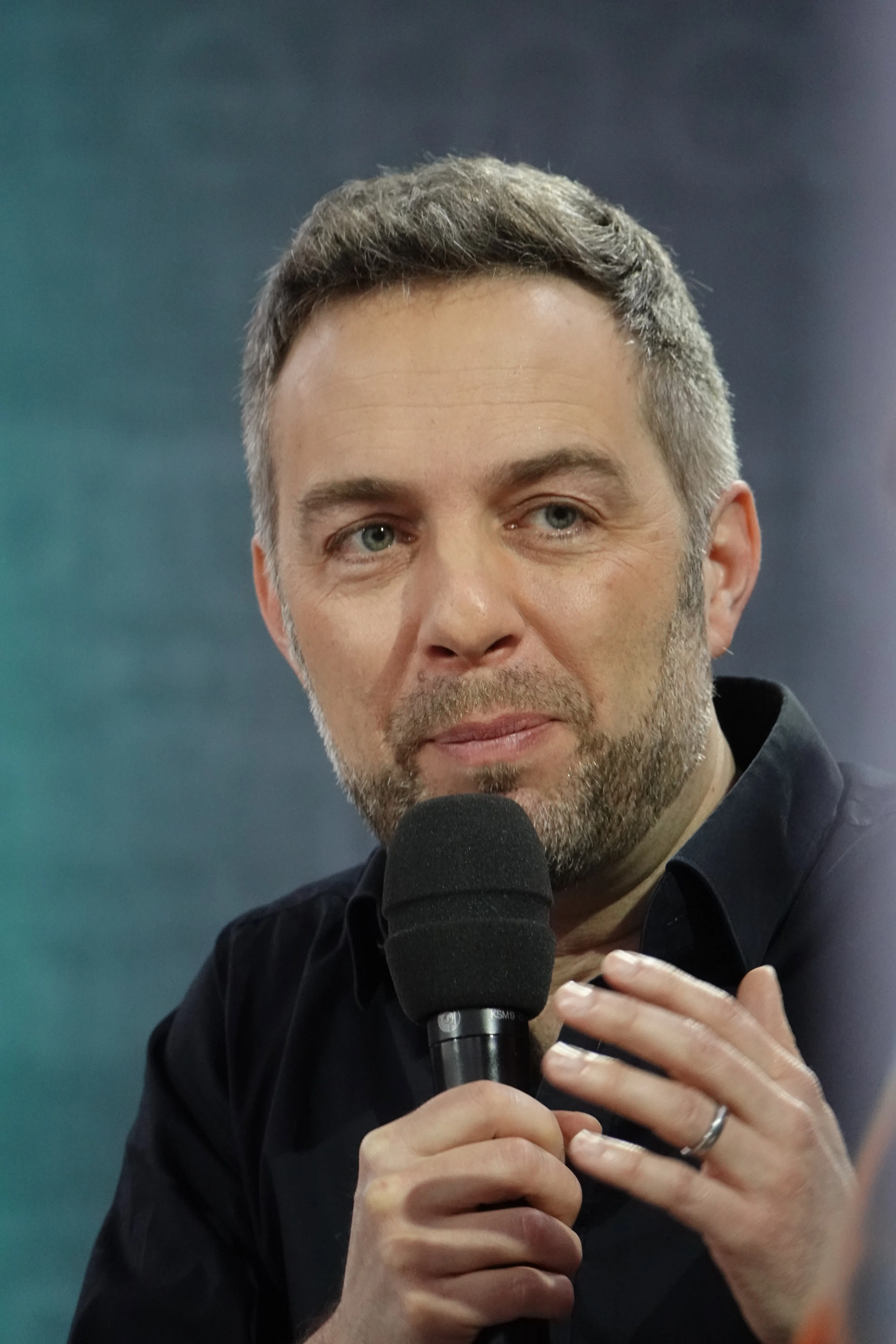
Image from Wikipedia
Image from Wikipedia
Martin Schäuble: Research, Contemporary Literature and Dystopias with Political Impact
An Author Who Transforms Reality into Literature
Martin Schäuble, born on December 7, 1978, in Lörrach, has made a name for himself as a German journalist and author whose books extend far beyond their respective genres. Under the pseudonym Robert M. Sonntag, he also develops novels that translate societal conflicts, digital surveillance, and political radicalization into vivid future scenarios. His works have been translated into several languages and frequently find their way into schools, theaters, and discussions on contemporary issues and responsibility. ([de.wikipedia.org](https://de.wikipedia.org/wiki/Martin_Sch%C3%A4uble))
Biographical Roots: Journalism, Science, and Field Research
Martin Schäuble's journey does not begin in a literary ivory tower but in journalism. After completing his high school diploma, he undertook an internship at the daily newspaper Freie Presse in Chemnitz and subsequently worked as a news editor. He then studied political science in Berlin, Israel, and the Palestinian territories, earning his Ph.D. in 2011 at the Otto Suhr Institute of the Free University of Berlin with a dissertation on jihadists in various social environments. This blend of journalistic practice, political analysis, and direct field research shapes his entire body of work. ([de.wikipedia.org](https://de.wikipedia.org/wiki/Martin_Sch%C3%A4uble))
This academic and journalistic dual perspective lends authority to his books. The Taiwan International Book Exhibition describes him as a non-fiction author focusing on the interplay of politics, culture, and religion, particularly in their radical forms, and whose works are based on eyewitness reports gathered on-site. His own website emphasizes that he has been researching and writing about social and political issues for over twenty years. This results in a rare combination of factual proximity, narrative precision, and literary sharpness. ([tibe.org.tw](https://www.tibe.org.tw/en/news_detail/10/34))
The Breakthrough with Non-Fiction Books on the Middle East
Schäuble drew attention early on with works that make the Middle East conflict accessible to a broad audience. Together with Noah Flug, he published The History of Israelis and Palestinians in 2007, a youth book based on eyewitness conversations, which has been reprinted multiple times and received various awards. This was followed by Black Box Jihad and the travel narrative Between the Borders, in which he traversed Israel and Palestine on foot and hitchhiking. These books showcase the author as an observer who does not describe political reality abstractly but makes it tangible through biographies, journeys, and voices. ([de.wikipedia.org](https://de.wikipedia.org/wiki/Martin_Sch%C3%A4uble))
His ability to transform complex conflicts into understandable yet never oversimplified literature is particularly strong. Schäuble's books combine research, interviews, historical context, and narrative clarity. That The History of Israelis and Palestinians has been used as teaching material and received multiple awards underscores his status as an author who unites education and literary quality. Thus, his work not only informs but also sparks debates. ([de.wikipedia.org](https://de.wikipedia.org/wiki/Martin_Sch%C3%A4uble))
Dystopias, Young Adult Novels, and Literary Tension
Under the name Robert M. Sonntag, Schäuble opened a second literary dimension: the dystopian novel. The Scanners was published in 2013 and envisions a future where books are deemed dangerous and digital control dictates daily life. This was followed by The Scanned, Endland, His Kingdom, Cleanland, Godland, All Colors Grey, Why You Remain Silent, and Hero Days. On his website, he describes these texts as novels with young protagonists, set partially in realistic and partially dystopian worlds. ([martin-schaeuble.net](https://martin-schaeuble.net/))
The thematic range is remarkable: right-wing nationalism, climate crisis, surveillance, conspiracy theories, digital totality, suicide, and familial conflicts. Particularly, Endland has been described in reviews and press comments as politically highly relevant; dtv cites the Süddeutsche Zeitung and WDR 5 among others, evaluating the novel as disturbingly believable and extremely contemporary. The fact that the piece was newly staged at the Schauburg München in 2025 shows how strongly Schäuble's materials can be translated into other art forms. ([dtv.de](https://www.dtv.de/product/ac9707ce51394fd7a15544180b722290/pdf-download))
Current Projects: Literature as a Diagnosis of the Present
In his most recent publications, Martin Schäuble remains true to his core: he writes literature that responds to societal tensions. His official website lists new novels Hero Days and Why You Remain Silent with S. Fischer; alongside them are All Colors Grey and Godland. Your Eternal Life Has a Price, dealing with loss, suicide, climate wars, and digital uploading. This is not an escape into fantasy, but a literary analysis of the present cloaked in the guise of the future. ([martin-schaeuble.net](https://martin-schaeuble.net/))
Particularly revealing is Schäuble's approach to political dystopias. In a supplementary material to Endland, he explains that he always writes dark future images with an eye on the present, and that the real development of right-wing extremist forces has surprised him. This is precisely the power of his work: it does not operate with mere shock aesthetics but with a precise continuation of already existing trends. Thus, literature becomes a resonant space for democratic vigilance. ([schauburg.net](https://www.schauburg.net/sites/default/files/2025-04/Endland_web.pdf))
Style, Method, and Narrative Signature
Schäuble's style is clear, direct, and designed for impact. He employs documentary techniques, eyewitness reports, on-site research, and a language that translates political complexity into narrative tension. His novels and non-fiction books benefit from this journalistic background: they never appear arbitrary but display acute observation of power, fear, ideology, and familial ties. Thus, his work possesses a rare mix of factual authority and literary pressure. ([tibe.org.tw](https://www.tibe.org.tw/en/news_detail/10/34))
The characterization also follows this signature. Young protagonists often stand at the center, as Schäuble makes societal conflicts visible through their biographies. Whether in a dystopia like Cleanland, where health becomes the principle of control, or in His Kingdom, where radicalization and conspiracy thinking threaten the family: it is always about people who must make decisions under the pressure of political systems. Literature appears here as a composition space of tension, morality, and insight. ([martin-schaeuble.net](https://martin-schaeuble.net/))
Awards, Reception, and Cultural Influence
The reception of Martin Schäuble's books confirms their literary and societal relevance. The History of Israelis and Palestinians was awarded by Deutschlandfunk and Die Zeit in 2007 and nominated for the Best Science Book of the Year in 2008. Black Box Jihad and The Scanners also received recognition, while Endland was awarded the Leipzig Reading Compass and nominated for the Hansjörg-Martin Prize among others. Such milestones mark a remarkable career bridging non-fiction, young adult fiction, and political literature. ([de.wikipedia.org](https://de.wikipedia.org/wiki/Martin_Sch%C3%A4uble))
His influence extends beyond the printed page. Endland was adapted for the theater, The Scanners received licenses in several countries, and several titles are considered school reading. The author is a member of PEN Berlin, collaborates with renowned publishers like S. Fischer, Hanser, dtv, and Piper, and is regarded by agencies and publishers as a distinguished author of socio-political material. This is authority in the best sense: institutionally anchored, critically received, and firmly established in the educational sector. ([martin-schaeuble.net](https://martin-schaeuble.net/uber-mich/))
Conclusion: An Author Who Dissects the Present
Martin Schäuble is among those German-speaking authors who remarkably consistently combine research, political analysis, and narrative tension. His books are uncomfortable, precise, and highly relevant because they do not merely orbit the conflicts of our time but translate them into concrete lived realities. Anyone seeking literature that takes contemporary society seriously while narrating it compellingly will find one of the most interesting voices of his generation here. Reading his texts means looking closer and understanding the future as a consequence of today’s decisions. ([de.wikipedia.org](https://de.wikipedia.org/wiki/Martin_Sch%C3%A4uble))
Especially in live readings, discussions, or theater adaptations, this work unleashes its full power. Martin Schäuble is exciting because he does not just write; he interrogates, condenses, and charges reality with literary energy. Those who experience his books or stage adaptations encounter not a mere storyteller but an author with conviction, an analytical gaze, and a strong instinct for the societal fault lines of our time. ([martin-schaeuble.net](https://martin-schaeuble.net/lesungen-kontakt/))
Official Channels of Martin Schäuble:
- Instagram: No official profile found
- Facebook: No official profile found
- YouTube: No official profile found
- Spotify: No official profile found
- TikTok: No official profile found
Sources:
- Martin Schäuble – official website
- Martin Schäuble – About Me
- Martin Schäuble – Readings & Contact
- Wikipedia – Martin Schäuble
- Goethe-Institut – About the Author Martin Schäuble
- Aenne Glienke Agentur – Martin Schäuble
- dtv – Press Document on Martin Schäuble
- Schauburg München – Endland (PDF)
- Taipei International Book Exhibition – Germany: Martin Schäuble