
Martín Palmeri
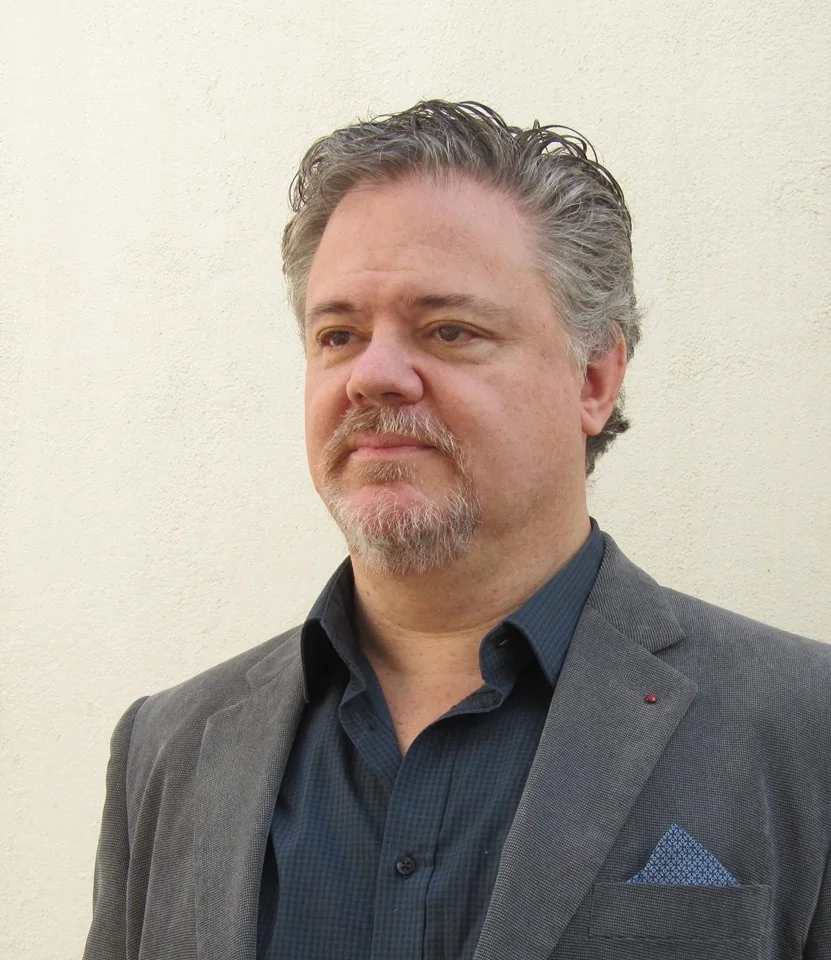
Image from Wikipedia
Image from Wikipedia
Martín Palmeri – Composer Between Classical and Tango Nuevo
The Voice of Tango in Sacred Spaces: Why Martín Palmeri Electrifies the Choral Scene Worldwide
Born in Buenos Aires in 1965, Martín Palmeri is regarded as the composer who has secured a legitimate place for Tango Nuevo in concert and sacred repertoires. As a conductor, pianist, and composer, he intertwines liturgical forms, choral sound architecture, and the rhythmic language of the Río de la Plata into a distinctive signature. His “Misa a Buenos Aires” – known internationally as “Misatango” – catapulted him to prominence in the 1990s as a defining voice of contemporary vocal music. Since then, his works have featured in the programs of renowned choirs, festivals, and concert halls across multiple continents.
Origins, Education, and Artistic Development
Palmeri grew up in Buenos Aires, in close proximity to the vibrant tango tradition, studying composition, choral conducting, orchestral conducting, piano, and singing. The versatility of his education – ranging from choral-symphonic practice to traditional tango orchestration – continues to shape his music career today. Studies with influential teachers and intensive work with ensembles have shaped his artistic development, consistently balancing between score craftsmanship and performative stage presence. This dual perspective – as a composing pianist and a conducting composer – explains the energetic sound direction of his scores.
Breakthrough with “Misa a Buenos Aires” (Misatango)
The breakthrough came in 1996 with “Misa a Buenos Aires,” a setting of the Mass that intertwines the Ordinary in Latin with the harmonies, gestures, and instrumentation of Tango Nuevo. Premiered in Buenos Aires, the work quickly conquered international stages and became Palmeri's signature composition. Characteristic is the instrumentation featuring mezzo-soprano, SATB choir, bandoneon, piano, and strings – an orchestral sound that combines the syncopated movement of tango with contrapuntal choral work. Fugues in the Kyrie and Agnus Dei demonstrate compositional expertise, while the rhythmic motor drives the liturgical text into animated dramaturgy.
International Successes: Rome, Carnegie Hall, and Beyond
A notable career highlight was in 2013 when the Misatango opened the International Festival for Sacred Music and Art in Rome – during the papacy of Pope Francis and featuring prominent participation from the Argentine music scene. This programming granted the work global visibility and sent a cultural-political signal for the opening of sacred spaces to Latin American idioms. In 2015, Misatango was performed at Carnegie Hall in New York in a major international production; in 2016, Palmeri himself conducted a further performance in the same hall to celebrate the 20th anniversary. Since then, festival and concert series in Europe and America have solidified the work's status as a modern classic in the choral repertoire.
Works Overview: From Opera and Oratorio to Magnificat, Tango Gloria, and Tango Credo
In addition to Misatango, Palmeri's catalog includes operas, oratorios, concert works, and large-scale choral pieces. The opera “Mateo” (1999), the “Oratorio de Navidad” (2003), and the “Concierto para bandoneón” (2004) showcase his competence in dramatic and concert forms. This was followed by the “Magnificat” (2012) – featuring an impressive recording that incorporates bandoneon – as well as “Tango Gloria” (2014) and “Tango Credo” (2017), which each continue Palmeri's sacred tango aesthetics from different text and sound perspectives. With “La Pasión según Astor” (2021), he crafts a poetic, educational, and culturally insightful portrait of Piazzolla through biblical references – a dramaturgically daring bridge between iconic tango biography and passion motifs.
Discography: Reference Recordings and Repertoire Impact
The discography documents the rapid canonization of his music. An early reference recording of Misatango was released by Fonocal, based on performances with Palmeri at the piano – a time capsule that captures the initial interpretive practice. This was followed by international productions, such as the coupling of “Misatango & Tango Gloria” with a leading German ensemble, which exemplifies the intricate relationship between choral sound and tango idioms. The “Magnificat” is also available in a widely noted recording, modeling the symbiosis of Latin praise song, bandoneon color, and piano-driven rhythm convincingly. Overall, the availability of high-quality recordings has significantly accelerated its spread in the global choral scene.
Style, Language, and Technique: Tango Nuevo Meets Choral Counterpoint
Palmeri's style represents a synthetic sound language: He retains the "harmonic inventory" and "melodic designs" of tango and anchors them in choral writing techniques ranging from homophonic declamation to dense, baroque-trained counterpoint. The bandoneon serves as the sonic dramaturgical gravitational center; piano and strings layer rhythmic patterns that fluctuate between marcato, rubato, and syncopated accents. In the choral direction, Palmeri employs clear text articulation, concise periodic structures, and architectural rising curves – a production that challenges ensembles while being effective for audiences. This fusion of genre identity and formal rigor explains the ongoing resonance with choral directors worldwide.
Cultural Influence: Identity, Sacredness, and Globality
Palmeri's Misatango has broadened the understanding of "tango as concert language" by intertwining the liturgy not as exotic but with the everyday poetics of the Río de la Plata. It grants Spanish-Latin American identity a place in the sacred canon while providing choirs access to South American rhythms without losing liturgical gravitas. The repeated performances in Rome, Vienna, New York, Cologne, and numerous cities across America and Eastern Europe demonstrate the global adaptability of this musical language. For repertoire planning, this means that Misatango stands today alongside Ramirez’s “Misa Criolla” as a cornerstone work of Latin American sacred music.
Reception: Between Critique Acclaim and Audience Enthusiasm
Critics regularly emphasize the "brilliant" liaison between tango rhythm and measured text declamation. Reviews of major New York concerts refer to gripping crescendos, the sparkling Credo section, and the lyrical calm of the Agnus Dei – moments where choral fullness and solo lines merge organically. Audiences often respond with applause between movements, an unmistakable sign of the material's emotional directness. This mix of artistic expertise and immediate impact makes Palmeri's music appealing to both professional vocal ensembles and ambitious amateur choirs.
Current Projects and Recent Performances (2024–2026)
Recently, Palmeri's music remains present: In 2024/2025, new Misatango productions are scheduled in Latin America, the USA, and Europe, including collaborative formats with theaters and cultural institutions. In Mexico, the Orquesta de Cámara de Bellas Artes programmed Misatango, while in Argentina, state cultural institutions highlighted the work as a formative contribution to national music culture. In the USA, a production in Rochester (NY) connected Misatango with community work – an example of how Palmeri's sound language builds cultural bridges. Additionally, “La Pasión según Astor” continues to be performed in Argentina, with Palmeri at the piano – a sign of vibrant maintenance of the work.
Palmeri at the Piano: Performative Authenticity
As a pianist, the composer regularly shapes the piano part of his works – an advantage for interpretation, articulation, and timing. His playing balances percussive clarity and chamber music transparency; it supports the bandoneon without overpowering the choral declamation. This performative proximity to the score lends performances a unique authenticity and inspires conductors and ensembles to realize the rhythmic grammar of Tango Nuevo precisely. Thus, Palmeri intertwines experience, expertise, and authority in his own work – an ideal according to EEAT criteria.
Practical Relevance for Choirs and Programs
For choirs, Palmeri offers repertoire with clear dramatic arcs, vocally appropriate tessitura, and tension-rich contrasts. The instrumentation with bandoneon, piano, and strings is logistically feasible, especially as alternative versions in chamber settings have become established. In program architecture, Misatango, Tango Gloria, or the Magnificat serve as core cycles that can be contrasted with baroque or contemporary partner works. Festivals utilize these works to audibly connect cultural diversity, music history, and modernity.
Conclusion: Why You Should Experience Martín Palmeri Live
Martín Palmeri translates the soul of tango into a choral-symphonic language that respects sacred forms while pulsating into the present. His scores combine compositional discipline with sonorous sensuality, and his music career demonstrates international authority and lasting cultural influence. Experiencing Misatango live is to encounter music theater in the truest sense of the word: a spiritual ritual that dances. Recommendation: listen, perform, re-listen – and feel the range from the electrifying Credo to the intimate Agnus Dei in the concert hall.
Official Channels of Martín Palmeri:
- Instagram: No official profile found
- Facebook: No official profile found
- YouTube: No official profile found
- Spotify: No official profile found
- TikTok: No official profile found
Sources:
- Wikipedia – Martín Palmeri (EN)
- Wikipedia – Misa a Buenos Aires (DE)
- Wikipedia – Misa a Buenos Aires (EN)
- Carus-Verlag – Profile of Martín Palmeri
- Vox Anima London – Artist Profile Martín Palmeri
- Musica International – Composer Database (EN)
- Musica International – Composer Database (ES)
- New York Concert Review – DCINY “Misatango” 2015, Review
- DCINY – Misatango: A Tango Mass from Argentina (Carnegie Hall, 2015)
- DCINY – Misatango 20th Anniversary (Carnegie Hall, 2016)
- Catholic News Agency – Interview & Festival Opening Rome 2013
- INBA (Mexico) – Misatango Program Announcement
- Argentina.gob.ar – CCK: Misatango & Background on Its Creation
- Argentina.gob.ar – Misatango at the Museo Casa Rosada
- Rossings – Misatango (Rochester, NY, 2025)
- Apple Music – Misatango & Tango Gloria (CPO, 2017)
- Apple Music – Misatango (Fonocal, 2006)
- Presto Music – Martín Palmeri: Magnificat (DUX, 2017)
- Wikipedia: Image and Text Source
Upcoming Events
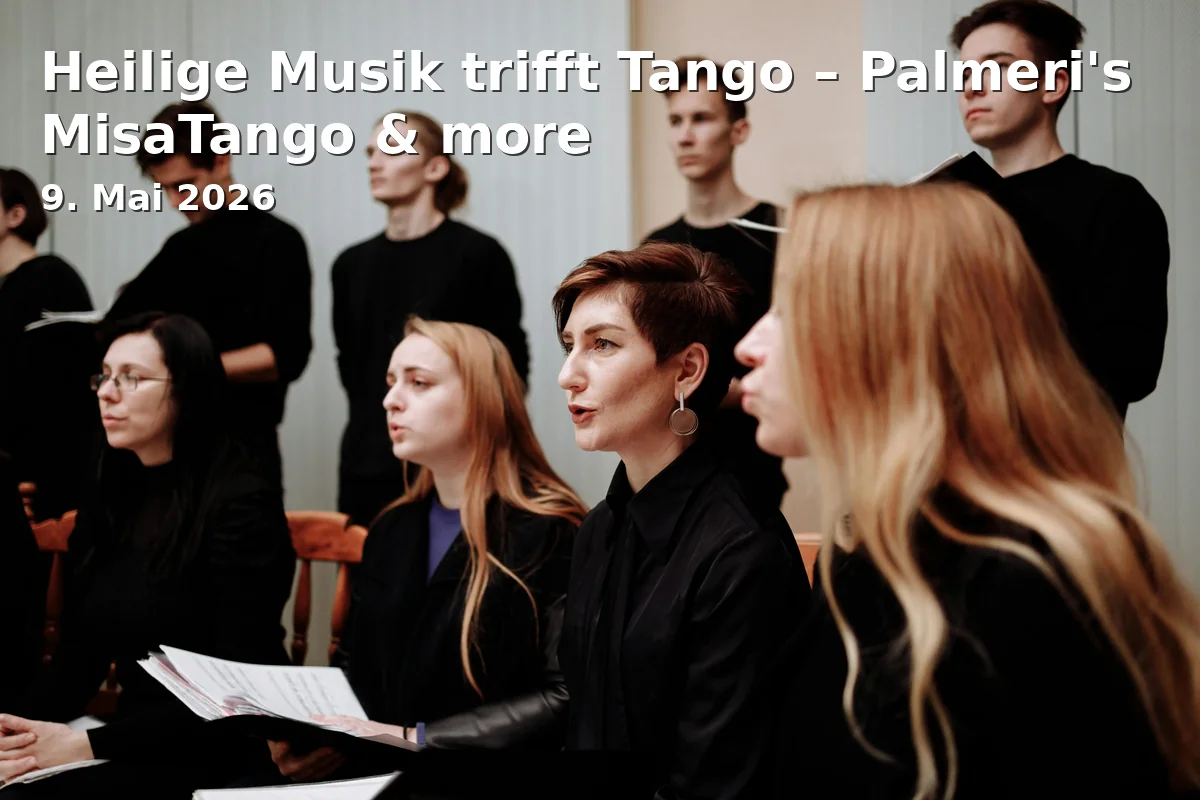
Sacred Music Meets Tango – Palmeri's MisaTango & more
Discover the unique mix of sacred music and tango in Palmeri's MisaTango on May 9, 2026 at the Kreuzkirche Dachau.

Concert Sacred Music Meets Tango – Palmeri's MisaTango & more
Tango and liturgy merge in Holy Cross: Misatango, Fauré, Piazzolla. Saturday, 9.05.2026, 19:30, Tickets 18–28 Euro. Sound colors, emotion, goosebumps – secure your seats now. #DachauConcert
Concert Sacred Music Meets Tango – Palmeris MisaTango & more
An evening between devotion and tango: The Choral Community Dachau lets MisaTango, Fauré, and Piazzolla shine in the Church of the Holy Cross. #Dachau #Concert
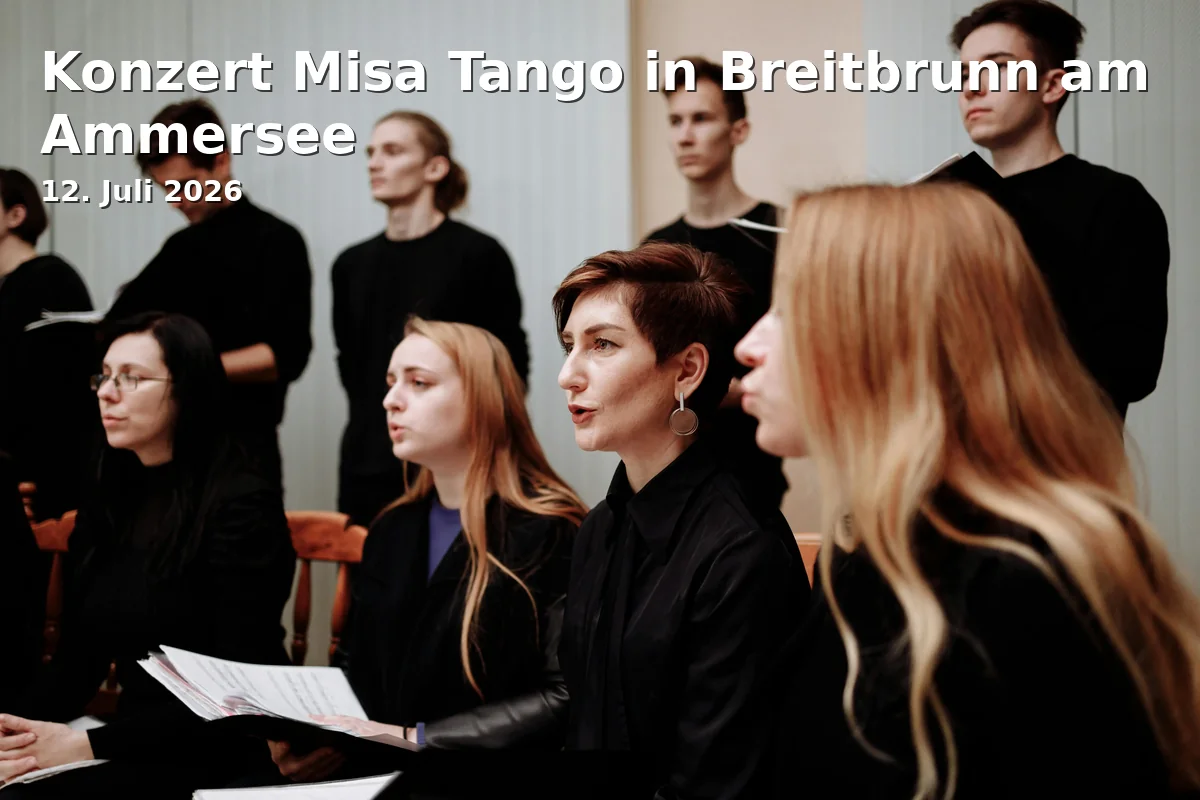
Concert Misa Tango in Breitbrunn am Ammersee
An evening between mass liturgy and tango fire: Misa Tango in the Kulturkirche Breitbrunn am Ammersee. On 12.07.2026, sound becomes an experience. #Ammersee
Martín Palmeri: Tango Mass at the Cultural Church Breitbrunn
An evening between sacred space and tango fervor: Martín Palmeri live in Breitbrunn at Lake Ammersee. Choir, bandoneon, and Piazzolla create goosebumps. #LakeAmmersee
Martín Palmeri – Mass in Buenos Aires (Misatango)
Misatango in Lindau: Tango and liturgy merge into intense sound art in the cathedral. 03.10.2026, 19:00. Tickets via Reservix. An unforgettable concert experience – book now! #Misatango