
Gehrock
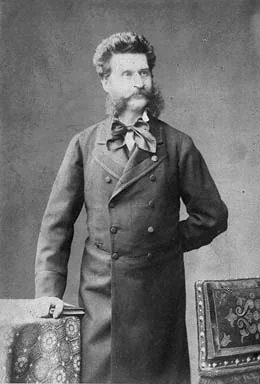
Image from Wikipedia
Image from Wikipedia
Frock Coat: The Elegant Silhouette between Court Fashion, Men's Skirt, and Modern Style Icon
A Classic of Men's Fashion with History, Stance, and Timeless Presence
The frock coat is one of the most distinctive garments in European fashion history. As a late form of the men's skirt, it combines festive strictness with a striking, long silhouette and was particularly a sign of style, status, and social order in the 19th century. Its double-breasted construction, knee-length skirt, and typically dark fabric give it a presence that remains associated with formal elegance to this day.
What makes the frock coat so exciting is its dual identity: on one hand, a historical men's garment, and on the other, a term still used today for a fitted, tailored long jacket. Under names like Overjacket, Overcoat, Longjacket, or Langsakko, its design language continues to live on, showing how significantly traditional tailoring influences modern fashion. Thus, the frock coat is much more than a relic of past etiquette – it is a symbol of stylistic continuity.
Origin and Historical Context
Originally, the frock coat evolved from the tradition of the men's skirt, which was a garment consisting of an upper part and attached skirts. This structure clearly distinguished it from the actual jacket and emphasized an elegant, vertical line. The knee-length cut provided the frock coat with a formal effect that made it suitable for festive occasions as well as representative appearances in public life.
In the 19th century, the frock coat reached its greatest significance. It became a staple of bourgeois and court wardrobes and was closely tied to the prevailing understanding of seriousness, distinction, and social belonging at that time. Its dark fabrics and precise tailoring reflected the taste of an era where clothing was read as an expression of stance.
The Frock Coat as a Tailoring Model: Form, Material, and Effect
Characteristic of the frock coat is the double-breasted button placket, which accentuates the upper body and gives the garment a majestic calmness. The attached skirt extends to about the knee and creates the elongated, almost architectural silhouette that makes the frock coat unmistakable. In its classic form, it appears at once strict and finely balanced.
Usually made from dark fabric, the frock coat emphasized restraint rather than ornamentation. This was precisely its strength: the effect derived not from excess but from line, proportion, and material quality. In tailoring, it marks a style ideal based on precision, structure, and formal clarity.
From Goethe to Lincoln: Famous Wearers and Cultural Presence
Notable wearers of the frock coat include figures such as Johann Wolfgang von Goethe, Friedrich Schiller, Abraham Lincoln, as well as Johann Strauss Sr., Johann Strauss Jr., and Eduard Strauss. These names show that the frock coat was not just a piece of clothing but also a cultural signifier. It accompanied authors, statesmen, and musicians alike, thus becoming a visual code of representation.
Especially in the 19th century, the frock coat represented a habitus that radiated education, authority, and social order. In portraits, official situations, and festive occasions, it functioned as a garment with a clear message. Its impact was based on a balance of dignity, discipline, and aesthetic rigor.
The Shift in Fashion: From Men's Skirt to Modern Longjacket
With the transition to later fashion epochs, the classic frock coat lost its everyday presence but never entirely disappeared from the stylistic consciousness. Today, the term is often used for modern, fitted long jackets that echo the historical line. Thus, the frock coat remains a lively reference piece in fashion history.
In contemporary contexts, it appears in variants described as Overcoat, Overjacket, or Langsakko. These designations illustrate how flexibly a historical garment can be translated into new style concepts. The frock coat remains relevant as it merges historical elegance with modern wearability.
Style Effect and Today’s Significance
The frock coat possesses a special aura because it instantly creates a formal, expressive effect. Its length and tailored lines create a silhouette that conveys both authority and elegance. In today’s fashion, it often serves as a conscious style break or a reference to historical clothing culture.
Especially in contexts where traditional tailoring is gaining importance again, the frock coat showcases its strength. It stands for artisanal precision, the art of pattern-making, and a conception of fashion that understands clothing as a cultural statement. Its character connects tradition, representation, and aesthetic discipline.
Cultural Influence and Fashion Aftermath
The cultural influence of the frock coat extends far beyond mere men's fashion. It shaped the visual conception of dignity, bourgeois elegance, and ceremonial appearance over decades. Even though modern suits and blazers have largely taken over its function, its image remains vibrant in the collective memory.
As a symbol of historical fashion, the frock coat illustrates how clothing makes societal values visible. Its form narrates issues of hierarchy, taste, and craftsmanship. Anyone dealing with fashion history encounters a garment that does not scream for attention yet leaves a lasting impression.
Conclusion: A Garment with Authority, Style, and History
The frock coat fascinates because it embodies a rare mixture of history, elegance, and clear design language. It is a garment that impressively showcases the transition from classic men's fashion to modern stylistic interpretation. Its impact lies in its discipline, length, and iconic presence.
Those who appreciate fashion history, tailoring, and cultural staging will discover in the frock coat a true classic. It remains a symbol of ceremonial appearance and formal elegance – and deserves special attention whenever style is meant to be more than just surface. Experiencing the frock coat live means witnessing a piece of living fashion history.
Official Channels of Frock Coat:
- Instagram: No official profile found
- Facebook: No official profile found
- YouTube: No official profile found
- Spotify: No official profile found
- TikTok: No official profile found