
Franz Schubert
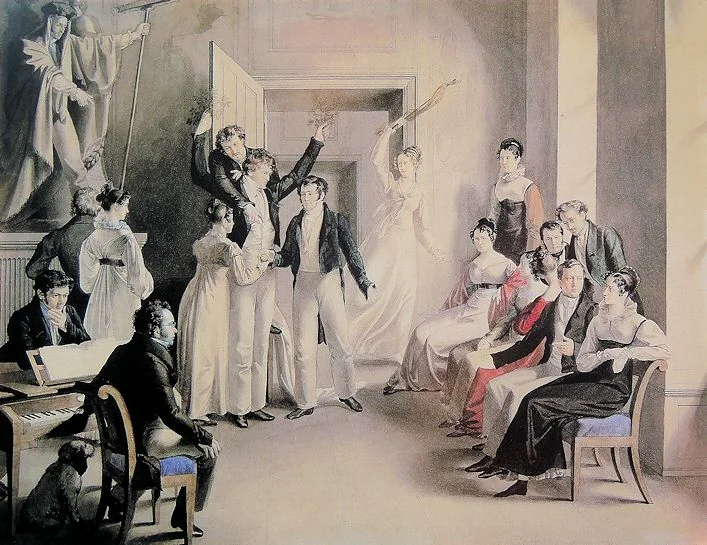
Image from Wikipedia
Image from Wikipedia
Franz Schubert – Song Genius, Sound Pioneer, Eternal Romantic
A composer straddling Classicism and Romanticism, whose melodies continue to shape the world of music today
Franz Peter Schubert, born on January 31, 1797, in Himmelpfortgrund near Vienna and died on November 19, 1828, left behind an overwhelmingly rich oeuvre despite his short life: more than 600 songs, benchmark chamber music, prominent symphonic works, sacred music, and piano music. Schubert's musical career combined an unparalleled gift for melody with bold harmony and sensitive text interpretation. His artistic development reflects the transition from Viennese Classicism to early Romanticism; it was only in the music history of the following decades—carried by Mendelssohn, Schumann, Liszt, and Brahms—that his significance was elevated to that of a canonical master.
Childhood, Education, and Early Artistic Development
Growing up in a musical household, Schubert received lessons from his father and early mentors, became a choir boy with the court chapel in 1808, and studied at the Vienna Stadtkonvikt. Lessons with Antonio Salieri sharpened his sensitivity to vocal art and prosody. Early on, a rich compositional technique was revealed: between 1813 and 1815, he wrote masses, early symphonies, and a plethora of songs. With "Gretchen am Spinnrade" (1814), he reshaped the dramaturgy of German song: piano figuration as a psychological "spinning wheel," nuanced harmony, text interpretation word for word—a pioneering moment in song aesthetics that would influence his further presence as a song composer. These early years mark the germ cell of his style: melodic expansiveness, surprising modulations, a fine sense of color, and an intuitive approach to form and expression that would also characterize his later contributions. ([britannica.com](https://www.britannica.com/biography/Franz-Schubert?utm_source=openai))
Viennese Years, Circle of Friends, and the "Schubertiads"
From 1817 onward, Schubert intensified his freelance life in Vienna. The singer Johann Michael Vogl became the central interpreter of his songs; private concert evenings among friends—the Schubertiads—established a new form of chamber culture. This intimate performance practice suited the chamber music disposition of many works and Schubert's presence as a composer who anchored his music in salons, not in opera houses. The close exchange with poets like Mayrhofer sharpened his sensitivity to text and helped profile the song as a "small opera of the soul." His musical career began to take shape—without institutional securities but with increasing artistic authority. ([de.wikipedia.org](https://de.wikipedia.org/wiki/Franz_Schubert))
Song Art at the Center: From Die schöne Müllerin to Winterreise
Schubert's discography in a broader sense begins with song: the cycles Die schöne Müllerin (1823) and Winterreise (1827) with texts by Wilhelm Müller are pinnacle works of the romantic song genre. They combine motivic work, differentiated tonal architecture, and psychological dramaturgy. Winterreise, often referred to as the "Everest" of the song repertoire, challenges interpreters both interpretatively and vocally like hardly any other work; its reception extends to orchestral interpretations (Hans Zender) and remains a reference for generations of singers. Recently, renowned artists have deepened their engagement with the work, confirming its unbroken relevance in the present. ([en.wikipedia.org](https://en.wikipedia.org/wiki/Winterreise?utm_source=openai))
Instrumental Mastery: Chamber Music, Piano Works, Symphonies
Schubert's chamber music showcases an exemplary artistic development: the String Quintet in C major D 956 (1828) is considered a legacy work with orchestral breadth in a chamber musical guise; the String Quartet in D minor "Death and the Maiden" D 810 (1824) transforms its own song motif into a dramatic variations-andante—a model case of musical intertextuality. The "Trout Quintet" D 667 (1819) expands the genre constellation (with double bass) and transposes song melody ("Die Forelle") into concertante chamber joy. Piano cycles like Impromptus and Moments musicaux sharpen Schubert's profile as a poetic architect of large-arched forms, while the "Wanderer-Fantasy" D 760 converges symphonic energy into pianistic virtuosity. ([de.wikipedia.org](https://de.wikipedia.org/wiki/Der_Tod_und_das_M%C3%A4dchen_%28Streichquartett%29?utm_source=openai))
The Symphonies: "Unfinished" and "Great C Major" as Milestones
Schubert's symphonic output culminates in two iconic works. The Symphony in B minor D 759 ("The Unfinished", 1822) captivates with concentrated two-movement structure, dark timbres, and an unusual formal narrative. It was only in 1865 that it received a celebrated performance—a late triumph that fueled the Romantic fascination with the fragmentary. The Symphony in C major D 944 ("The Great," 1825–1826) was premiered in Leipzig in 1839 by Mendelssohn after Robert Schumann had discovered the score in Vienna in 1838 and initiated its dissemination. This performance and reception history is central to Schubert's authority in symphonic music: the length, rhythmic drive of the finale, and orchestral power set standards and anchored the work as a symphonic grand form of Romanticism. ([swr.de](https://www.swr.de/swrkultur/musik-klassik/musikstueck-der-woche/article-swr-14722.html?utm_source=openai))
Style Analysis: Melody, Harmony, Texture
Schubert's compositions are characterized by melodic long lines, modulatory refinement, and a texture that intertwines sound layers organically. In song composition, the piano acts as a psychological orchestra; in chamber music, voices merge into breathing fabrics that derive tension from the "interstices" of harmony. The symphonic work connects thematic development with sound planes, often created from ostinato rhythms and sequenced motifs (finale of the C major symphony). This method of production—composition as continuous singing—explains the emotional immediacy and cultural influence of his music even today in media and recording cultures. ([britannica.com](https://www.britannica.com/biography/Franz-Schubert?utm_source=openai))
Reception, Networks, and Discovery After Death
Undervalued in his lifetime, discovered and canonized after his death: Schubert's work owes its triumph largely to the mediation by Schumann and Mendelssohn, soon supported by Liszt and Brahms. Particularly "The Great C Major" and "The Unfinished" benefited from the Gewandhaus tradition and concert practice of the 19th century. Critics focused on the blend of classical form and romantic sentiment—a mixture that solidified Schubert's authority. This reception history strengthens his position as a bridging figure and explains why his rank as a prominent representative of early Romanticism is now undisputed. ([britannica.com](https://www.britannica.com/topic/Symphony-No-9-in-C-Major?utm_source=openai))
Cultural Influence: From the Schubertiade to the Present
The idea of the "Schubertiade" continues to live on—in Vorarlberg as an internationally leading song and chamber music festival and in various formats worldwide. These institutions keep the performance tradition alive, promote young talent, and set interpretative accents. At the same time, Schubert's works resonate in media, education, and popular culture: arrangements, reinterpretations, and references demonstrate the timeless brilliance of his compositions. The connection of song, chamber music, and symphonic works makes him a reference point for singers, ensembles, and orchestras of all generations. ([schubertiade.at](https://www.schubertiade.at/de/start/index.html?utm_source=openai))
Current Projects, Editions, and Anniversaries
With an eye on the 200th anniversary of his death in 2028, new projects are fueling Schubert's legacy. The multi-year initiative "SCHUBERT 200" (Samuel Hasselhorn & Ammiel Bushakevitz) is releasing curated song programs through harmonia mundi and is touring internationally; radio stations and cultural magazines are accompanying these musical career stations with intensive reporting. At the same time, the "New Schubert Edition" is nearing completion: The critical complete edition, led by the International Schubert Society and Bärenreiter, combines musical texts, source studies, and editorial reports—a milestone for research, interpretation, and production. Competitions like "Franz Schubert and Modern Music" (Graz) connect tradition and the present and document the lively discourse around interpretation, arrangement, and song aesthetics. ([schubert200.com](https://www.schubert200.com/de?utm_source=openai))
Selected Landmark Works (Discography Overview)
- Songs: Die schöne Müllerin D 795; Winterreise D 911; Schwanengesang D 957 (posthumous collection). Central to genre, composition, and performance practice, frequently recorded and critically discussed.
- Symphonies: h-Moll D 759 "Unfinished"; C-Dur D 944 "The Great" – cornerstones of Romantic symphonic music, with complex performance history and lasting reception.
- Chamber Music: String Quintet C major D 956; String Quartet D minor D 810 "Death and the Maiden"; Trout Quintet A major D 667 – parade examples of sound balance, motivic work, and chamber music dramaturgy.
- Piano: Impromptus D 899/935; Moments musicaux D 780; piano sonatas (late trilogy D 958–960); "Wanderer-Fantasy" D 760 – pianistic large forms with orchestral imagination.
This selection encapsulates Schubert's stylistic signatures: melodic invention, harmonic audacity, text-driven articulation, and a production aesthetic that unites sound, form, and affect in exemplary unity. ([en.wikipedia.org](https://en.wikipedia.org/wiki/Winterreise?utm_source=openai))
Why Schubert Appears Greater Today Than Ever
Schubert's music finds new listening communities in the streaming and recording society. Cyclical dramaturgies like Winterreise inspire interpretations ranging from historically informed to experimental; festivals, competitions, and editions ensure quality and discursive height. For the production of modern recordings, his music offers ideal conditions thanks to its clear formal architecture and open emotional spaces: it remains interpretable without becoming arbitrary—a hallmark of true classics.
Conclusion: Timeless Melody, Modern Relevance
Franz Schubert remains an artist whose artistic development and musical career make the heart of Romanticism audible. His song art speaks directly to the present, his chamber music demands dialogue, and his symphonic works breathe expansiveness. Those who experience the emotional truth of Winterreise, the chamber music tension of "Death and the Maiden," or the orchestral architecture of "The Great C Major" live witness the power of a composer who thinks melody and humanity inseparably. Discover Schubert in concert—as an intimate voice and a symphonic creator of worlds.
Official Channels of Franz Schubert:
- Instagram: No official profile found
- Facebook: No official profile found
- YouTube: No official profile found
- Spotify: No official profile found
- TikTok: No official profile found
Sources:
- Wikipedia – Franz Schubert
- Encyclopaedia Britannica – Franz Schubert
- Britannica – Symphony No. 9 in C Major ("The Great")
- New Schubert Edition – Official Project Site
- Wikipedia – New Schubert Edition (NSE)
- Schubertiade Vorarlberg – Official Festival Website
- SCHUBERT 200 – Project Site (Hasselhorn/Bushakevitz)
- ORF Ö1 – Schubert New Releases (17.03.2025)
- Wikipedia – Winterreise
- Gramophone – Zender: Schubert's Winterreise (Review)
- SRF Kultur – "Trout Quintet": Background Information
- Wikipedia – String Quartet D 810 "Death and the Maiden"
- Apple Music Classical – "Unfinished" D 759 (Work Portrait)
- Boston Symphony Orchestra – Work Info: "The Great C Major"
- Wikipedia: Image and text source
Upcoming Events
Night Light
A Schubert evening with goosebumps in Fürth: Aco Bišćević and the Tölzer Knabenchor bring Romanticism and night sound to the stage. #Concert
Swan Song
An evening full of Schubert magic in Bayreuth: Swan Song at the Margravial Opera House connects sound, history, and chills. Mark your calendar now! #Bayreuth #Schubert
The Beautiful Miller's Daughter: Song Presentation by Franz Schubert
Immerse yourself in the emotional world of Schubert's song cycle “The Beautiful Miller's Daughter” at Palais Bellevue - Remise.
Klassikfestival AMMERSEErenade: Closing Gala
Immerse yourself in the romantic world of classical music at the conclusion of the AMMERSEErenade 2026 in the Florian-Stadl Andechs.
Franz Schubert: Winter Journey – Song Cycle in Rossini Hall
An intense song evening in Rossini Hall: Schubert's Winter Journey with deep emotion and clear sound language. Bad Kissingen, 18.07.2026, details on time and price to follow. Experience it, feel it, be there live. #WinterJourney
on the 7th at 7 · Franz Schubert · »Winterreise«
Schubert's Winterreise live in Bonn: an intense song evening in the Kreuzkirche with great closeness and fine sound. 07.10.2026, from 10 euros. Discover now! #Bonn
On Romantic Paths
Experience Romantic sound worlds in Potsdam: On Romantic Paths at the Nikolaisaal brings together Dvořák, Schubert, and Weber for a special Sunday concert. 29.11.2026, from 13 euros. #Classical