
David Fray
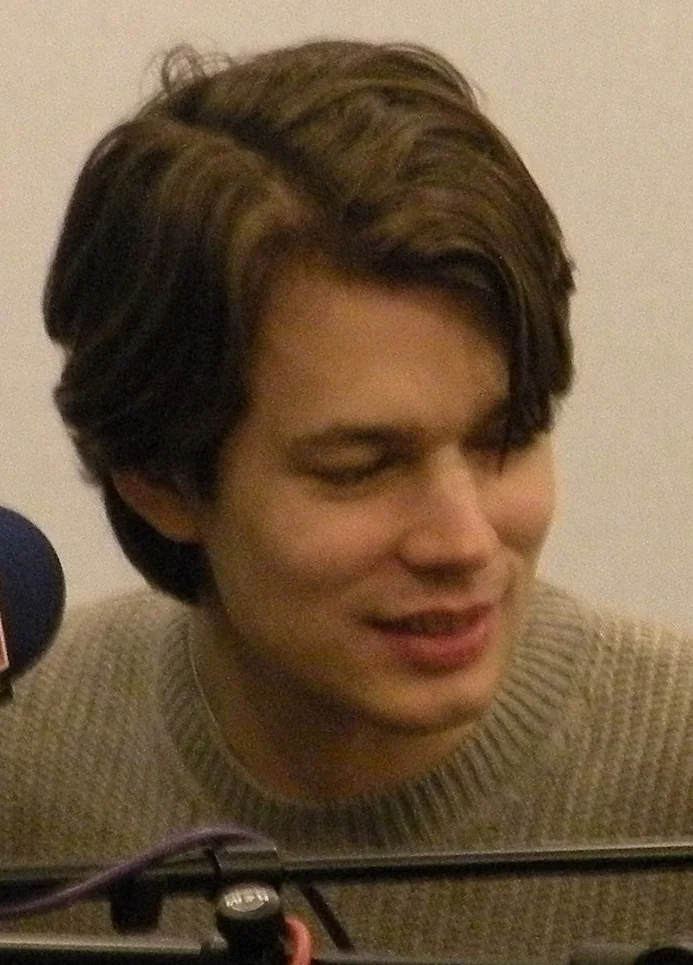
Image from Wikipedia
Image from Wikipedia
David Fray – The Poetic Sound Sculptor of the French Piano
A pianist who brings Bach to life and reinterprets Schubert
David Fray, born on May 24, 1981, in Tarbes, represents a musical career that uniquely combines intellect, sonic imagination, and stage presence. Early on, influenced by both German and French culture, he developed an artistic journey that spans from successful competitions to collaborations with leading orchestras. Today, he is regarded as one of the most distinguished French pianists of his generation, celebrated for a Bach interpretation that resonates with the voice of the piano and for Schubert performances characterized by a singing line, deep breath, and narrative tension. His discography with Erato/Warner Classics documents this approach in exemplary recordings – from the cosmos of Bach to romantic fantasies.
Biography: From Tarbes to the Grand Stages
Growing up in the Pyrenees, David Fray received crucial professional training after winning the Second Grand Prize at the Montreal International Music Competition in 2004. Debuts at major venues followed quickly, such as in 2009 with The Cleveland Orchestra; soon after, he was engaged by the Boston Symphony, San Francisco Symphony, New York Philharmonic, Chicago Symphony, and Los Angeles Philharmonic. In Europe, he performed with the Royal Concertgebouw Orchestra, the Deutsche Kammerphilharmonie Bremen, the Philharmonia, and the Orchestre de Paris, among others. Conductors like Riccardo Muti, Esa-Pekka Salonen, Christoph Eschenbach, Paavo Järvi, and Yannick Nézet-Séguin have shaped his orchestral work and enhanced his profile as a "thinking musician." This international presence attests to his authority in the classical piano repertoire and his interpretation style based on scholarly study and sound culture. ([davidfraymusic.com](https://davidfraymusic.com/about-2/?utm_source=openai))
Career Breakthrough and Artistic Signature
Fray experienced his artistic breakthrough with pointed Bach programs and a distinctive tone that critics described as muscular yet lyrical. Earlier portraits and documentaries – including the widely discussed ARTE production – made his working method visible: attentive rehearsing, intense structural thinking, and sonic color direction. This combination of analytical precision and singing phrasing, of rubato-aware rhetoric and transparent voice leading, became his trademark. The BBC Music Magazine's Newcomer Award in 2008 cemented his international recognition; his repertoire has continuously expanded from Bach to Mozart and Schubert, up to Chopin and Boulez. ([en.wikipedia.org](https://en.wikipedia.org/wiki/David_Fray?utm_source=openai))
Discography: Milestones from Debut to "Baroque Encores"
Fray's debut album "Schubert–Liszt" was released in 2006 on ATMA Classique, making an early statement for poetic sound discourse and dramatic tension. With the Warner/Erato catalog, he intensified his focus on Bach: in 2018, he released the Concertos for two, three, and four pianos – a chamber music-infused, yet powerful project with long-time collaborators and mentor Jacques Rouvier. In 2019, "Bach: Sonatas" with Renaud Capuçon followed, a reference for dialogue culture, balance, and articulatory delicacy. In 2021, he crowned his Bach cycle with the Goldberg Variations – a pianistic "rite of life," as Fray himself describes it. Most recently, he is set to return in 2025 with "Baroque Encores," a finely curated panorama from baroque character pieces to large transcriptions, thematically inspired by his theater project with director Chiara Muti. This discography exemplifies how Fray understands composition, arrangement, and production as a cohesive narrative. ([atmaclassique.com](https://atmaclassique.com/produit/schubert-liszt/?utm_source=openai))
Critical Reception: Between Glory and Controversy
The music press recognizes Fray as a "seriously deep" artist who shapes tonal colors, lets lines sing, and phrases grandly – for instance, in Schubert's G Major Sonata D 894. At the same time, critics have discussed issues of spatial acoustics, balance, and texture in individual releases – a productive discourse that underscores the seriousness of his quest for ideal sound architecture. That Fray's work polarizes is part of the life of a strong artistic personality; crucial is the lasting impact of his readings within the repertoire history. ([theguardian.com](https://www.theguardian.com/music/2015/feb/15/schubert-fantaisie-cd-review-david-fray-exceptionally-thoughtful?utm_source=openai))
Style and Technique: Singing, Contour, Polyphony
Fray's aesthetic approach is based on the idea of the "singing piano" – a term that precisely captures his concept of sound. He favors a singing touch, flexible breath arcs, and a polyphony where each voice is colorfully differentiated. In practice, this means: careful voice weighting, clearly articulated inner rhythms, controlled pedaling, and conscious legato and portato playing. In Bach, he connects contrapuntal transparency with rhetorical articulation; in Schubert, he seeks tranquility, expansiveness, and organic transitions, allowing form to be experienced as a narrative flow. This professionally grounded sound ideal shapes his discography and gives the recordings strong recognition when compared to historical and contemporary interpretations. ([prestomusic.com](https://www.prestomusic.com/classical/products/9731945--the-singing-piano?utm_source=openai))
Awards, Collaborations, and Stage Projects
His authority is supported by awards, prominent partnerships, and curated projects. For John Neumeier's pandemic ballet "Ghost Light," Fray performed a Schubert tapestry – a project that earned him the OPUS KLASSIK (Innovative Concert of the Year) and showcased his stage presence beyond traditional recitals. He interprets Schubert's "Winterreise" with singer Peter Mattei; he repeatedly returns with the Hamburg Ballet. These interdisciplinary successes expand his artistic development and demonstrate how he understands dramaturgy, space, and sound as a total work of art. ([davidfraymusic.com](https://davidfraymusic.com/david-fray-wins-opus-klassik-award-for-innovative-concert-of-the-year-for-ghost-light/?utm_source=openai))
Curator and Cultural Entrepreneur: L’Offrande Musicale
As founder and artistic director of the festival "L’Offrande Musicale" in the Hautes-Pyrénées, Fray is committed to inclusion. The festival reserves 20 percent of seats each year for people with disabilities, opens rehearsals, organizes accessible shuttle services, and holds concerts in healthcare facilities. Artistic programming spans from chamber music to interdisciplinary formats – an example of lived cultural responsibility. The 5th edition in 2025 confirmed the festival's status as a lighthouse project between excellence and participation; the next edition is scheduled for 2026. ([tarbes.fr](https://www.tarbes.fr/actualite/loffrande-musicale-fete-ses-5-ans/?utm_source=openai))
Current Projects 2024–2026: New Narratives from the Baroque
With "Baroque Encores" (release date November 14, 2025), Fray continues his Erato work at the intersection of original and transcription. The program links Bach, Rameau, and Royer with legendary piano arrangers like Siloti, Busoni, Kempff, and Stradal, and includes the world premiere of a Monsaingeon transcription from Bach's A Minor Violin Sonata. The project originated from a theater collaboration with Chiara Muti, which premiered at Fray's own festival in 2023 – an example of how he translates program concepts from the stage into production. In parallel, 2025 will see the release of digital EPs ("Bach: Air," "Bach: Siciliano," "Rameau: Le rappel des oiseaux"), which sharply outline his sound language. ([warnerclassics.com](https://www.warnerclassics.com/release/baroque-encores?utm_source=openai))
Concert Successes and Venues
Whether it's Wigmore Hall, Philharmonie de Paris, Carnegie Hall, Musikverein Wien, or the BBC Proms – Fray's performances in leading venues confirm the viability of his interpretative stance: focused dramaturgy, clear formats, and communicative stage presence. Highlights of the 2024/25 season include projects with Orchestre National de France, Orchestre de Chambre de Paris, Royal Northern Sinfonia, Orchestre de Chambre de Lausanne, as well as US orchestras in Louisville, Tucson, and Savannah. This density of invitations reflects relevance, reputation, and sustainable demand. ([salzburgerfestspiele.at](https://www.salzburgerfestspiele.at/en/a/david-fray?utm_source=openai))
Musical Placement and Influence
In the canon of Bach interpretations, Fray positions himself between historical informedness and modern sound utopia: he respects dance characters, affect theory, and voice textures without sacrificing the singing piano tone. In Schubert, he emphasizes harmonic expansiveness, intermediary registers, and modulated silence – a "speaking" of the piano that recalls Wilhelm Kempff's ideal without imitating it. This balance of expertise (stylistics, phrasing theory, articulation knowledge) and experience (stage, recording, interdisciplinary formats) explains his cultural influence on younger pianists who understand the dialogue of works as a narrative art. ([en.wikipedia.org](https://en.wikipedia.org/wiki/David_Fray?utm_source=openai))
Voices of the Fans
The reactions of fans clearly show: David Fray captivates people worldwide. On Facebook, one listener writes: "Your Bach sounds as if the piano is breathing – thank you for this evening!" Another comment exclaims: "Rarely have I heard so much poetry and precision at once." This resonance reflects how Fray's attention to detail in interpretation unfolds immediate, emotional impact. ([davidfraymusic.com](https://davidfraymusic.com/home/))
Conclusion
What makes David Fray so exciting? His playing unites intellectual depth, sonic imagination, and dramaturgical clarity – experienced in concerts, ballet, chamber music, and studio work. His discography is both research and narrative; his projects – from "Ghost Light" to "Baroque Encores" – demonstrate artistic responsibility and cultural relevance. Those who hear his interpretations of Bach and Schubert live experience piano art as a breathing language. Recommendation: Experience David Fray in concert – where sound, space, and moment merge into an event.
Official Channels of David Fray:
- Instagram: No official profile found
- Facebook: https://www.facebook.com/DavidFray.officiel
- YouTube: No official profile found
- Spotify: https://open.spotify.com/artist/6ngR3n1aQ7GLB5w46hqSWR
- TikTok: No official profile found
Sources:
- The Official Site for David Fray – Biography
- Warner Classics – Baroque Encores (Release Info, November 14, 2025)
- Warner Classics – Bach: Goldberg Variations (November 26, 2021)
- Warner Classics – Bach: Sonatas (with Renaud Capuçon)
- Warner Classics – Bach: Concertos for 2, 3 & 4 Pianos (2018)
- ATMA Classique – Schubert–Liszt (Debut Album, 2006)
- The Guardian – Schubert: Fantaisie, Review
- The Classic Review – Bach Concertos for 2, 3 & 4 Pianos
- ClassicsToday – J.S. Bach: Keyboard Concertos (Review)
- medici.tv – Artist Profile David Fray
- Salzburger Festspiele – Artist Page & Season Highlights 2024/25
- davidfraymusic.com – OPUS KLASSIK (Ghost Light)
- Hamburg Ballet – Ghost Light (Program Page)
- L’Offrande Musicale – The Festival (Inclusion & Mission)
- City of Tarbes – L’Offrande Musicale Celebrates 5 Years (2025)
- Apple Music – Bach: Goldberg Variations (2021)
- Q-rious Music – Announcement "Baroque Encores" (2025)
- Wikipedia: Image and Text Source
Upcoming Events
A Coffee with ... David Fray
A morning full of sound thoughts in the Regent Building: David Fray in conversation about style, work, and interpretation. 18.07.2026, 11:00 AM, free entry. Get inspired and be there live. #KissingerSommer
»Auf einen Kaffee mit ... David Fray«
Ein eleganter Vormittag für Klassikfreunde: David Fray spricht im Weißen Saal des Regentenbaus über Musik, Werk und Interpretation. 18.07.2026, Eintritt frei. #KissingerSommer #BadKissingen