
Camille Thomas
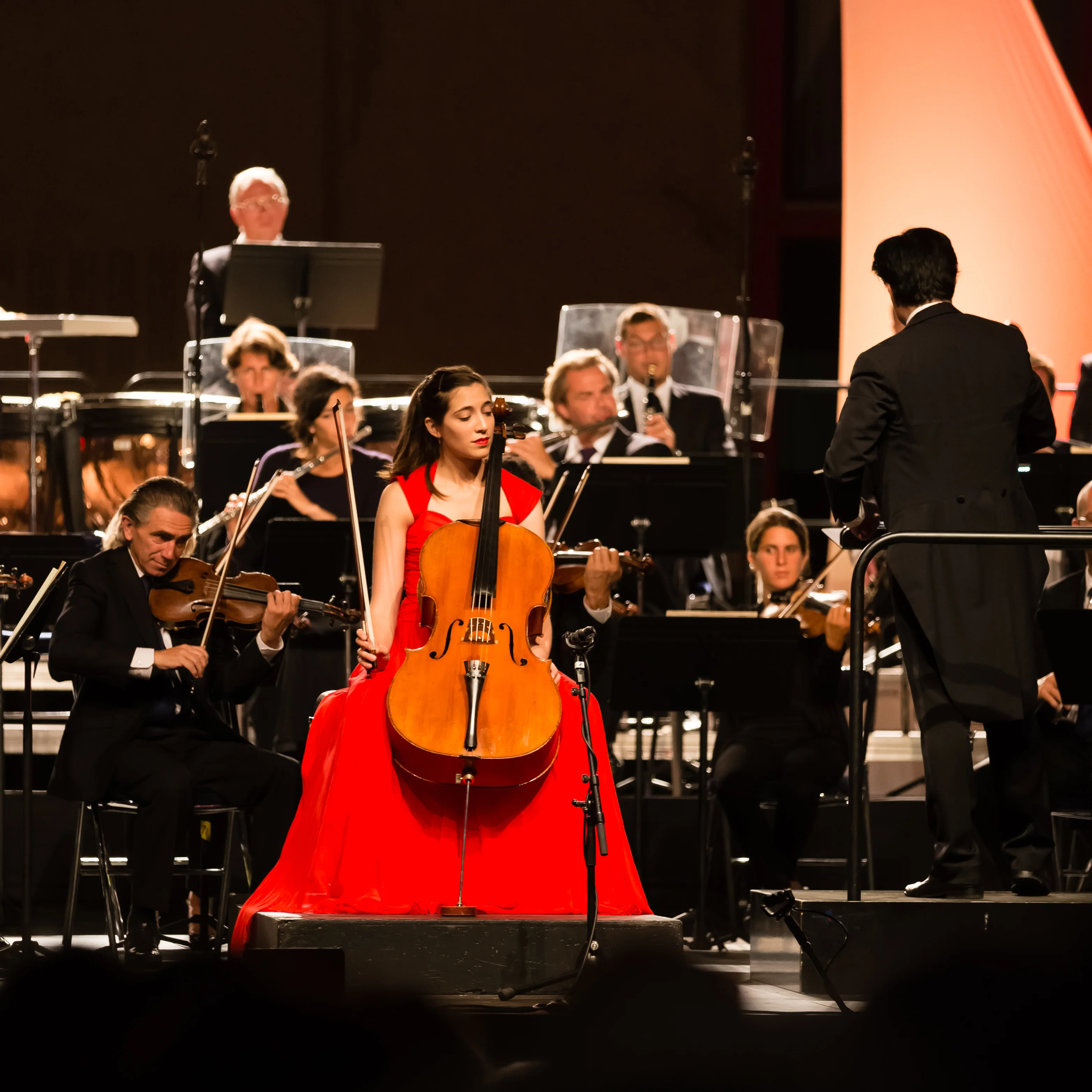
Image from Wikipedia
Image from Wikipedia
Camille Thomas: The Poetic Power of the Cello Between Romanticism, Sound Magic, and Contemporary Times
Camille Thomas – a Cellist with an International Profile and Distinctive Touch
Camille Thomas, born in 1988 in Paris, has developed into one of the most distinctive voices in contemporary classical music as a Franco-Belgian cellist. Her journey combines early virtuosity, dedicated training, significant competition successes, and an artistic curiosity that is reflected in both romantic literature and programmatically curated projects. As a soloist, chamber musician, and recording artist, she embodies a warm, lyrical tone, technical sovereignty, and a stage presence that goes far beyond mere perfection. ([en.wikipedia.org](https://en.wikipedia.org/wiki/Camille_Thomas))
Early Years, Education, and Initial Artistic Influences
Camille Thomas began playing the cello at the age of four. At ten, she studied at the Conservatoire national de région de Paris with Marcel Bardon, and at 16 she won her first competition prize. She then continued her studies with Philippe Muller in Aulnay-sous-Bois and in Germany with Stephan Forck, Frans Helmerson, and Wolfgang-Emmanuel Schmidt in Berlin and Weimar. Masterclasses with figures such as David Geringas, Steven Isserlis, Ralph Kirshbaum, and Tabea Zimmermann expanded her perspective on sound, phrasing, and musical rhetoric. ([en.wikipedia.org](https://en.wikipedia.org/wiki/Camille_Thomas))
These educational paths explain much of her artistic development: Thomas views the cello not just as a solo instrument, but as a voice with dramatic, chamber-music, and almost vocal expressiveness. Early on, she connected French sound culture with German training and an international perspective on repertoire and interpretation. Being recognized by Seiji Ozawa and Steven Isserlis and being invited to their festivals in 2012 marked an early point in her breakthrough. ([en.wikipedia.org](https://en.wikipedia.org/wiki/Camille_Thomas))
The Breakthrough on Major Stages in Europe
Thomas performed as a soloist with renowned orchestras, including the Orchestre national de Lille, the Philharmoniker in Baden-Baden, the Hamburg Philharmonic State Orchestra, the Slovak Philharmonic, the Orchestre philharmonique royal de Liège, and other ensembles across Europe. Concert performances in Paris, Geneva, Brussels, Berlin, Jerusalem, and at major festivals such as the Pablo-Casals Festival, the Strasbourg Series, and the Amsterdam Cello Biennale sharpened her profile as a versatile concert artist. This presence across different musical traditions significantly contributed to her international visibility. ([en.wikipedia.org](https://en.wikipedia.org/wiki/Camille_Thomas))
With accolades such as the “Révélation classique” from Adami, the title of “Revelation, Instrumental soloist” at the Victoires de la musique classique, first place at the EBU competition, and selection for the Forbes 30-under-30 list, she has firmly established herself at the center of the classical music scene. Such honors not only reflect her renown but also the authority of an artist whose career is based on performance, repertoire knowledge, and stylistic independence. ([en.wikipedia.org](https://en.wikipedia.org/wiki/Camille_Thomas))
Discography: From Chamber Music Intimacy to Orchestral Statements
Her discography shows a remarkable evolution from chamber music dialogue to a prominent soloist position. The debut album A Century of Russian Colours was released in 2013 by Fuga Libera, focusing on 20th-century Russian music in collaboration with pianist Beatrice Berrut. In 2016, Réminiscences followed on La Dolce Volta, an imaginary recital bridging the late 19th and early 20th centuries, combining transcriptions by Franck and Ysaÿe with music by Fauré and Duparc. The album received the CHOC from Classica and the ECHO Klassik award. ([en.wikipedia.org](https://en.wikipedia.org/wiki/Camille_Thomas))
With her exclusive contract with Deutsche Grammophon in 2017, Thomas took a significant career step: she became the first cellist ever signed to the label. Her DG debut united Saint-Saëns and Offenbach with the Orchestre national de Lille under Alexandre Bloch and received broad acclaim in the press. The reception particularly highlighted her velvety, “warming” tone and the assurance of her musical expression. ([en.wikipedia.org](https://en.wikipedia.org/wiki/Camille_Thomas))
Voice of Hope and the Search for a Broader Musical Narrative
With Voice of Hope, Camille Thomas deepened her DG discography in 2020. The centerpiece is the world premiere recording of Fazıl Say's cello concerto Never Give Up, created in response to the terror attacks in Paris and Istanbul, explicitly written for Thomas. The album is complemented by Bruch's Kol Nidrei and arrangements from Purcell to John Williams, Gluck, Bellini, and Wagner; it was also the first classical recording produced in partnership with UNICEF. ([deutschegrammophon.com](https://www.deutschegrammophon.com/en/artists/camille-thomas/biography))
This project particularly illustrates her artistic development: Thomas sees the cello as an instrument of hope, remembrance, and emotional intensity. The combination of repertoire, political sensitivity, and careful program dramaturgy gives her work a rare narrative depth. From the perspective of classical music production, it is more than a recording – it is a curated statement on contemporary issues and responsibility. ([deutschegrammophon.com](https://www.deutschegrammophon.com/en/artists/camille-thomas/biography))
Current Projects, New Relevance, and Artistic Presence 2024/2025
Recent projects include The Chopin Project, a 3-CD set released by Deutsche Grammophon in 2023, which management reports has already achieved over ten million streams. Also highlighted is the 2023 vinyl release of Voice of Hope and the continued exclusivity with DG. For 2024 and 2025, concerts and programs such as the Elgar cello concerto, Dance by Anna Clyne in Paris, Schumann with Paavo Järvi, Lalo with Mikko Franck, and Saint-Saëns in Hamburg have been mentioned. ([static1.squarespace.com](https://static1.squarespace.com/static/53ab0bdfe4b01a7f1ac7859c/t/651c3d645c0031033feac499/1696349540555/CT%2B24-25%2BRecital%2BFactsheet%2BOct2023.pdf))
In 2025, Thomas remains present in high-profile contexts: a review of Victor Le Masne's Ravel Recomposed features her as a contributor alongside Christine and the Queens and Julius Asal. This involvement in a current repertoire project demonstrates that Thomas is recognized not only as an interpreter of the canon but also as a partner for cross-genre, contemporary productions. ([fazemag.de](https://www.fazemag.de/platten-des-monats-dezember-2025-alben-compilations/))
Style, Sound Ideal, and Musical Identity
Camille Thomas's style combines French elegance with a pronounced affinity for melody, lyricism, and dramatic line. Her repertoire ranges from romantic cello concertos and song transcriptions to arranged operatic and vocal works that she reinterprets for the cello. This is particularly evident in her DG videos and concert programs, where Schubert, Wagner, Purcell, Ravel, Dvořák, Gluck, Pärt, or Offenbach are placed in new contexts. ([deutschegrammophon.com](https://www.deutschegrammophon.com/en/artists/camille-thomas/videos))
The Apple Music playlist From Paris with Love underscores this aesthetic self-positioning. Thomas describes Paris as her musical life axis and references composers and artists who bring her emotionality, nostalgia, joy, and exaltation. Such self-commentaries help to understand her interpretative stance: not as abstract virtuosity, but as culturally grounded, personal sound expression. ([music.apple.com](https://music.apple.com/us/playlist/camille-thomas-from-paris-with-love/pl.6377557fbe214c1a83fd0a7af8aa7772))
Cultural Influence, Awards, and Public Perception
Camille Thomas is now regarded as an artist who translates classical cello playing into the 21st century without losing connection to tradition. The combination of label prestige, competition successes, festival presence, and an openly communicated understanding of programming makes her equally interesting to audiences and music critics. The resonance noted in specialist media regarding her tone and presence shows that her impact stems not only from repertoire choice but also from the emotional immediacy of her playing. ([deutschegrammophon.com](https://www.deutschegrammophon.com/en/artists/camille-thomas/biography))
Additionally, her symbolic significance as the first cellist with Deutsche Grammophon after more than four decades makes her an important figure in the recent history of classical music marketing and the representation of women at the forefront of classical music. Her career also represents a changed perception of female cellists as leading soloists on major international stages. ([static1.squarespace.com](https://static1.squarespace.com/static/53ab0bdfe4b01a7f1ac7859c/t/651c3d645c0031033feac499/1696349540555/CT%2B24-25%2BRecital%2BFactsheet%2BOct2023.pdf))
Conclusion: Why Camille Thomas Remains So Fascinating
Camille Thomas captivates audiences because she plays the cello with great stylistic clarity, emotional depth, and programmatic ambition. Her music career tells a story of precise training, remarkable competition successes, strong recordings, and a presence that effortlessly bridges chamber music, solo repertoire, and contemporary concert dramaturgy. Following her development provides an insight into an artist who does not merely manage tradition but transforms it productively. ([en.wikipedia.org](https://en.wikipedia.org/wiki/Camille_Thomas))
This quality unfolds most intensely in live performances: in her articulation, the expansive arc of her phrases, and in that blend of virtuosity and poetic tranquility that has become her hallmark. Camille Thomas belongs to the cellists whose concert appearances are more than just interpretations – they are musical events. Those who experience her playing in the concert hall quickly understand why she enjoys such high attention in the international classical music scene. ([deutschegrammophon.com](https://www.deutschegrammophon.com/en/artists/camille-thomas/biography))
Official Channels of Camille Thomas:
- Instagram: https://www.instagram.com/camillethomascellist/
- Facebook: https://www.facebook.com/CamilleThomasCellist
- YouTube: https://www.youtube.com/@CamilleThomasCello
- Spotify: https://open.spotify.com/artist/4jr0QTGJnWJNUPeHjju3RD
- TikTok: no official profile found
- X/Twitter: https://x.com/CamilleThomasOF
Sources:
- Deutsche Grammophon – Camille Thomas Biography
- Deutsche Grammophon – Camille Thomas Videos
- Camille Thomas – Official Website
- Apple Music Classical – Camille Thomas: From Paris with Love
- Frank Salomon Associates – Camille Thomas 24-25 Recital Factsheet
- Wikipedia: Camille Thomas – Image and Text Source
- FAZEmag – Records of the Month December 2025