Insider tips in Passau: discover hidden highlights
Insider tips in Passau that will surprise you on your next visit
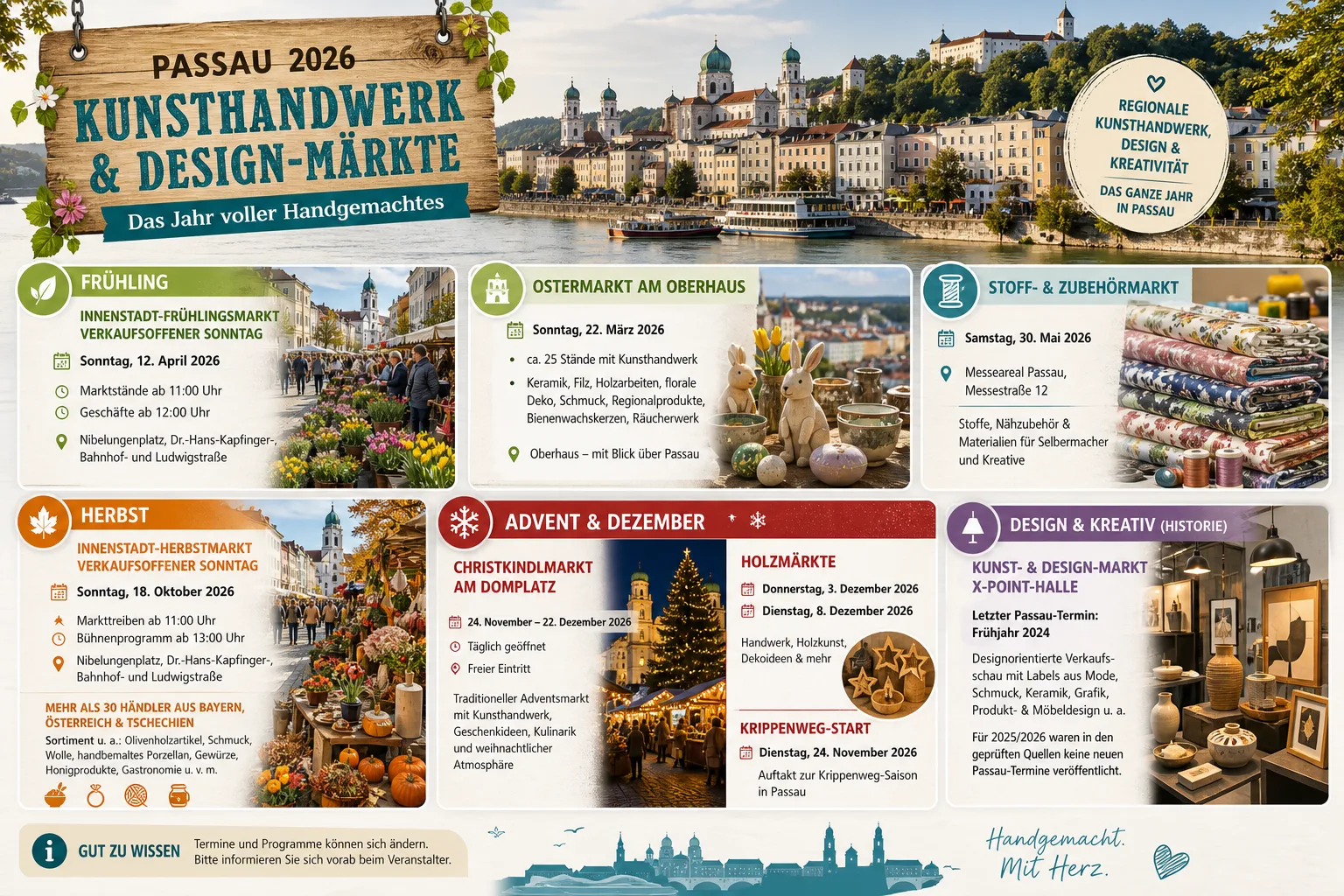
Are you planning to spend some time in Passau soon and want to discover something beyond the classics, something that feels like it’s “just for insiders”? This route is designed as a future walk: with quiet sightlines, artistic details in the urban space, and deliberately chosen stops that you can easily experience yourself in the coming days or weeks.
How to use this guide (as an upcoming mini-expedition)
- Time frame: Plan 2 to 4 hours for the round, depending on breaks.
- Rhythm: Allow yourself 10–20 minutes of “viewing time” per location, instead of just taking photos.
- Timing: Start in the early morning or late afternoon if you prefer it quieter.
- Low-barrier alternative: If you want to avoid stairs, plan the high points (Oberhaus/Mariahilf) as separate stages.
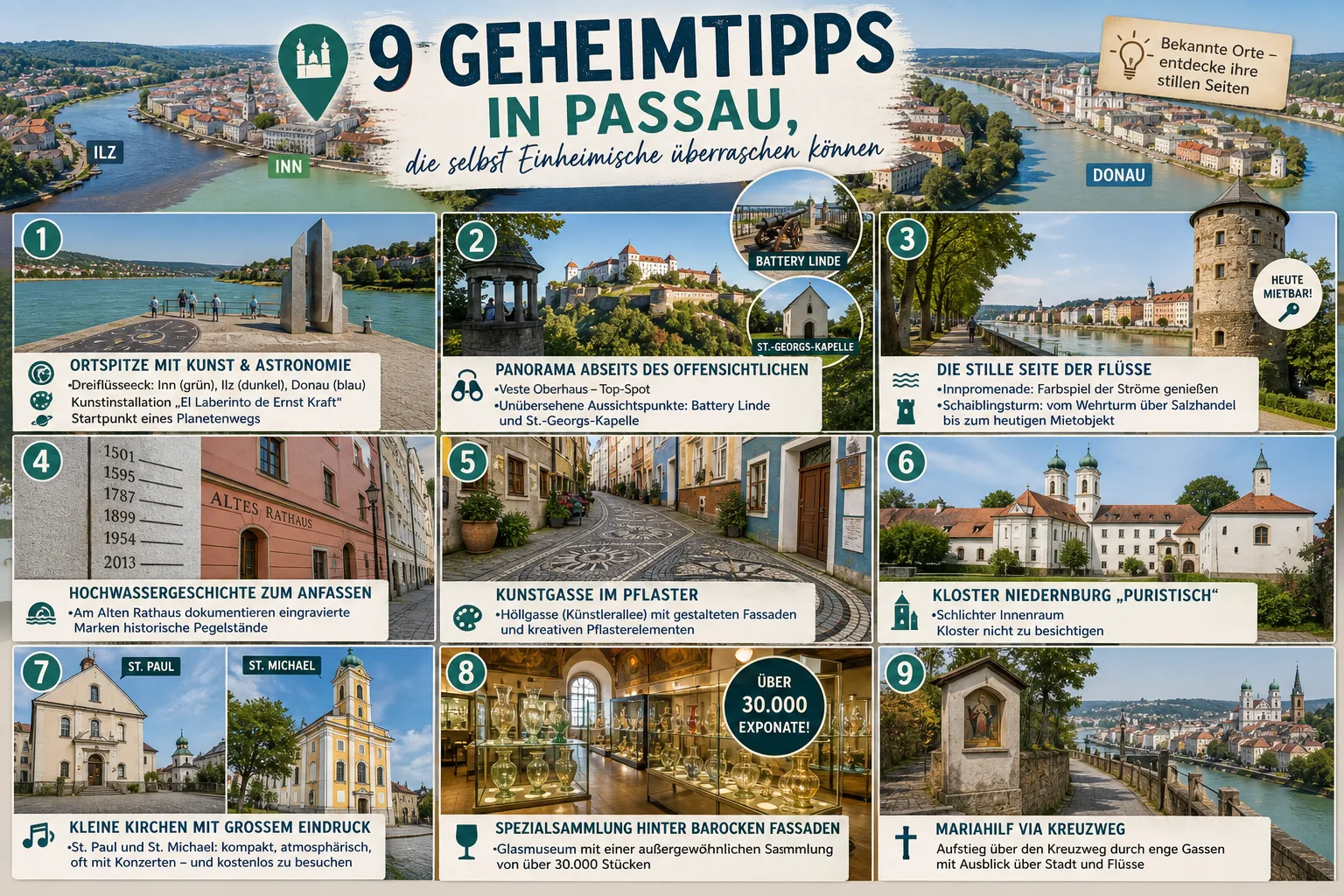
Your next “locals’ round”: 7 stops worth visiting
1) Dreiflüsseeck: Take an extra five minutes for details
When you arrive at the tip of the city on your next visit, don’t just stop for the panorama. Make a conscious effort to walk slower and read small clues in the urban space: installations, markings, and path beginnings often only become visible when you look away from the main attraction.
- Mini-task for your next walk: On site, look for a detail that acts as a “starting signal” (e.g., a plaque, a marking, or an art element) – and follow it for a few minutes without googling it first.
- Photo tip for later: Take a second shot from knee height. This makes lines, paving, and urban details stand out more than just the panorama.
2) Oberhaus Heights: Plan a quiet moment with a view instead of a “castle check-off”
Set yourself a clear goal for your next trip: not to “see everything,” but to really let one viewpoint sink in. If you’re heading towards Oberhaus, it’s worth looking for a spot off the obvious main areas where you can stay for 5–10 minutes without rushing.
- What you can aim for: Take a short break where you consciously count three things (e.g., bridges, church towers, ships) and notice how your sense of orientation in the city changes.
- If you’re with children: Turn it into a “city explorer challenge”: Who can find a spot where you can see two river directions at once?
3) Inn Promenade: Your next quiet stretch for 20 minutes of “winding down”
For your next day in Passau, you can set a simple rule: At least one stage should be without a program. A promenade stretch is ideal for this, as it combines movement, views, and a break. Deliberately plan this stage as a deceleration window.
- Ritual for your next walk: Walk the first 5 minutes without your phone in your hand. Only then take a photo.
- Observation you can try: Pay attention to the light on the water surface and compare it again after 10 minutes.
4) Old Town: Turn “passing by” into a micro-tour
On your next walk through the old town, you can consciously break typical walking routes: Instead of rushing from A to B, plan two stops where you look for inscriptions, markings, or explanatory plaques. These elements act like an open history book if you give them time.
- Your next focus: Look for high water or water level markers and consider which routes you would choose in the future during high water.
- “Local” trick: At a busy spot, slowly turn around once and only then decide which alley to take.
5) Höllgasse/Artists’ Alley: Plan a “detail hunt” in the pavement
For your upcoming walk through a creative old town alley, a change of perspective is worthwhile: Don’t just look up at facades, but also deliberately look down. Many artistic interventions are designed to only be noticed when walking slowly.
- Specific task for your next visit: Find three different patterns/materials in the ground – and note (or remember) a spot you want to return to later.
- If you like photography: Make a series of 3 pictures (ground – door/shop window – whole alley). This creates a small “art trail” instead of a single photo.
6) Small churches & quiet spaces: Consciously allow yourself 15 minutes indoors in the future
If you’re looking for a contrast to the urban space on your next day in Passau, plan a short indoor stage: 10–15 minutes, without rushing. This break is not meant as a “sightseeing check-off,” but as a rest cut between two routes.
- How to make it concrete: Decide in advance not to take photos inside (or only after 5 minutes). This way you experience space, acoustics, and light more intensely.
- If you’re unsure about opening times: Check them shortly before your visit via official sources (see references) to keep your route smooth.
7) Mariahilf Ascent: Plan your next “staircase reset” with a view
For your next stay, you can use the way to a viewpoint as a conscious mini-workout: walk slowly, take short breaks, arrive at the top and let your gaze “run out.” If you see the ascent as a ritual instead of a duty, it becomes one of the strongest Passau moments.
- Practical procedure for your next visit: Plan 10 minutes at the top where you don’t move on, but just look (and only then decide whether to return or continue).
- If you’re traveling with little time: Use the ascent as the final highlight at the end of your day – as a closing image that stays with you.
Planning for the coming days: 3 ready-made variants
Variant A (short, approx. 90 minutes): “Water & Old Town Details”
- Start at Dreiflüsseeck: 10 minutes of conscious viewing
- Old Town stop: 20 minutes micro-tour (markings/inscriptions)
- Artists’ Alley: 20 minutes detail hunt in the pavement
- Finish at a promenade stretch: 20 minutes of quiet walking
Variant B (medium, approx. 2.5–3 hours): “Quiet paths + one indoor space”
- Dreiflüsseeck as a start
- Inn Promenade as a deceleration stage
- Old Town: 1–2 targeted stops for details
- Small sacred indoor space: 15 minutes of quiet time
- Optional: short second promenade section as a conclusion
Variant C (long, approx. 4 hours): “Heights, View, Reset”
- Old Town start with detail focus
- Oberhaus stage: a quiet moment with a view
- Return via a quiet stretch (promenade/side paths)
- Mariahilf ascent as a conclusion
Notes for your next visit (Safety & Respect)
- Consideration: In churches and quiet spaces: speak softly, keep your phone silent, observe local notices.
- Weather: Riverside paths can be slippery when wet; choose suitable footwear for your next walk.
- High water: Check current notices from the city or relevant authorities before riverside or promenade stages (see references).
Note (not legal, not medical): This article is an inspiration and planning guide for your future city walk. Please rely on official information on site for opening times, access situations, closures, and safety conditions.